News
TAJIKISTAN
One of the leaders of the PIVT Jaloliddin Mahmud has died in prison
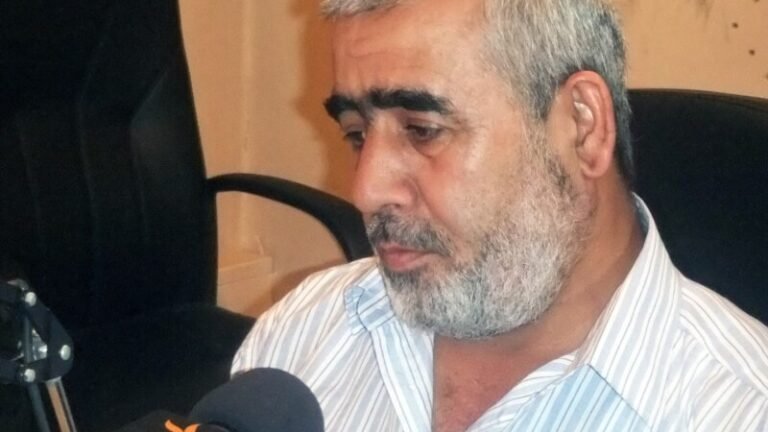
On the evening of August 12, 2023, one of the high-ranking leaders of the Islamic Renaissance Party of Tajikistan and a veteran of the opposition, Jaloliddin Mahmud, passed away in a prison in the city of Vahdat. Prison administration staff in Vahdat called his relatives on August 13. He was buried in his hometown of […]
On the evening of August 12, 2023, one of the high-ranking leaders of the Islamic Renaissance Party of Tajikistan and a veteran of the opposition, Jaloliddin Mahmud, passed away in a prison in the city of Vahdat.
Prison administration staff in Vahdat called his relatives on August 13. He was buried in his hometown of Gissar.
The National Alliance of Tajikistan, a coalition of Tajik opposition organizations abroad, in its statement linked Jaloliddin Mahmud’s death to the “inhumane treatment” by the authorities of the country.
“The Council of the National Alliance is convinced that the death of Jaloliddin Mahmud as a result of persecution is indicative of the illegal and inhumane treatment of the government towards political prisoners,” the statement from the National Alliance reads.
The National Alliance of Tajikistan believes that the re-sentencing of Jaloliddin Mahmud “under the pretext of providing assistance to political prisoners and their families is further evidence of the premeditated actions of the authorities to exert pressure on political prisoners.”
Islamjon Saidov, head of the Executive Office of the National Alliance of Tajikistan, stated in an interview with Azda TV on August 14:
“The fact that the National Alliance of Tajikistan considers the inhumane treatment by the prison administration to be the cause of Jaloliddin Mahmud’s death comes from experience. This is not the first time such a thing has happened in Tajikistan. The number of extrajudicial killings in prisons has not decreased. We have witnessed similar cases that occurred in the Khujand prison, on the Khujand-Dushanbe highway, in the Vahdat colony, and other places, which proves this.”
“The re-sentencing of Jaloliddin Mahmud to imprisonment is evidence of the inhumane treatment by the authorities, who exert pressure on political figures in various ways to silence their voices and, as far as possible, eliminate them physically,” Saidov stated.
He also added that the National Alliance of Tajikistan intends to bring the issue of political prisoners to the attention of the international community.
The head of the Civil Committee for the Protection of Political Hostages and Prisoners in Tajikistan, Abdusatyor Boboev, also stated in an interview with Azda TV:
“When Jaloliddin Mahmud was imprisoned for the first time and even when he was released, he did not complain about his health. However, when he was sent to prison for the second time, due to severe pressure from the authorities and poor conditions in prison, he fell ill.”
According to him, it is possible that Jaloliddin Mahmud died from torture and pressure from the prison administration, rather than from illness.
Abdusatyor Boboev also reported that the Civil Committee for the Protection of Political Hostages and Prisoners in Tajikistan has repeatedly appealed to international human rights organizations regarding the torture of political prisoners in Tajikistan’s prisons, but no measures have been taken.
Djaloliddin Mahmud, a member of the Supreme Presidium of the Islamic Revival Party of Tajikistan, was detained in 2015 while serving as a member of the Central Election Commission and referendum. He was accused of “illegal possession of weapons.” The court sentenced him to 5 years in prison. In April 2019, he was released under an amnesty law. However, in August 2020, he was detained again. He was accused of “collaborating with opposition forces that are wanted.” The court sentenced him to 6.5 years in prison.
Djaloliddin Mahmud held various positions in the IRPT, including serving as the deputy chairman of the IRPT, head of the branch in the regions under republican jurisdiction, and so on.
He also held high-ranking positions outside the party, including co-chairman of the Ceasefire Monitoring Commission, member of the National Reconciliation Commission, and member of the Central Election Commission and referendum.
His friends know him as a theologian, faqih, and expert in Islamic law.
Muhammadsaid Rizo, a member of the Supreme Presidium of the Islamic Revival Party of Tajikistan, stated that Djaloliddin Mahmud “simultaneously possessed deep knowledge in Islamic jurisprudence, had his own opinion, and had the courage to express it.”