News
SOCIETY
Energy limit in the capital forced journalists to raise their voices
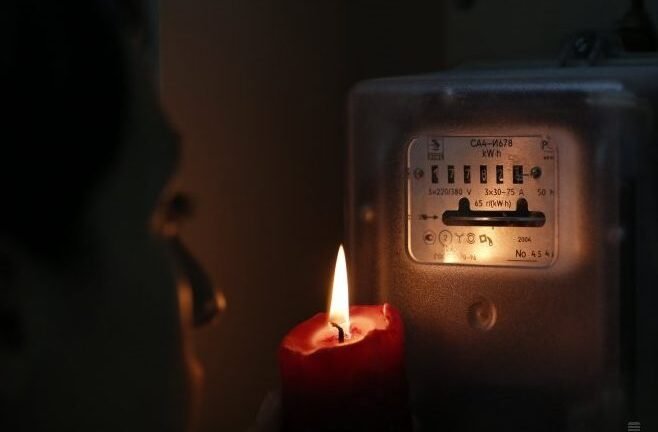
Some residents of the city of Dushanbe, citing Dushanbe electric networks, claim that an energy limit has been introduced in the capital. On March 13, 2024, residents of the capital raised their voices regarding the introduction of a limit on electricity supply in Dushanbe. Fakhriddin Kholbek, a well-known Tajik journalist and resident of the capital, […]
Some residents of the city of Dushanbe, citing Dushanbe electric networks, claim that an energy limit has been introduced in the capital.
On March 13, 2024, residents of the capital raised their voices regarding the introduction of a limit on electricity supply in Dushanbe.
Fakhriddin Kholbek, a well-known Tajik journalist and resident of the capital, writes that each year the restrictions on electricity supply to the capital’s population are increasing.
“Power outages have moved from the villages to the capital; this should not be the case. It is necessary to reunite the energy companies. The experience of Kyrgyzstan has shown that separation is not a solution. Three institutions, three accounting departments, three budgets, and here is the result (electricity outages in the capital – editor’s note),” writes Fakhriddin Kholbek.
Abuali Nekruzov, a journalist and resident of the capital, commenting on the situation with electricity outages in the country and especially in Dushanbe, writes:
“The electricity limit today is not what it used to be. As the saying goes, ‘Every day is worse.’ This morning in the neighborhoods around the new Imam Azam mosque, half of the Kushonien market, and the neighborhoods around it, there has been no electricity from 08:48 AM until now.”
Fakhriddin Kholbek writes that on March 13, there has been no electricity in the area above 9 km since 9 AM! It has already been 3 hours!” In response, another Tajik journalist, Umarali Safarali, emphasized that “the same situation is at the 7th km. There has been no electricity since 9 AM. Until now.”
Tajik journalist Khurshedi Atovullo, a resident of the 102nd microdistrict of the capital, writes: “There has been no hot water for over a month, and now they have started cutting off electricity.” Another Tajik journalist, Abdurakhmon Rakhmonov, also writes: “Yesterday we had no water. It turns out that the lack of water is even worse than the lack of electricity.”
Journalist and resident of the capital Rajabi Mirzo also reported on the electricity outage.
“Yesterday we had no water and electricity until 5 PM. We called the duty officer at the mayor’s office, and they told us that electricity would be restored by 4 PM. Although they did not openly say that a limit had been introduced, it was clear from their manner of expression: a limit has been introduced for cities and neighborhoods in turn! But why not announce this officially if the situation is so bad and serious? Would it not be better to inform in advance that there will be no electricity and water on such and such street from such and such hour and day until such and such time?” asks Rajabi Mirzo.
User Nazrullo Amirov claims that some employees of the energy company “Barki Tojik” are to blame for the increase in the limit.
“Their most obvious betrayal is that many of them have their own private companies or intermediary companies that supply “Barki Tojik” with low-quality materials at high prices. Do they care about the population?” he writes.
It was reported the day before that the general director of the Joint Stock Company “Electric Distribution Networks,” Arvind Gudzhral, signed an order requiring the heads of the company’s branches to provide the population with electricity for 8 hours a day until March 11.
Arvind Gujral, a citizen of India, has been the CEO of the Open Joint Stock Company “Electric Distribution Networks” of Tajikistan for over 2 years. During his two years in office, he has not met with the country’s journalists at any press conference of the company “Barki Tojik”.
“Arvind Gujral is a specialist and former chairman of the company EV Motors India, which is engaged in equipping and launching electric charging stations. Is it really the case that among the citizens of Tajikistan, who built the Nurek Hydroelectric Power Station, the Kayrakkum Hydroelectric Power Station, a series of power plants on the Vakhsh River, the Pamir-1 Hydroelectric Power Station, and are currently constructing the Rogun Hydroelectric Power Station, there was not a single specialist in electricity supply and distribution, that we brought in a battery charging specialist from India and appointed him head of the electricity distribution company?” writes Tajik public activist Bijan Mukhabbatshoev.