News
HUMAN RIGHTS SOCIETY
Tajikistan: Education Collapse Shatters Dreams (based on materials from Eurasianet.org)
Schools are short of a thousand teachers; salaries are meager, educators are demoralized, and children are bored.
There is a shortage of a thousand teachers in schools; salaries are meager, educators are demoralized, and children are bored.
52-year-old Alisher dreamed of becoming an art teacher since childhood. He grew up when Tajikistan was still part of the Soviet Union. At that time, teachers and artists were considered elite members of society. Alisher studied, entered university, participated in art exhibitions, and even won several awards. Before he graduated from college, the Soviet Union collapsed. Soon after, a civil war broke out. It lasted for five years.
“When I graduated from university, art and teachers were not needed by anyone. Since I had no wife or children, no family obligations, I started teaching at the university. In the meantime, I painted in hopes of selling my works and earning some extra money,” Alisher recounts (all names in this article are fictional).
But there was no art market for Alisher’s paintings. All the spare money people had was spent on food. His teacher’s salary was meager; sometimes he wasn’t paid at all. “At 27, I got married. Later, we had a son. I inherited an apartment from my father, but I still had to support my family. Our needs gradually grew, but my earnings were not enough,” Alisher said.
Alisher long postponed the idea of emigrating in search of work. In 2010, he went to Russia for work; first to Samara, then to St. Petersburg. “It was hard for me to come to terms with the thought that I would have to throw away my diploma, leave my children, and emigrate. I had just spent 35 years of my life, so I needed to learn some craft in a foreign country to feed my family,” he said.
In Tajikistan, countless thousands of trained teachers have been forced, like Alisher, to migrate due to low salaries. According to government statistics, the average salary of educators in 2023 was just over 1600 somoni (150 US dollars). There are several professions that pay less.
The teaching profession has become almost entirely female. Many of the men who enroll in teacher training courses at Pedagogical Universities do so to gain exemption from mandatory military service — an experience that entails two years of hazing and terrible rations.
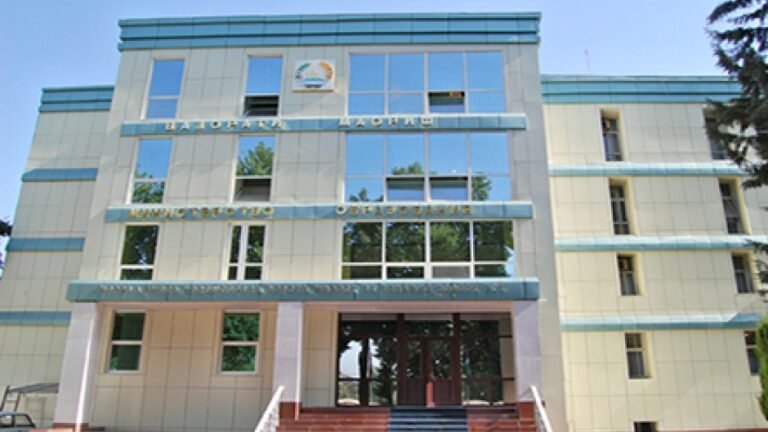
The Ministry of Education and Science stated that in 2022 there was a shortage of about 3400 teachers. This problem has rapidly worsened in just the last few years. Officials reported that in 2021, the shortage of teachers was 1124. Deputy Minister of Education Ziedullo Abdulzoda noted in August 2023 that subjects such as mathematics, physics, and chemistry were the most affected. Abdulzoda said that the government is working on creating incentives to attract more people to this profession, but they are hard to see. Meanwhile, there are many factors deterring future teachers.
Another teacher, Daler, now lives in Thailand. Upon returning to Tajikistan, he grew tired of constant laborious inspections from the Ministry of Education, the Ministry of Internal Affairs, the General Prosecutor’s Office, and others.
“My physics students have won prizes at international Olympiads,” said 35-year-old Daler to Eurasianet.org. “Sometimes we stayed in school dormitories to understand what children are taught in the West. But when we returned [to Tajikistan], no one from the Ministry of Education met us, congratulated the children, or provided us with any support. It seems they think this is how it should be.” Daler expressed concern that a sports medal will always be valued much more than any prize they managed to win at an academic tournament. Inspectors from the Ministry of Education are fixated on administrative and bureaucratic issues, but pay little attention to school achievements, he said.
“We constantly receive complaints about… the non-compliance of students’ school uniforms with the ministry’s requirements, about their hair not being cut or styled. But our successes completely escape their attention,” Daler said. Tired of these disappointments, Daler applied for positions at international schools outside the country. He was hired at a school in Kyrgyzstan and then moved to Thailand. The shortage of teachers is a problem even in the capital, Dushanbe.
Firuza Akobirova is looking for a suitable school for her daughter, who is set to start first grade this year. According to her, at the school near her home, younger children attend classes from 8 AM to 10:40 AM. “What can children learn in two or three hours? Besides learning the alphabet and numbers, children need to engage in creative activities to develop innovative thinking,” Akobirova said. “This worries me a lot, so I need to find another school; I can’t send her to the nearest one.” Akobirova mentioned that she is considering private schooling, but the monthly fees at the places she is looking at can range from $80 to $150.
“I work as a nurse in a hospital, and my husband works as a laborer. Our combined monthly income is $250-300. With our salaries, the cost of private schools is unaffordable. But there is no proper basic education in regular schools,” she said.
Madina Muso, a ninth-grader from Dushanbe, has experienced all of this firsthand. There are so few teachers; they only conduct two or three lessons each day lasting 45 minutes, she says. “Sometimes a teacher comes in and talks about who has paid or hasn’t paid a certain fee,” Muso said. “Or we just sit and chat mostly. By 11 AM, I go home and help my mom with housework.” After finishing ninth grade, Muso plans to study computer programming.
“I don’t want to spend another two years in school. There’s nothing to do there. I’m bored. It feels like time is just wasted, and we learn nothing,” she said. Middle school still beckons. There’s no escaping it.
“I hope that there will be interesting and useful classes in high school. And just in case, I will learn Turkish. Since childhood, I have dreamed of becoming a translator,” said Muso. “I dream of finding my place in this life. I look at my cousins, stuck in their daily routine. Their lives seem to have come to a halt after marriage. This scares me.”