News
HUMAN RIGHTS MIGRATION
Why is official Dushanbe silent in the face of public torture of Tajiks by Russian security forces? (based on materials from Radio Ozodi)
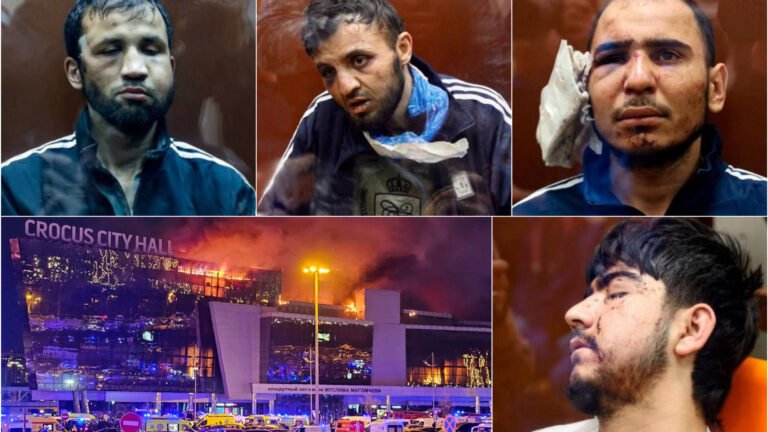
The silence of the official Dushanbe regarding the brutality of Russian security forces, who allowed themselves unacceptable actions of a forceful nature against four Tajik citizens accused of the terrorist attack at “Krokus City Hall,” has become a reason for criticism of the government. We have all witnessed the scene from a Russian court where […]
The silence of the official Dushanbe regarding the brutality of Russian security forces, who allowed themselves unacceptable actions of a forceful nature against four Tajik citizens accused of the terrorist attack at “Krokus City Hall,” has become a reason for criticism of the government.
We have all witnessed the scene from a Russian court where one detained Tajik citizen was brought to court with a severed ear; another was in a nearly unconscious state due to beatings; a third had a piece of a plastic bag around his neck. Four Tajik citizens have been charged with committing a terrorist act at the Moscow region concert hall “Krokus City Hall,” which resulted in the deaths of 144 people and injured over 500 others. Five more Tajik citizens are accused of aiding the main figures in this criminal case. The terrorist act has been condemned worldwide, including in Dushanbe.
However, the silence of the Tajik authorities regarding the mistreatment of detained Tajik citizens has led to criticism of the government, which is said to have been expected to defend the rights of its citizens. So far, none of the statements from Tajik authorities have mentioned the presumption of innocence or condemned the actions of the Russian security forces.
The Ministry of Internal Affairs of Tajikistan issued a statement on March 23, stating that the initial report from Russian media about the detention of three Tajik citizens was not true, as they had irrefutable alibis—two of them were in their homeland at the time of the terrorist act, and one was in another Russian city, Samara. The Ministry of Foreign Affairs of Tajikistan also initially published a statement asking the media to rely on official information disseminated by Russian state authorities, as “the spread of unverified and false information can harm Tajik citizens currently outside the country.” The Public Council at the Tajik Embassy in the Russian Federation issued a message on March 26 for compatriots in Russia, urging them to be “cautious and avoid places of mass gatherings.”
After this, on March 25, President of Tajikistan Emomali Rahmon held a ceremony for the Navruz carnival in Dushanbe and mentioned the terrorist act in Moscow, urging parents to “pay even more serious attention to the upbringing of children.” “I emphasize once again that we must protect adolescents and youth from the influence of such destructive and horrifying groups and movements and not allow our children to tarnish the good name of the Tajik nation, the sovereign state of the Tajiks, and their parents,” he said. The head of the Tajik state described these days as difficult but transient for the people of Tajikistan. “I know, I feel, I am also in such a situation, but never lose heart. This is life, statehood! Under no circumstances should you lose heart!” he emphasized.
Critics of the government believe that mere words were not enough to support the people and that the government should have defended the rights of its citizens.
Mukhiddin Kabiri, head of the National Alliance of Tajikistan, a political organization formed by emigrated representatives of the Tajik opposition, stated on April 2 to Radio Ozodi: “The authorities of Tajikistan have never considered themselves as guarantors of the protection of their citizens’ rights throughout their modern history. Not only abroad but also in their own country. And they have never considered themselves responsible for meeting the basic needs of the Tajik people. The protection of rights and freedoms is one of the fundamental needs of every citizen. The Republic of Tajikistan guarantees its citizens protection and patronage outside its borders, namely state protection of human and civil rights and freedoms in accordance with the Constitution.”
Kabiri lamented that instances of abuse against Tajiks occur both outside and inside the country, and there has never been a serious response to this. “Perhaps in the latter case, by his silence, Emomali Rahmon wanted to once again emphasize his loyalty to the Kremlin, that he unconditionally supports the position of the Russian authorities under any circumstances, even at the expense of the nation’s interests,” the interlocutor noted.
Well-known human rights activist Oynihol Bobonazarova wrote on her Facebook account on March 31, 2024, that the Tajik side should also participate in the investigation of the terrorist attack. “The government of Tajikistan should take part in the investigation of the terrorist attack, in which citizens of the Republic of Tajikistan are accused, and ensure their right to access legal protection,” she noted.
Tajik authorities state that the absence of a public statement does not mean that they are silently watching everything that is happening, and that “they have raised the issue of the abuse by Russian security forces and the inadmissibility of torture with the Russian authorities.” Tajikistan’s parliament member Saidjafar Usmonzoda reported last week on Radio Ozodi’s program “Gapi Ozod” that “a Tajik delegation, consisting of representatives from the State Committee for National Security, the Ministry of Internal Affairs, the General Prosecutor’s Office, and the Ministry of Foreign Affairs, flew to Moscow to study the materials and protect their citizens. Therefore, one should not think that everyone is indifferent.”