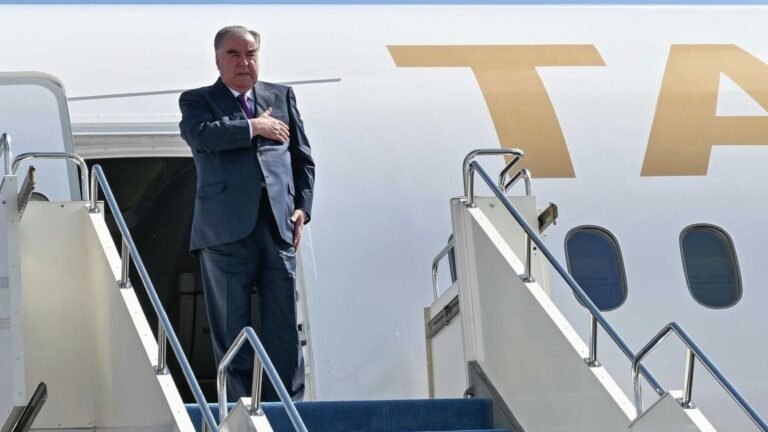
According to the Eurasianet portal, Tajikistan, a resource-limited Central Asian state, is trying to create an image of a tough fight against terrorism following the attack in late March on a concert venue in Moscow, during which Tajik militants are accused of killing more than 140 people. However, the government’s actions appear to be aimed at addressing the symptoms of an internal problem rather than the disease itself.
The terrorist tragedy on March 22 triggered a wave of retribution against Tajik citizens in Russia and brought the regime of President Emomali Rahmon unwanted attention, reminding the world of its numerous governance shortcomings. Rahmon’s efforts to mitigate the damage include a mix of denial and a “sweep of ordinary suspects” approach, which does not address the root causes of economic and social discontent fueling the spread of radical Islamic ideas in the country. Rahmon’s reflexive response to the involvement of Tajik citizens in the attack was denial. In a phone call with Russian leader Vladimir Putin on March 24, the President of Tajikistan downplayed the notion that conditions in the poorest country in Central Asia had any relation to the events in Moscow. “Terrorists have no nationality, no homeland, and no religion,” Rahmon told Putin.
Highlighting Tajikistan’s response, reports emerged on April 4 that China would assist Tajik authorities in implementing the second phase of the “Safe City” project, which involves equipping the capital of Tajikistan, Dushanbe, with surveillance cameras. As a result of the first phase of the project, over 800 surveillance cameras were installed throughout the city. The second phase will expand surveillance capabilities in Dushanbe, Chinese broadcaster CGTN reported, and will extend the project to other urban centers in Tajikistan. Meanwhile, the official Tajik news agency Khovar reported on April 17 that the Ministry of Internal Affairs is conducting an information campaign in several districts of Dushanbe, including Firdavsi, Sino, and Shohmansur. The report indicated that authorities are seeking to compel people to comply with the government and are not interested in gathering information about conditions on the ground. “The public has been called to patriotism, self-awareness, and reverence for the highest national values,” the Khovar report stated.