News
AFGHANISTAN POLITICS
Why is Russia planning to exclude the Taliban from the list of terrorist organizations?
According to Radio Ozodi, Moscow is preparing to remove the Taliban movement from the list of terrorist organizations. The authorities of Tajikistan have not yet officially supported relations with the Taliban government and maintain a critical stance towards them. Will Moscow’s position affect the Tajik authorities’ attitude towards the Taliban, and what do they think […]
According to Radio Ozodi, Moscow is preparing to remove the Taliban movement from the list of terrorist organizations. The authorities of Tajikistan have not yet officially supported relations with the Taliban government and maintain a critical stance towards them. Will Moscow’s position affect the Tajik authorities’ attitude towards the Taliban, and what do they think about the possible decision of the Kremlin in Dushanbe?
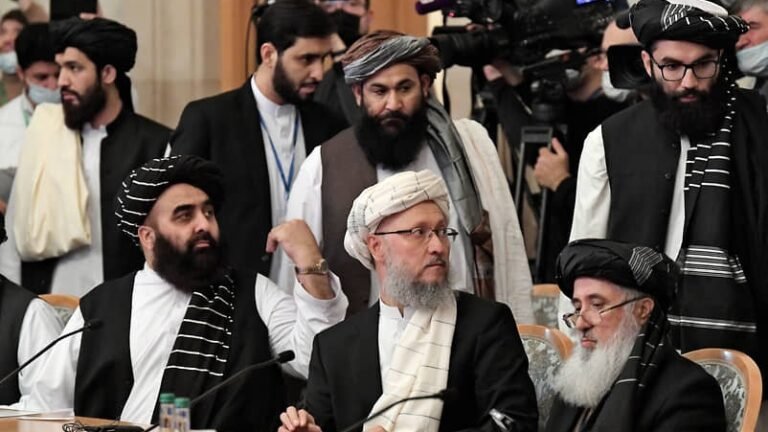
The possibility of removing the Taliban movement from the list of terrorist organizations in Russia was reported as early as early April, citing a statement from the Russian Foreign Ministry. The foreign policy agency noted at that time that the final decision on this issue would be made by the political leadership of Russia. The decision is being discussed against the backdrop of the upcoming “Russia – Islamic World” forum in Kazan in May, which will also include members of the Taliban government.
Meanwhile, the authorities of Tajikistan remain the only ones in the region that officially distance themselves from establishing political cooperation with the Taliban government, while maintaining economic ties with Afghanistan.
Moscow’s Motives
The head of the Center for Afghan Policy Studies, Andrey Serenko, notes several reasons that he believes explain Moscow’s motives:
Andrey Serenko. “The first reason is that Moscow has no remaining allies and friends who would represent its interests in Afghanistan. Therefore, it hopes to find such friends, possibly within some factions of the Taliban….
The second reason is disappointment in last year’s contacts with representatives of the Taliban opposition… apparently, in Moscow, after communicating with them, they did not see any real strength or prospects…
The third reason is the growing threat from ISIS and the Afghan branch of ISIS. Moscow has no options left but to prepare for possibly conducting operations against ISIS on Afghan territory itself. And for this, it will need the Taliban’s consent…”
In February 2003, the Supreme Court of Russia recognized the activities of the “Taliban” as terrorist and banned it on the territory of the country. The decision was made at the request of the Prosecutor General’s Office of Russia based on materials from the FSB. Over the past 20 years, Moscow’s attitude towards this movement has changed as they returned to power in Afghanistan.
Parviz Mullodzhanov. “Today, Russia is trying to unite around itself a large part of anti-Western forces, which includes the ‘Taliban’. Moscow is trying to raise its prestige in the Muslim world and strengthen its positions in the southern direction,” says independent political analyst from Dushanbe Parviz Mullodzhanov. According to him, establishing relations with the Taliban allows for the opening of new trade routes to southern seas, and in this regard, Moscow’s position coincides with that of some post-Soviet countries, and possibly, Russia will seek to legitimize the Taliban in the post-Soviet space.
Criticism and Cooperation
At the end of 2023, the authorities of Kazakhstan announced the removal of the “Taliban” from the list of banned organizations, explaining the decision by stating that according to the UN Security Council resolution, this movement is not included in the list of terrorist organizations. The governments of Uzbekistan, Turkmenistan, and Kyrgyzstan are actively engaging with the “Taliban” at the level of foreign ministries. The agenda includes issues of humanitarian aid, cooperation in the transport and logistics sector, hydropower, security, etc. All countries in the region are urging the “Taliban” to form an inclusive government that includes all ethnic groups, to respect human rights, particularly women’s right to education, etc. This is especially emphasized by the leadership of Tajikistan, which has no diplomatic relations with the “Taliban” and supports the anti-Taliban resistance led by Ahmad Masood.
At the same time, the authorities of Tajikistan continue to export electricity to Afghanistan, restore cross-border trade with this country, and according to various reports, are conducting secret negotiations with the “Taliban” aimed at eliminating groups recognized as terrorist in Tajikistan from Afghan territory.
How will Dushanbe respond to Moscow’s decision?
Orientalist and journalist Kosim Bekmuhammad notes that considering the allied relations of the countries in the region with Moscow within many organizations, the decision of the Russian authorities to remove them from the terrorist list may increase the expectations of the Taliban from the countries in the region. “In this regard, the ‘Taliban’ may use the presence of terrorist groups in the northern regions of Afghanistan to exert pressure on Central Asian countries, including Tajikistan.”
“Naturally, Tajikistan, with its consistent position on this issue, will not welcome such an initiative from Russia,” says Bekmuhammad. According to him, there are no guarantees that after such a decision, the “Taliban” will sever ties with the terrorist organizations present in Afghanistan, with which they share common ideology and values.
According to Parviz Mullodjanov, the authorities of Tajikistan will consider the position of their allies, but this will not lead to trust in this movement. “There is a position that economic feasibility will change the ‘Taliban’ from within and they will not allow Central Asian jihadists to take any active steps. But in Tajikistan, there is less trust in this position,” says Mullodjanov.
Overall, the interlocutors of Radio Ozodi agree that the removal of the “Taliban” from the list of terrorist organizations may legitimize the brand and methods of this movement in the post-Soviet space, especially in the minds of radicalized citizens.