News
AFGHANISTAN CENTRAL ASIA
Tajikistan opposed the participation of the Taliban in the work of the SCO
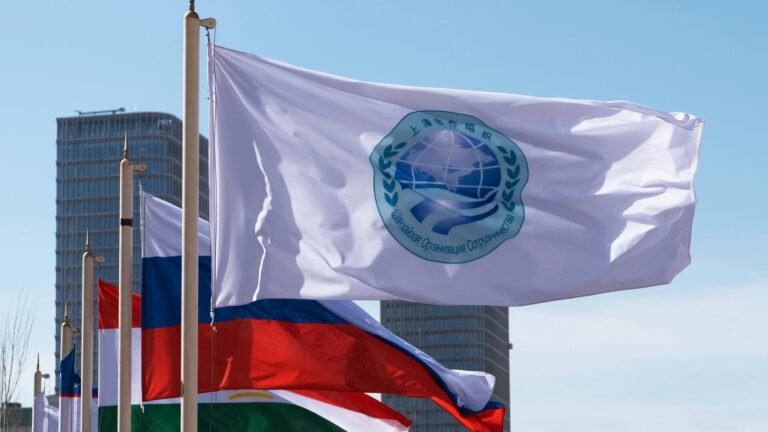
The majority of participants in the Council of Foreign Ministers of the member states of the Shanghai Cooperation Organization (SCO) supported the resumption of the SCO-Afghanistan group. Only Tajikistan disagrees with this, said Zamir Kabulov, director of the second Asia department of the Russian Foreign Ministry, in an interview with RIA Novosti on June 11. […]
The majority of participants in the Council of Foreign Ministers of the member states of the Shanghai Cooperation Organization (SCO) supported the resumption of the SCO-Afghanistan group. Only Tajikistan disagrees with this, said Zamir Kabulov, director of the second Asia department of the Russian Foreign Ministry, in an interview with RIA Novosti on June 11.
According to him, the issue of resuming the work of the SCO-Afghanistan group was recently discussed at the Council of Foreign Ministers of the SCO member states (May 20-21, 2024, in Astana). “Russia and the majority of participants in this event supported the resumption of this contact group’s work. Certain doubts on this matter remain among our Tajik partners, but we hope that in the near future they will also soften their position,” Kabulov said.
A year ago, the leadership of the Taliban stated that their representatives have the legitimate right to participate in the summits of the Shanghai Cooperation Organization (SCO). “The Islamic Emirate of Afghanistan (the name used by the Taliban for the state) welcomes such meetings to improve coordination aimed at ensuring regional security and developing cooperation, and also considers Afghanistan’s participation (which is an observer in the organization) in such meetings to be its legitimate right,” – the Taliban stated at that time.
According to the Taliban, the absence of representatives of the Afghan authorities at SCO meetings is an obstacle “to comprehensive coordination of actions to counter security challenges, combat drug trafficking, provide humanitarian assistance to the Afghan population, and implement infrastructure projects.”
Before the Taliban came to power in Afghanistan in 2021, the country participated fully as an observer in the work of the SCO, including previous leaders of Afghanistan attending the summits of this organization. Attempts to resume the work of the SCO-Afghanistan group and thus open the way for their participation in the SCO are taking place against the backdrop of certain steps taken by some SCO members. For instance, China has long resumed the activities of its embassy in Kabul, sent high-level delegations there, and hosted Taliban representatives in Beijing. At the end of May, it was reported that the Russian Foreign Ministry and the Ministry of Justice informed President Vladimir Putin that the Taliban could be removed from the list of banned organizations.
President Putin later stated at his press conference that it is necessary to consider reality and somehow build relations with the “Taliban,” as this group is currently in power in Afghanistan. On June 3, 2024, President of Kazakhstan Kassym-Jomart Tokayev announced that Kazakhstan has already removed the “Taliban” from its list of terrorist organizations in order to develop economic cooperation with the Taliban-controlled government of Afghanistan. “Kazakhstan has removed the Taliban regime from the terrorist list, based on the importance of developing trade and economic cooperation with modern Afghanistan and understanding that this regime is a long-term factor,” Tokayev stated.
In this situation, Tajikistan remains one of the few countries that has chosen to refuse recognition of the Taliban regime and cooperation with them, until the new rulers of Afghanistan, as stated by President of Tajikistan Emomali Rahmon, create an inclusive government that represents all ethnic groups, especially the Tajiks of Afghanistan, who are estimated to make up 46% of the population of the neighboring country. It should be noted that Tajikistan, as a founding member of the SCO, can hinder the resumption of the SCO-Afghanistan group’s activities.
What is the SCO – Afghanistan group?
The establishment of the Contact Group “SCO – Afghanistan” was motivated by the concerns of SCO countries regarding the negative developments in Afghanistan and the intention to establish a specific consultative dialogue with Kabul. The relevant Protocol was signed on November 4, 2005, in Beijing. The group’s task was to develop proposals and recommendations for cooperation on issues of mutual interest, and its activities were defined in the form of consultative meetings based at the SCO Secretariat or the Afghan embassy in Beijing. The composition of the Group was to be formed from the Permanent Representatives of member states at the SCO Secretariat, officials of the Secretariat, and senior diplomats from the embassy. It was also noted that the cessation of the group’s activities could only occur by mutual agreement.
On May 15, 2006, the SCO Foreign Ministers’ Decision approved the Regulations for the work of SCO representatives in the contact group, which, among other things, noted that at its meetings, SCO representatives speak from agreed positions, and if there are objections from one member state regarding a particular position, it is considered unagreed and is not brought to the Group’s meetings…
In 2011, Afghanistan applied for observer status at the SCO, bypassing the dialogue partnership stage. A positive decision on this matter was made at the Council of Heads of State on June 7, 2012, in Beijing. In this context, the Secretariat sent a conclusion on the legal status of the Contact Group to the parties. It noted that the documents regulating the Group’s activities do not provide for its termination upon Afghanistan receiving observer status at the SCO, and the Group can continue its work. Moreover, its activities are actually in line with paragraph 4.1 of the Rules of Interaction of the SCO with Observers dated May 15, 2006, regarding the establishment of Joint Committees or Liaison Groups with observers. On July 14, 2021, the first meeting of the foreign ministers of SCO member states and Afghanistan took place in Dushanbe within the framework of “SCO – Afghanistan.” In August of the same year, power in Afghanistan passed to the Taliban.