News
SOCIETY
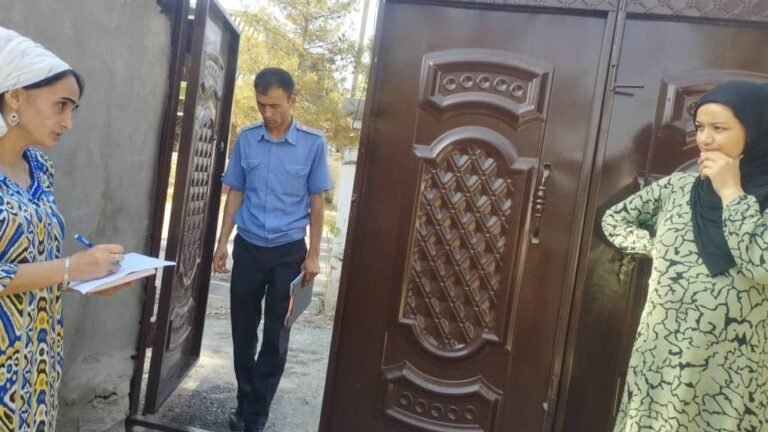
House-to-house visit by members of the NDP in the Farhor district
The ruling People’s Democratic Party of Tajikistan is conducting apartment and house visits to residents. As reported by the ruling People’s Democratic Party of Tajikistan (PDPT) on its Facebook page, a group of government members and civil servants, who are members of this party, is conducting apartment and house visits to residents to implement the […]
The ruling People’s Democratic Party of Tajikistan is conducting apartment and house visits to residents.
As reported by the ruling People’s Democratic Party of Tajikistan (PDPT) on its Facebook page, a group of government members and civil servants, who are members of this party, is conducting apartment and house visits to residents to implement the instructions and directives of the party chairman Emomali Rahmon. One of Rahmon’s directives is to explain to residents the ban on wearing “clothing foreign to the national culture.”
At a meeting with residents, representatives of the authorities urged the residents of the Farhor district to honor the national culture and wear national clothing in public places. The authorities also explained to residents to refrain from promoting superstitions and foreignness. However, they did not clarify what specific clothing is considered national clothing and what they meant by promoting superstitions.
Additionally, other PDPT pages on Facebook have published a large number of posts in recent days about the progress of explanatory work on wearing national clothing.
However, previously published videos online show how representatives of the authorities force women in hijabs to remove their headscarves and tie them, as they expressed, “in Tajik style.”
Earlier, on May 8, the Parliament of Tajikistan amended the law “On the Regulation of Traditions and Rituals,” which prohibits “the import, sale, and wearing in public places of clothing foreign to the national culture.”
On June 19, the Upper Chamber of the Parliament of Tajikistan adopted these amendments, after which President Rahmon signed the bill.
Experts note that the strict position of the Tajik authorities regarding Islamic values may lead to serious consequences. The forced removal of hijabs from women and shaving of beards from men, in their opinion, will only increase tension in society, as the ban on wearing “clothing foreign to the national culture” primarily targets Muslim clothing and hijabs, rather than other types of clothing that are far from Tajik culture. Since the majority of Tajikistan’s population are Muslims, such measures may provoke growing discontent among the population. As a result, this discontent could lead to the emergence of extremist and terrorist groups, further exacerbating the situation in the country.