News
HUMAN RIGHTS RUSSIA
Head of Rosobrnadzor urged not to admit students to school without knowledge of the Russian language
The percentage of migrants who did not pass the Russian language exam increased from 3% to 30% from January to May 2024, the Ministry of Education and Science reported on July 3. In April 2024, migrant assistance centers lost the right to conduct Russian language exams. Previously, they could do this on behalf of Russian universities. At the request of the Ministry of Education and Science, contracts with them were terminated.
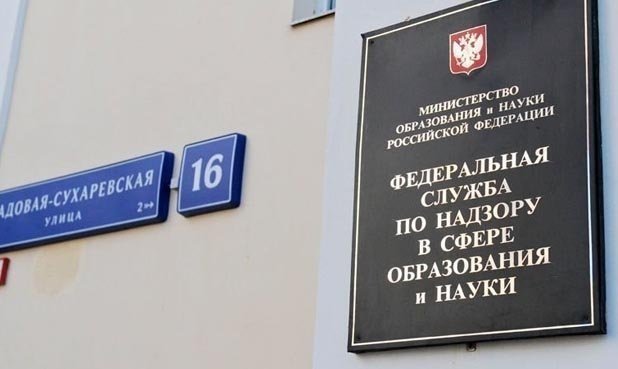
Students admitted to Russian schools should possess the necessary knowledge of the Russian language, said in an interview with RBC the head of the Federal Service for Supervision in Education and Science (Rosobrnadzor) Anzor Muzaev. “I am radical. If you come here with your family and plan to become a citizen or live temporarily, if you want your children to receive an education in this country, they must have a certain level of language knowledge,” Muzaev stated.
In his opinion, migrant families rarely “decide to pack their bags and move to another country in a week,” so they can prepare for the move, including learning the language. “If we take Central Asia, a lot of funds have been allocated for the construction and functioning of Russian schools and Russian language centers. Therefore, children from families who have moved to Russia for permanent residence should learn the language before they come to school,” Muzaev is convinced. According to the head of Rosobrnadzor, if such requirements are not set, it will be impossible to respect and teach the Russian language.
According to the Constitution, in Russia “everyone has the right to education,” and the accessibility and free provision of preschool, basic general, and secondary vocational education in state or municipal educational institutions and enterprises is guaranteed.
This provision was previously criticized by the head of the Human Rights Council. “No child who does not know the Russian language should be enrolled in school,” said in June the chairman of the Human Rights Council Valery Fadeev. Before that, he called for updating legislative norms so that children who do not know the Russian language could not be admitted to schools and that Russian language education could be required in a specialized center.
In the interview with RBC, Muzaev also mentioned that discussions are ongoing about the return of the speaking skills test in the Russian language exam for migrants. “There is an important point regarding video recording. For example, if in court or other proceedings a foreigner claims not to know the language, but has taken the exam with video recording, this material can be used to understand their actual level of knowledge,” Muzaev explained.
This part was removed from the exam in 2021. The former rector of the A.S. Pushkin Institute of the Russian Language, Natalia Trukhanovskaya, suggested in the RBC interview to reinstate it. “Verbal live communication is the main guarantee that a future labor migrant will be able to adequately perform professional tasks and socialize in society. It is not so important whether they know the history of Russia or how quickly they can find Red Square on a map of Moscow. They must understand spoken Russian, the instructions given to them at the workplace, and they should be able to express their thoughts both in professional communication and in everyday situations,” Trukhanovskaya noted.
The percentage of migrants who did not pass the Russian language exam increased from 3% to 30% from January to May 2024, reported the Ministry of Education and Science on July 3. In April 2024, migrant assistance centers lost the right to administer Russian language exams. Previously, they could do this on behalf of Russian universities. At the request of the Ministry of Education and Science, contracts with them were terminated.