News
POLITICS SOCIETY
Usmonzoda planned to overthrow President Rahmon? – experts’ opinion
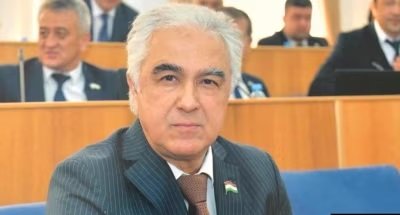
The Prosecutor General’s Office of Tajikistan reported in June that Saidjafar Usmonzoda, now a former member of parliament and ex-leader of the country’s Democratic Party, was detained on suspicion of attempting to seize state power. The official statement released on this matter notes that “to implement his criminal plan, Usmonzoda recruited his supporters from various […]
The Prosecutor General’s Office of Tajikistan reported in June that Saidjafar Usmonzoda, now a former member of parliament and ex-leader of the country’s Democratic Party, was detained on suspicion of attempting to seize state power. The official statement released on this matter notes that “to implement his criminal plan, Usmonzoda recruited his supporters from various social strata within the country and abroad, and requested $10 million from a representative of one of the foreign countries to incite the population to protests.”
Almost immediately, several well-known figures in the country were also detained along with Usmonzoda. It is unclear whether these detentions are connected, but residents do not rule out a planned attempt at a coup.
“Is it time?”
But is a coup attempt possible in the current realities of Tajikistan?
Political scientist Aziz Nurulloev, residing in the USA, believes that “within groups that hold certain influence in the country, there has long been a demand for change in the existing socio-political situation, as the monopolization of all the country’s resources is not just in the hands of individuals from one region, but of one clan, somehow connected to the president, which creates a natural ground for conflicts of interest.”
However, Temur Umarov, a researcher at the Carnegie Center in Berlin studying Russia and Eurasia, doubts the possibility of a coup. In his opinion, authoritarian states often use such accusations to eliminate either undesirable individuals, or those who pose a threat to the state, or those who possess important or secret information. “Here, it is more likely that there was some agreement that failed to materialize, and therefore Usmonzoda, who has always been loyal to the regime of Emomali Rahmon, simply became unnecessary,” Umarov believes.
Aziz Nurulloev points out that “in the current political climate in Tajikistan, there is not a single person or group that has shown independence. And among the recently detained well-known figures, there were none. If they could not challenge the system during their peak of influence and political power (for example, Iskandarov, Zarifi, Salimov, and others), then now, when they have lost their former might, it is unlikely to be possible,” he said.
Other local analysts also agree that none of the detainees have the political influence or social base to claim power. However, a political expert who wished to remain anonymous stated that “extraordinary conditions and circumstances can prompt even unknown individuals to take unexpected actions.”
It is worth recalling the former chairman of the Democratic Party Mahmadruzi Iskandarov, the leader of the unregistered party “New Tajikistan” Zayd Saidov, the head of the Social Democratic Party Rahmatillo Zoirov, or the leader of the unregistered party “Tarakkiyot” Sultan Kuvvat, who did not pose a significant threat to the government of Emomali Rahmon, but the authorities did everything to remove them from the political arena or send them behind bars. “Usmonzoda, as the leader of the Democratic Party and a member of parliament, if he were to shift his loyalty from Rahmon to protest against his actions, could step onto the stage and quickly become a public leader capable of changing the situation,” says this analyst, noting that this would be possible “with external assistance.”
External Hand?
Sharofiddin Gadoev, deputy chairman of the banned National Alliance of Tajikistan – an organization that unites opposition parties and movements abroad, stated in an interview with Radio Ozodi a day after Usmonzoda’s detention about the involvement of a certain Russian general, who allegedly suggested that Saidjafar Usmonzoda take on the role of leader of a new government, as “Russia wanted to form a new government in Tajikistan,” and this fact allegedly contributed to Usmonzoda’s change of position. However, Temur Umarov believes that it is not in Moscow’s interest to jeopardize stability in Tajikistan and “to replace Rahmon, who has long known Putin and trusts him sufficiently.”
Unlike Umarov, Russian expert Andrey Serenko does not rule out the possibility of “internal power struggles” and preparations for a change at the top through a power transition from father to son, although he denies Moscow’s involvement in what is happening in Tajikistan. According to him, he has heard that Moscow discussed the readiness of Rustam Emomali to take his father’s place, but nothing more. “I don’t know why, but in this case, it is said that Rahmon’s plan for a power transition may not have fully satisfied Moscow. At the moment, everyone understands that sooner or later Rahmon will leave, and there is an understanding that this process should be not spontaneous, but organized, sequential, and rational,” says Andrey Serenko.
Serenko acknowledges the decline of Russia’s influence in Central Asia since the beginning of the war in Ukraine and suggests that it is quite possible that Russia’s rivals, and “even its friends,” want to shape a new future for this region, and from Moscow’s perspective, “the ruling elite led by Rahmon is the weakest link in the chain of Russian influence in the region.”
Long-serving Ministers Worried?
However, Nurulloyev links the news of the recent arrests of prominent figures to inter-agency rivalry or struggles between factions in power. Another expert from Dushanbe, who agreed to share his opinion on condition of anonymity for security reasons, believes that “some long-serving ministers are concerned, as the transfer of power from father to son means a change in the composition of the government. But it is unclear how these changes will occur, and the arrests of Hamrokhon Zarifi and Akbarsho Iskandarov are the cause of their anxiety.” When asked to clarify that these are “former officials” who have long been out of power, the expert said that “the purpose of the arrests is to clear all space around Rustam, so that no figure could be more influential than him.”
Meanwhile, a source close to the investigation, speaking on condition of anonymity, told Radio Ozodi on July 2 that during the investigation, Usmonzoda named dozens of people as his accomplices in the attempted coup, which led to their summons for questioning. Investigators arranged a confrontation between some of them and Usmonzoda, and he told them to their faces, “Don’t you remember how you consulted with each other?” However, these individuals denied any involvement in negotiations about the coup and change of power. One of the mysterious aspects of the case: while authorities have always circulated the theme of an attempted coup in the past, this time the case has taken a covert turn. A month has passed since Usmonzoda’s arrest, but authorities have not provided any new details about the case.