News
ENVIRONMENT
Tajikistan will receive 8 billion dollars to combat climate change
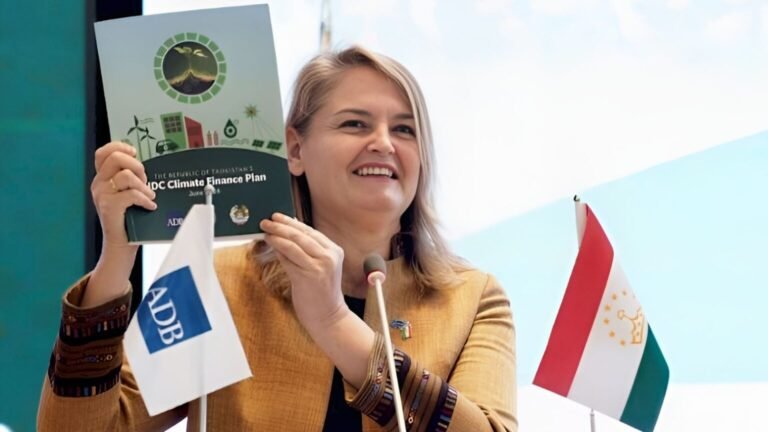
The Asian Development Bank and the Committee for Environmental Protection under the Government of the Republic of Tajikistan presented a Climate Financing Plan amounting to 8 billion dollars. According to media reports, the project aims to achieve the country’s targets under the nationally determined contributions (NDC) by 2030. The plan adopted by the Asian Development […]
The Asian Development Bank and the Committee for Environmental Protection under the Government of the Republic of Tajikistan presented a Climate Financing Plan amounting to 8 billion dollars.
According to media reports, the project aims to achieve the country’s targets under the nationally determined contributions (NDC) by 2030.
The plan adopted by the Asian Development Bank and the Committee for Environmental Protection of Tajikistan provides for the necessary investments for climate change adaptation and mitigation of its effects in the country.
As one of the most vulnerable countries to climate change in Central Asia, Tajikistan faces significant climate risks that could lead to irreversible economic, social, and environmental damage.
According to the Asian Development Bank, the main climate risks in Tajikistan include glacier melting, which affects irrigation and hydropower, increased flooding, lack of food security, drought, damage to critical infrastructure due to rising temperatures, and deforestation.
The bank states that funding of 8 billion dollars will be required by 2030.
The ADB Director in Tajikistan, Ms. Shanni Campbell, emphasized the urgency.
“As one of the most vulnerable countries to climate change in Central Asia, Tajikistan faces significant climate risks that could lead to irreversible economic, social, and environmental damage. The impact on rural communities, which make up the majority of the population, will be most severe, especially on women, the elderly, and children,” she noted.
Tajikistan has been attracting billions of dollars for environmental projects for years, including combating climate change, protecting the environment, and developing agriculture. However, it is unclear whether these funds are being used for their intended purposes. Experts believe that obtaining grants and funding for environmental projects is a profitable business for officials in Tajikistan.
Earlier, in 2009, the British auditing and consulting firm Ernst & Young published a scandalous audit of the National Bank of Tajikistan. According to the report, the former chairman of the National Bank and ex-deputy prime minister of Tajikistan, Murodali Alimardon, was involved in the misappropriation and embezzlement of over 850 million dollars. However, the government of Emomali Rahmon did not hold Alimardon accountable, and international financial organizations did not demand compensation for the damage caused.