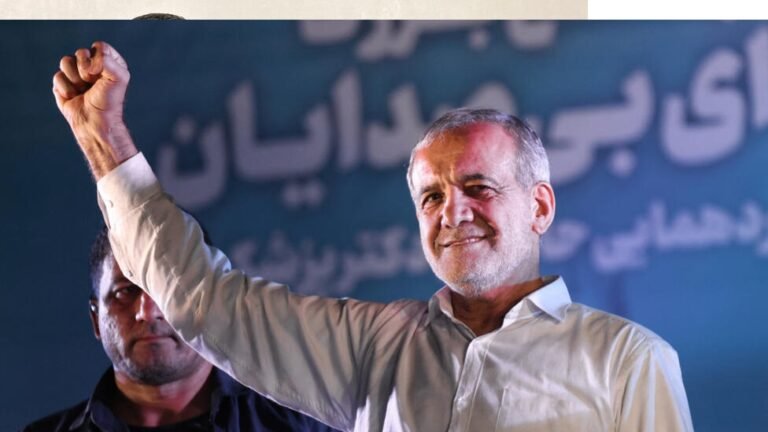
Two weeks ago, Iran elected a new president – reformer Masoud Pezeshkian. His victory came as a surprise to many (he faced strong candidates from the conservatives) and raised many questions.
Why did he win despite the predictions of not only foreign experts but also politicians and analysts within Iran? How much influence will reformers have on Iran’s domestic and foreign policy? What will be the priorities of Pezeshkian’s government in foreign policy? What is the place of Central Asia and Tajikistan in this policy?
The majority of analysts did not predict Masoud Pezeshkian’s victory because both the presidency and parliament were in the hands of conservatives, and many were convinced that reformers would not have enough time to prepare before the early elections. However, the results of the first round, where the relatively unknown Pezeshkian received more votes than the main conservative candidates Saeed Jalili and Mohammad Bagher Ghalibaf, changed the opinions of many both inside and outside Iran. The overall outcome surprised everyone – such was the will of the voters.
What are the reasons for this unexpected victory?
Pezeshkian began his election campaign with the slogan “For Iran” and reformist rhetoric; in his program, during television debates, and in meetings with voters, he promised to revive the “Barjam” or “Comprehensive Joint Action Plan” (nuclear agreement), improve Iran’s relations with the international community, including the West; and join the Financial Action Task Force (FATF) to combat money laundering. He also advocated for social freedoms, called for an end to internet restrictions, and for the expansion of women’s rights, specifically condemning the repression for improper hijab wearing and criticizing the Iranian morality police, etc.
Moreover, he spoke openly in a simple, ordinary, and relatable language. His team worked better and more actively with the “internet generation,” which differs in worldview and values from the middle and older generations, and achieved results. Additionally, many felt a sense of solidarity with the reformist candidate due to his opposition to conservative rivals, as he stood alone against them in the debates. Furthermore, Pezeshkian and his team, with a clear program, managed to gain the support of ethnic and religious minorities, which became the foundation of his victory.
Restoration of public trust in elections
Another significant point is that in the current complex regional and international situation, it is important for Iran that the people participate in the elections, as the protest movements in recent years have negatively affected the participation of certain segments of society, especially the youth and women. The round-the-clock anti-Iranian propaganda of Western media, especially Persian-language channels like BBC and Iran International, and calls for a boycott of the elections raised concerns that the elections could become the least significant in Iran’s history. In fact, in the first round of the elections, 39.9% of voters participated – less than in previous years. However, when people saw that their votes were indeed counted, their trust in the elections and desire to participate in the fate of the country and nation returned. The nearly 50% voter turnout in the second round is clear evidence of this reality.
Challenges Facing Pezeshkian
It is also important to note another key point. Pezeshkian is the first president of Iran with a margin of less than 10% against his opponent. If he had received the votes of an absolute majority of voters, he would have faced fewer problems in forming a government and addressing other issues. But now he will have to consider the interests of about 14 million conservative supporters. If he does not do this and does not include representatives of various political and social groups in his government, he will face difficulties. If the Iranian parliament, which is almost entirely composed of conservatives, does not approve the ministers proposed by the president, he will not be able to form a government.
Typically, the consideration and approval of ministerial candidates in Iran is accompanied by heated debates in parliament, especially if the proposed candidates belong to the opposing camp. In addition to this point, in the first round, 60% and in the second round, 50% of voters did not vote, which is a serious signal for the new president of the country. If Pezeshkian can fulfill at least half of the promises made during the election campaign, he will be able to restore broader public trust in the government and the system. This moment is especially important for Iran in the current complex regional and international situation.
Foreign Policy Priorities of Pezeshkian
Many expect that with the arrival of a reformist president, Iran’s foreign policy will change significantly. This expectation is not entirely realistic, as the foreign policy of this country is shaped in several centers, the main one being the Supreme National Security Council. Although the chairman of this council is the president, its members also include high-ranking officials in the fields of politics, armed forces, security, and judiciary, who have significant influence in Iran’s political system. The decisions of this council are implemented only after approval by the Supreme Leader of Iran. Therefore, the role of the president in decision-making is more executive than independent.
Pezeshkian promised dialogue and interaction with the world, primarily with Western countries, which have yet to congratulate the new president of Iran on his victory. How smooth this path will be for Pezeshkian undoubtedly depends on the collective will of Iran’s ruling elites, and perhaps at a tactical level, the opportunity for the return of a reformist president will be used to gain concessions from the West. However, in this context, one event occurred that explains a lot. In the corridors of the SCO summit in Astana, acting president of Iran Mohammad Mukhbir met with Russian President Vladimir Putin and conveyed a message from Iran’s Supreme Leader stating that the coming and going of governments (presidents) will not affect the relations between the two countries. Therefore, under Pezeshkian’s presidency, it is likely that Iran’s foreign policy priorities will not undergo significant changes, with a preference for developing cooperation with traditional partners, primarily Russia and China, as well as neighboring countries, Islamic states, and countries moving in the same direction as Tehran.
Pezeshkian, Central Asia, Tajikistan
Undoubtedly, Iran has a special approach and strategy towards our region, but unlike some countries, it is not presented in the form of a separate document outlining Tehran’s goals and priorities. Nevertheless, Iran has always been an important player in Central Asia. Naturally, if it were not for Western sanctions, Iran, relying on its cultural and historical influence, modern achievements in scientific, technological, industrial, medical, and other fields, could play a more active role.
But, of course, there are other factors.
Central Asia is one of the few regions where Iran clearly takes into account Russia’s interests, and it seems that it does not currently view China’s growing influence in Central Asia as contradictory to its own interests. After all, the presence of these two important players makes the region more predictable and secure for Iran in terms of external threats. It should be noted that under the leadership of reformist presidents, Iran’s attention to Central Asia has weakened. This is also confirmed by statistics; for example, if in 2013, under conservative President Mahmoud Ahmadinejad, Iran’s trade exchange with Central Asian countries amounted to over $6 billion, by 2019, under reformist Hassan Rouhani, it had decreased to $675 million.
Interestingly, last year, under conservative President Saeid Ebrahim Raisi, trade turnover with our region reached about $3.5 billion, indicating a return to positive dynamics in Iran’s cooperation with Central Asia. It is worth mentioning that just a few years ago, trade turnover between Tajikistan and Iran was less than $100 million, while in 2023 it grew to $270 million. Saeid Ebrahim Raisi made his first official foreign visit in September 2021 after his election to Tajikistan, highlighting the recognition of our country’s significance to Iran.
It should be noted that Pezeshkian is a moderate representative of the reformist camp and, considering the experience of bilateral relations between Iran and Tajikistan, which have had their ups and downs, he will act thoughtfully and in accordance with the common interests of the two friendly and brotherly countries. In other words, it can be said that Iran’s strategic vision regarding Tajikistan is essentially close to the message conveyed by Muhammad Mukhbir to Vladimir Putin.