News
HUMAN RIGHTS TAJIKISTAN
Abdullo Gurbati: a symbol of courage and the pursuit of justice
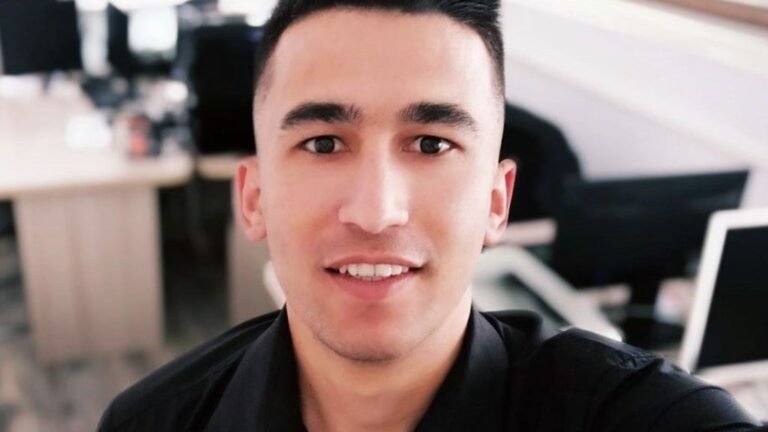
In a dictatorial regime, journalism becomes a dangerous profession that requires courage and persistence. In Tajikistan, where freedom of speech is under threat, journalists like Abdullo Gurbati become symbols of the struggle for truth and justice. Abdullo is celebrating his 27th birthday behind bars, serving an unjust sentence for his professional activities. What should a […]
In a dictatorial regime, journalism becomes a dangerous profession that requires courage and persistence. In Tajikistan, where freedom of speech is under threat, journalists like Abdullo Gurbati become symbols of the struggle for truth and justice. Abdullo is celebrating his 27th birthday behind bars, serving an unjust sentence for his professional activities.
What should a journalist be like?
To this question, people with normal morals and a sense of dignity usually respond similarly. A journalist should possess the following qualities:
1. Courage and persistence: In conditions of pressure or threats, a journalist must show bravery and not deviate from their principles.
2. Love for their country: A journalist who loves their country strives for its good, exposing abuses and helping society improve.
3. Striving for justice: Such a journalist cares about the fate of society, fights for the rights of the oppressed, and draws attention to injustices.
4. Social responsibility: Awareness of their role in society and influence on public opinion obliges a journalist to act responsibly.
Now imagine such a journalist in Tajikistan. Would they be able to embody all these qualities and work as a true professional? The answer to this question is evident in the example of Abdullo.
Abullo Gurbati — a symbol of the struggle for truth
Gurbatiy Avezmad Umaralievich, a 27-year-old journalist known by his pseudonym Abdullo Gurbati on social media, criticized corruption and abuses of power. His activities did not go unnoticed. On June 15, 2022, he was detained by prosecutors in the Shohmansur district of Dushanbe. A criminal case was opened against Abdullo under three articles of the Criminal Code of Tajikistan:
1. Public insult of a representative of authority (Art. 330, Part 1): Abdullo was accused of insulting a representative of authority while performing his official duties.
2. Use of violence against a police officer (Art. 328, Part 1): He was also charged with violence that is not dangerous to life or health, or the threat of violence.
3. Participation in an extremist community (Art. 307(2), Part 2): The journalist was accused of participating in an extremist organization.
Abullo Gurbati was summoned for questioning as a witness on June 15, 2022, at the Department of Internal Affairs-1 of the Shohmansur district in Dushanbe. Upon exiting the building, he encountered police major Murodov D.J., whom, according to authorities, he allegedly insulted and used violence against. However, Abdullo’s relatives stated that a video recording proving his innocence was not included in the case materials. If this recording had been presented, the groundlessness of the accusations would have been obvious.
The prosecutor claimed that Abdullo, using a pseudonym on social media, published materials containing criticism of the state policy of Tajikistan, which were seen as signs of extremist activity. He was also subscribed to the channel “Azda TV,” which the authorities of Tajikistan associate with the opposition.
Abdullo Gurbati worked in the multimedia department of the media group “Asia-Plus” in Dushanbe. His name was mentioned twice in connection with assaults. In May 2020, Abdullo Gurbati was beaten first in Dushanbe and then a second time in the Khoroson district of the Khatlon region.
The perpetrators of the first attack, as in most cases of journalist assaults, were not found. In the case of the second attack, three residents of Khoroson were found guilty and fined 580 somoni. Abdullo himself linked both incidents to his work.
One of his friends told Radio Ozodi that after these two attacks, Abdullo Gurbati was worried about his safety: “Abdullo really hoped for the support of the journalistic community, and perhaps this hope was too great. After these attacks, he hardly saw his colleagues around, and this greatly disappointed him. Therefore, he constantly felt that someone was following him.”
“Raids in the medical college of the Javan district
Gurbati’s reaction to societal issues differed from most. According to his friends, “he was constructive but sharp.” After the publication of a video about students from one college fleeing forced conscription into the army, known to the public as a “raid,” he wrote a response that later became one of the reasons for his imprisonment.
The Prosecutor’s Office of Tajikistan quoted this statement from Abdullo Gurbati:
“If this nation had someone who cared for it, if this state had a law, if this government had a minister, a Tajik youth would not consider jumping out of a window better than serving (in the army) for the nation and state… Now you can scold me as you wish, but I do not believe in your ‘paradise on earth.’ I do not believe in a national idea, nor in a single minister, nor in a great leader.”
Unjust sentence
The court proceedings took place behind closed doors in the administrative building of the pre-trial detention center No. 1 of the Ministry of Justice of Tajikistan, where Abdullo was found guilty on all three counts. The state prosecution demanded 8 years of imprisonment, but Gurbati was sentenced to 7.5 years. Abdullo did not plead guilty. In his final statement, he declared his innocence and asked the court to issue an acquittal.
Public and international organizations’ reaction
International human rights organizations and Western countries have repeatedly called on the government of Tajikistan to release Abdullo Gurbati and other detained journalists and bloggers, as well as to stop the persecution, threats, and pressure against them. However, the Tajik authorities have not responded to these calls.
“Reporters Without Borders” demands the immediate release of Abdullo Gurbati. President Emomali Rahmon, since 2015, has created an atmosphere of fear in the country, causing journalists who have faced violence and oppression to practice self-censorship out of fear of new reprisals. The situation in the country is now worsening. Tajikistan ranks 152nd out of 180 countries in terms of press freedom.
Abdullo Gurbati is a journalist who, despite repression and threats, continued his work, believing in the importance of truthful and honest journalism. His arrest shows how far the authorities are willing to go to silence those who fight for justice. But their examples inspire others to continue this struggle and not to give in in the face of injustice.
Happy birthday, Abdullo!