News
SOCIETY
Raids on conscripts may no longer occur?
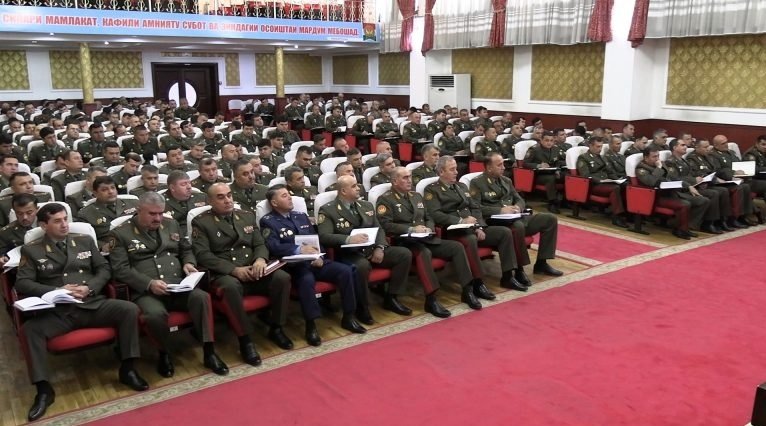
An autumn conscription campaign for the armed forces is starting in Tajikistan. At a meeting of the Ministry of Defense of Tajikistan with the participation of military commissioners from the regions and cities of the country, the head of this agency, Sherali Mirzo, urged his subordinates not to violate the law during the campaign. The […]
An autumn conscription campaign for the armed forces is starting in Tajikistan.
At a meeting of the Ministry of Defense of Tajikistan with the participation of military commissioners from the regions and cities of the country, the head of this agency, Sherali Mirzo, urged his subordinates not to violate the law during the campaign.
The Minister of Defense of Tajikistan, Sherali Mirzo, emphasized that only “healthy and prepared” young people should be sent to the armed forces of the country. He also discussed preventing “illegal conscription methods” and combating offenses, especially those of a “corrupt nature.”
However, the minister did not explain what specific illegal conscription methods should not be allowed.
Sherali Mirzo instructed to take measures to address the issues arising for citizens in connection with the conscription. Military commissariats were tasked, in cooperation with executive bodies of state power in cities and regions, community members, and the public, to conduct explanatory work with young men of conscription age and their parents.
The autumn conscription in Tajikistan is announced from October 1 to November 30 of this year. Young people born between 1997 and 2006 will be called up to the armed forces.
Every year during the conscription campaign, young men of conscription age and their families face difficulties. Employees of military commissariats detain young men right on the streets, in public places, and even in front of universities, forcibly sending them to the army – this method is commonly known as “oblava.”
During conscription seasons, dozens of videos about the course of “oblavas” are published on social networks, showing how military commissariat and law enforcement officials openly and in broad daylight illegally detain young men, yet for years no one has intervened or been able to stop these illegal actions.
Recently, the authorities have devised a number of new pressure tactics to send youth to the army. In particular, authorities condition residents to send conscription-age boys to the military commissariat for military service, or they will close the mosque or cut off electricity to the entire village. Law enforcement agencies have also detained the parents of young men working abroad in temporary detention facilities until their children returned and registered at the military commissariat.
It is unclear whether Minister Sherali Mirzo had these actions of the authorities in mind.
Experts are skeptical about such directives from the Minister of Defense, as they believe that without systemic changes in the work of the Ministry of Defense, the problem cannot be solved with directives alone.