News
SOCIETY
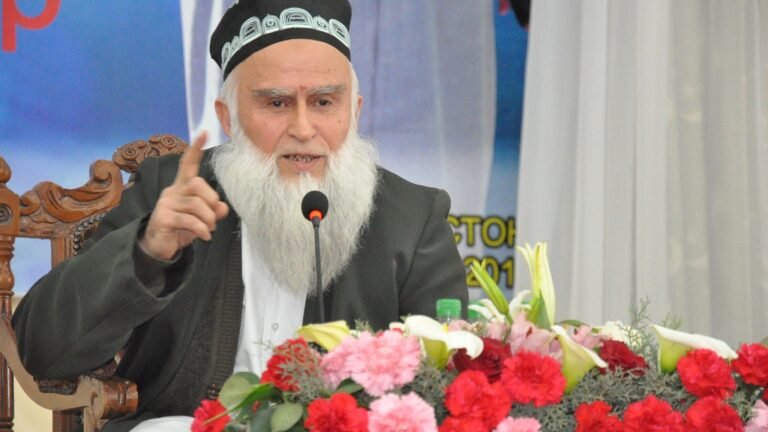
In Dushanbe, the renowned theologian Mawlavi Ablulkhai passed away
Well-known theologian and former high-ranking member of the Islamic Revival Party of Tajikistan Mavlavi Abdulkhay Iskandar has passed away at the age of 84. This information was confirmed on Friday, November 15, by Abdusat tor Boboev, a member of the Supreme Presidium of the IRPT. The IRPT also expressed condolences on its Facebook page, calling […]
Well-known theologian and former high-ranking member of the Islamic Revival Party of Tajikistan Mavlavi Abdulkhay Iskandar has passed away at the age of 84.
This information was confirmed on Friday, November 15, by Abdusat tor Boboev, a member of the Supreme Presidium of the IRPT.
The IRPT also expressed condolences on its Facebook page, calling his passing a loss for the Tajik people, especially for representatives of the intelligentsia.
Mavlavi Abdulkhay Iskandar was born in 1940 in the village of Langari Shah in the Tajikabad district. He received religious education from well-known scholars of that time, including Domullo Vali in the Oktyabrsky district (Bokhtar city), Mulla Abdurrahim Sarfi, and Domullo Dodorzhan in Kurgan-Tyube. Since 1964, he was a student of Mavlavi Muhammadjoni Kukandi (known as Mavlavi Hindustoni).
In 1992, he emigrated to Afghanistan and joined the IRPT. He was the head of the education and training department of the IRPT. After returning from exile, from 1999 to 2011, he was a member of the Supreme Presidium of this party. From 2001 to 2007, he served as the chairman of the scholars’ council of this party.
The deceased was a scholar in the fields of fiqh, hadith, tafsir, sarf, and nahw. According to relatives, he was a good connoisseur of Persian-Tajik literature, particularly the works of Abdulqadir Bedil. Mavlavi Abdulkhay educated many students.
After the ban on the activities of the Islamic Revival Party of Tajikistan, he remained in Dushanbe. Even in the most difficult times, he did not abandon his calling, engaging in the education of students and the public.
As noted in the IRPT’s statement, “he often remembered his imprisoned comrades, wept, and prayed for their release.”