News
POLITICS
Rahmon criticized the judges
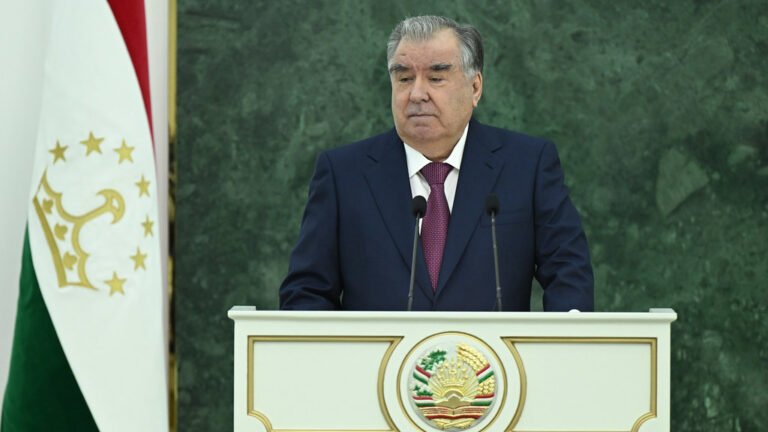
The President of Tajikistan, Emomali Rahmon, criticized the judiciary during a meeting with court officials. On December 5, speaking at the opening ceremony of the new building of the Supreme Court, which was attended by court officials, Rahmon noted the irresponsibility of judges, corruption, and delays in the consideration of cases. During his speech, Rahmon […]
The President of Tajikistan, Emomali Rahmon, criticized the judiciary during a meeting with court officials.
On December 5, speaking at the opening ceremony of the new building of the Supreme Court, which was attended by court officials, Rahmon noted the irresponsibility of judges, corruption, and delays in the consideration of cases.
During his speech, Rahmon highlighted some achievements, including the implementation of judicial and legal reforms, annual increases in funding for the judiciary, salary increases for judges and court staff, material and technical support for courts, and equipping them with modern buildings and equipment.
However, he also pointed out the negligence of judges who unjustifiably return criminal cases for further investigation, fail to provide proper legal assessments of facts, and do not check all circumstances relevant to the case.
Emomali emphasized that there are shortcomings and violations of the law in the administration of justice by the courts, including the adoption of illegal acts, unjustified delays in the consideration of cases, lack of control over the enforcement of court acts, and other deficiencies.
The negligent attitude of judges leads to the incorrect application of laws, the adoption of illegal acts, and ultimately to the annulment of their decisions. For this reason, according to the president, from 2020 to 2023 and in the first nine months of 2024, higher courts annulled more than 1,700 decisions of lower courts and recorded about 1,400 cases of non-compliance with deadlines for case consideration.
During this period, the Supreme Court reviewed 2,320 appeals from citizens regarding the actions of judges and court staff, while the Executive Office of the President recorded 4,332 appeals concerning the actions of judges, delays in case consideration, and dissatisfaction with court acts.
Rahmon acknowledged that citizens file appeals again because their issues were not resolved and their claims were considered unilaterally.
The president also expressed serious concern about cases of offenses, particularly criminal actions by some judges and court staff. He noted that from 2014 to 2024, criminal cases were initiated and investigated against 107 individuals, including 45 judges, deputy judges, and chairpersons of city and district courts, who were sentenced to various terms of imprisonment and excluded from the judiciary. Most of the crimes are of a corrupt nature, including fraud, abuse of office, bribery, and the issuance of unjust sentences by judges and court officials. In the first 10 months of 2024, 26 crimes were recorded against 16 individuals.
Pointing out the shortcomings and violations of the law committed by the courts during the administration of justice, Rahmon noted that over the past year and nine months of the current year, 1008 judicial acts in criminal cases had been canceled or amended nationwide, including 709 acts based on prosecutors’ protests and 299 acts based on cassation and supervisory complaints from convicts, victims, and their representatives.
President Rahmon urged judges and court staff to prevent offenses, pay special attention to the proper placement of personnel, enhance their qualifications and professional training, as well as take decisive measures to prevent and eliminate factors contributing to corruption.
It should be noted that the appointment of personnel in the judicial bodies is the prerogative of Rahmon himself. He is the one who appoints judges by his decree. The residents of the country have also understood this feature of the Tajik judicial system, and in case of difficulties, they turn directly to President Rahmon, understanding that if they have his support, the law is no longer as important.
After the events of 2016, dozens of international and human rights organizations criticized the judicial system of Tajikistan for bribery and corruption. International and human rights organizations also criticized the illegal imprisonment of political opposition representatives, human rights defenders, journalists, and dissenters. Some organizations noted in their reports that in most of these cases, judges admitted that they received instructions from “above” and could do nothing about it.
Experts believe that as long as the judicial system is not completely independent from the executive power, any reforms will not have the desired effect, and the problems of the judicial system will not be resolved.
The dependence of the judicial system on Emomali Rahmon has led to an increase in the number of political cases and political prisoners in the country.