News
SOCIETY
Residents of a village in the Khatlon region drink melted and rainwater
In water-rich Tajikistan, residents drink rainwater due to a lack of drinking water. The Central Asian Bureau for Analytical Journalism CABAR.asia notes in its report that residents of the village of Lolazor in the Vakhsh district of the Khatlon region in southern Tajikistan are suffering from a water shortage. The report, published on January 15 […]
In water-rich Tajikistan, residents drink rainwater due to a lack of drinking water.
The Central Asian Bureau for Analytical Journalism CABAR.asia notes in its report that residents of the village of Lolazor in the Vakhsh district of the Khatlon region in southern Tajikistan are suffering from a water shortage.
The report, published on January 15 of this year, states that the authorities are aware of the problem, but it is unclear when it will be resolved.
The village of Lolazor is located in the foothills of the Vakhsh district, 140 km south of the capital of Tajikistan. The village is part of the Mash’al rural community and is situated between three districts of the Khatlon region – Vakhsh, Kushoniyon, and Dangara.
Ten years ago, about 40 families lived in Lolazor; today their number has reached 80, and the population is increasing every year.
Residents of the village told journalists that with the growing population, the water shortage problem is worsening, with no water available for drinking or agriculture.
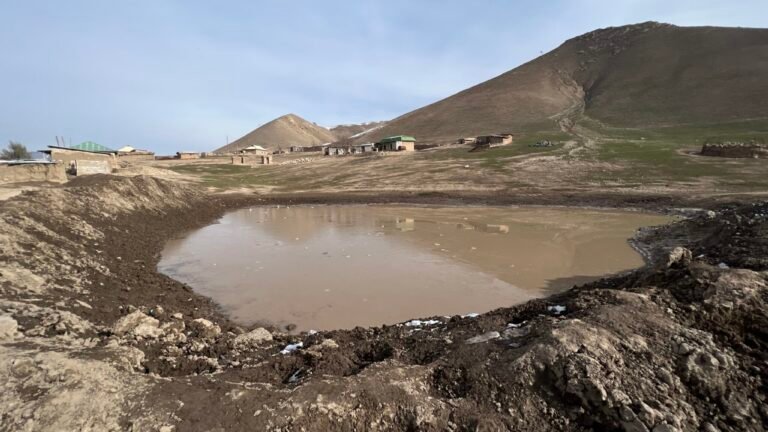
75-year-old resident Davlat Gafurov told CABAR.asia that they have not had clean water for drinking or washing for many years. They collect rainwater and melted snow, and also buy four tons of clean drinking water for 150 somoni (about 15 dollars).
During the Soviet era, water was supplied to the village through pipes from the Vakhsh River, but over time the pipes deteriorated, and water supply ceased.
Residents collect drinking water during the rainy and snowy seasons. When it rains, water flows from the roof through drains into special pits. With careful use, the water supply usually lasts only until autumn.
In a conversation with journalists, 67-year-old Davlatmoh shared that they have to conserve water because there is practically none available.
“We save on everything, even washing our hands and faces, and doing laundry. When there is no water, we have to buy it. How can you wash properly with purchased water? We wash very quickly, and we can’t wash our clothes properly either. We collect melted and rainwater in pits, but it’s not enough,” says Davlatmoh.
In the environmental protection department of the Khatlon region, CABAR.asia journalists were informed that the water shortage problem exists in most districts.
As is known, Tajikistan is rich in water resources – the country has more than 14,500 glaciers covering a total area of 11,146 square kilometers and 947 rivers with a total length of 28,500 km. In addition, there are about 1,300 lakes covering a total area of 705 square kilometers. About 65% of Central Asia’s water resources come from Tajikistan’s glaciers.
However, despite this, the residents of the country suffer from a lack of drinking water.