News
HUMAN RIGHTS
Tajik Ombudsman not allowed to meet with defendants in the “Krokus” case
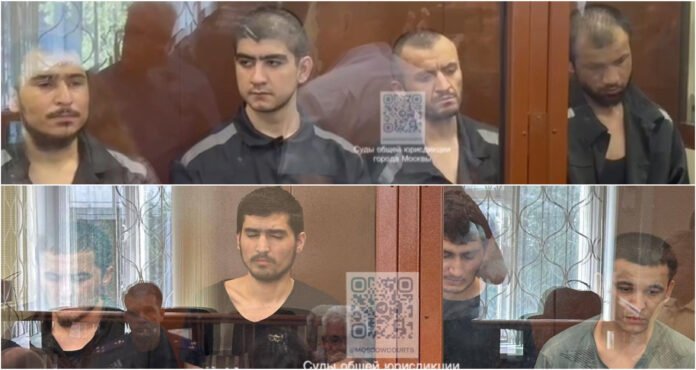
The Human Rights Commissioner in Tajikistan was not allowed to meet with Tajik citizens detained in connection with the terrorist attack at “Krokus”. The Human Rights Commissioner of Tajikistan, Umed Bobozoda, told journalists that he had sent letters to his Russian counterpart, Tatyana Moskalkova, more than 10 times regarding violations of the rights of Tajik […]
The Human Rights Commissioner in Tajikistan was not allowed to meet with Tajik citizens detained in connection with the terrorist attack at “Krokus”.
The Human Rights Commissioner of Tajikistan, Umed Bobozoda, told journalists that he had sent letters to his Russian counterpart, Tatyana Moskalkova, more than 10 times regarding violations of the rights of Tajik migrants in Russia.
However, Tatyana Moskalkova only responded to the last letter sent in October 2024.
The Tajik ombudsman noted in a conversation with journalists that Moskalkova promised to protect the rights of Tajik labor migrants.
According to him, it is still unclear how exactly she will assist the migrants.
Bobozoda stated that the numerous appeals from the Tajik side were prompted by video materials published on social media, which documented instances of violations of migrants’ rights.
The Tajik ombudsman also mentioned that during his visit to Moscow in 2024, he attempted to meet with Tajik nationals who were detained on suspicion of carrying out the terrorist attack at “Krokus.”
But, according to him, he was not allowed to meet with them.
At that time, Bobozoda said he spoke with Tatyana Moskalkova by phone, and she admitted that the public display of the detainees on television after their beating is a violation of norms.
Recall that on the evening of March 22, several individuals in camouflage opened fire with automatic weapons on people attending a concert by the band Piknik at the “Krokus City Hall” concert venue in Krasnogorsk, near Moscow. According to eyewitnesses, the shooters also threw Molotov cocktails, causing a fire in the establishment. According to media reports, about 144 people died, including children, and more than 180 were injured.
Shortly after the incident, the “Islamic State” claimed responsibility for the attack.
Following the attack on the “Krokus City Hall,” Russian authorities began to mass prohibit Tajik citizens from entering the country, while Tajik labor migrants in Moscow faced insults and beatings from police and residents.
Labor migrants complained that employers fired them on the grounds that they were Tajiks, and they were denied entry to stores and buses. Videos of detained and deported Tajik migrants to Tajikistan are being circulated on social media.