News
MIGRATION
Are migrants returning to their homeland?
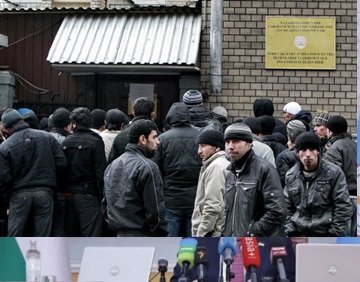
In 2024, more than 600 thousand citizens of Tajikistan returned home from Russia and other countries. The head of the Migration Service of the Ministry of Labor, Migration and Employment of the Population of Tajikistan, Imatcho Nodirzoda, stated at a press conference on February 11 that over 613.5 thousand labor migrants returned to Tajikistan from […]
In 2024, more than 600 thousand citizens of Tajikistan returned home from Russia and other countries.
The head of the Migration Service of the Ministry of Labor, Migration and Employment of the Population of Tajikistan, Imatcho Nodirzoda, stated at a press conference on February 11 that over 613.5 thousand labor migrants returned to Tajikistan from abroad in the nine months of the previous year.
He did not specify whether they returned due to pressure from Russian authorities on Tajik migrants recently or for other reasons.
However, the Minister of Labor, Migration and Employment of the Population of Tajikistan, Solekha Khomlakhmadzoda, acknowledged that “due to changes in Russian legislation, the number of migrants returning home has increased.”
Sources report an increase in the number of raids, inspections, detentions, and deportations of migrants following the attack on “Krokus City Hall” on March 21, 2024.
Experts note that migrants, particularly Tajik labor migrants, have faced difficulties before, but after this incident, harsh treatment, constant raids, and unjustified deportations have significantly increased.
In 2025, foreign citizens in Russia working under a patent will not be able to work in areas such as education, healthcare, other land passenger transport activities, wholesale and retail trade, including the trade and repair of motor vehicles and motorcycles, the provision of food and beverages, courier activities, hunting, capturing and shooting wild animals, including the provision of services in these areas.
The Ministry of Internal Affairs of Russia has also been granted the right to independently make decisions on the expulsion of foreign citizens from Russia without a court ruling.
It was also previously reported that migrants may be prohibited from settling near educational institutions. Deputies of the State Duma of the Russian Federation proposed to relocate migrants further away from institutions for minors, particularly schools and kindergartens. According to the initiative, migrants will not only be required to live more than 200 meters away from schools and kindergartens but also will not be able to register in premises intended for children.