News
POLITICS
Summit of the Presidents of Tajikistan, Kyrgyzstan, and Uzbekistan in Khujand
In Khujand on March 31, 2025 the first trilateral summit of the heads of state of Tajikistan, Kyrgyzstan, and Uzbekistan will take place. This was announced by the Deputy Prime Minister of Kyrgyzstan Edil Baisalov in his speech at the 58th session of the UN Human Rights Council in Geneva. According to him, during the […]
In Khujand on March 31, 2025 the first trilateral summit of the heads of state of Tajikistan, Kyrgyzstan, and Uzbekistan will take place.
This was announced by the Deputy Prime Minister of Kyrgyzstan Edil Baisalov in his speech at the 58th session of the UN Human Rights Council in Geneva.
According to him, during the event, the parties hope to strengthen regional cooperation.
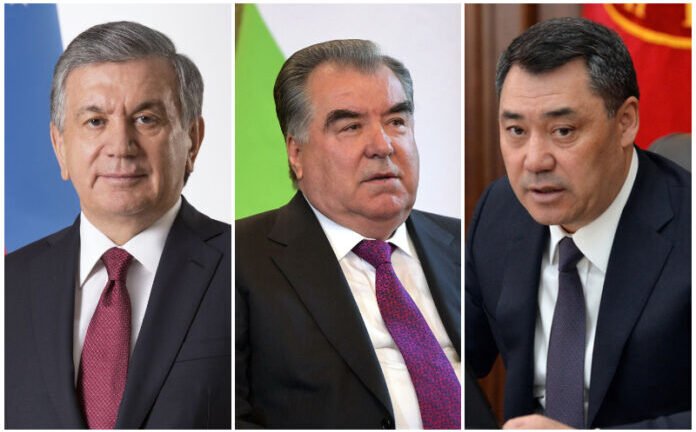
During the trilateral summit in Khujand, Emomali Rahmon, Sadyr Japarov, and Shavkat Mirziyoyev will discuss important issues of regional cooperation in areas such as security, economy, transport, and energy, as well as new initiatives to strengthen ties between the three countries.
Earlier, Tajikistan, Kyrgyzstan, and Uzbekistan had already actively cooperated within various bilateral and multilateral formats.
However, the summit in Khujand promises to be a historic step towards creating a solid foundation for regional cooperation in Central Asia.
Previously, the Prime Ministers of Tajikistan, Uzbekistan, and Kyrgyzstan, Kohir Rasulzoda, Abdulla Aripov, and Adylbek Kasymaliev, held a meeting at the junction of the borders of the three states, connecting the Batken, Fergana, and Sughd regions, and discussed issues related to the common border sections.
The heads of government of the three countries also touched upon the issues of delimitation and demarcation of the Tajik-Kyrgyz, Tajik-Uzbek, and Uzbek-Kyrgyz borders.
The Prime Ministers of the three countries emphasized that the countries have great potential for enhancing cooperation in key areas such as trade, logistics, water-energy, and cultural-humanitarian ties.