News
HUMAN RIGHTS
At a meeting with representatives of the OSCE and the UN, Emomali spoke about human rights
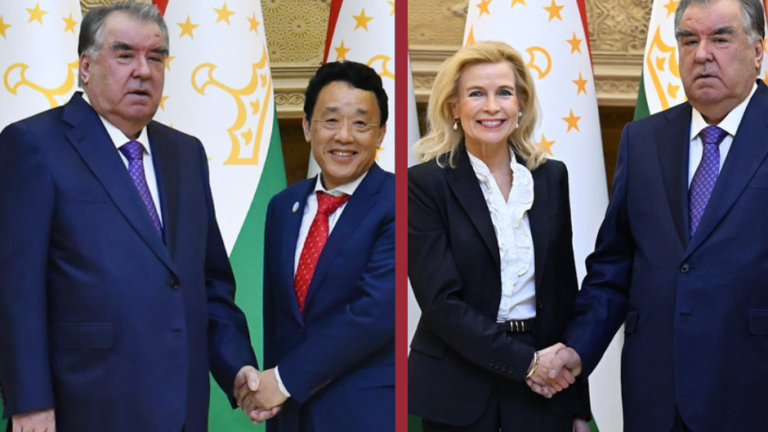
On April 29 of this year, the President of Tajikistan, Emomali Rahmon, met with the Chair of the Parliamentary Assembly of the Organization for Security and Co-operation in Europe, member of the Finnish Parliament Pia Liisa Kauma. The negotiations took place at the Palace of Nations in Dushanbe. On the same day, President Emomali Rahmon […]
On April 29 of this year, the President of Tajikistan, Emomali Rahmon, met with the Chair of the Parliamentary Assembly of the Organization for Security and Co-operation in Europe, member of the Finnish Parliament Pia Liisa Kauma. The negotiations took place at the Palace of Nations in Dushanbe. On the same day, President Emomali Rahmon received the Director-General of the Food and Agriculture Organization of the United Nations (FAO), Qu Dongyu, in Dushanbe.
According to the president’s press service, Rahmon discussed the current state and prospects for the development of cooperation between Tajikistan and the OSCE with Pia Liisa Kauma, including at the inter-parliamentary level. Rahmon emphasized that Tajikistan views the OSCE as an important international platform for constructive dialogue in three key dimensions: military-political, economic-ecological, and humanitarian.
The parties discussed issues related to conflict prevention, combating transnational crime, ensuring regional security, and countering global threats, including terrorism and its financing.
In this regard, Rahmon emphasized the “promotion of gender equality, increasing women’s participation in socio-economic life, as well as issues related to the protection of human rights.”
“The Tajik side expressed its readiness to continue cooperation with the OSCE in the framework of implementing the National Strategy of the Republic of Tajikistan on Human Rights for the period until 2038,” the statement said.
However, international experts and human rights organizations constantly criticize the authorities of Tajikistan, noting the high level of gross human rights violations in the country.
Tajikistan is also frequently criticized for the high level of corruption and lack of transparency in the economy and business sectors.
During the conversation with the Director-General of the Food and Agriculture Organization of the United Nations (FAO), Qu Dongyu, Emomali Rahmon discussed projects in agriculture, sustainable land use, and food security. This was reported by the president’s press service.
The main topic of the meeting was the expansion of cooperation in the effective management of water and land resources and the implementation of modern agricultural technologies.
President Rahmon’s meetings with representatives of international human rights organizations of the OSCE and the UN took place against the backdrop of a day earlier when the human rights organization Amnesty International criticized the Tajik government for its repression against independent journalists and dissenters, arbitrary detentions, closed court proceedings, and unfair sentences, labeling the country as “authoritarian.”
Tajikistan is criticized annually by dozens of human rights organizations for human rights violations and is labeled as having an authoritarian leader in Emomali Rahmon. Despite these organizations ranking Tajikistan very low in global human rights compliance ratings, Emomali Rahmon always claims during meetings with representatives of these organizations that the situation regarding freedom of speech and the observance of citizens’ rights is regularly improving.