News
SOCIETY
In Tajikistan, residents are suffering from a lack of water
Residents of the city of Kulyab in the Khatlon region claim that the authorities are unable to provide residents with drinking water. As reported in a detailed report by Radio Ozodi on July 13, 2025, dozens of residents of Tajikistan have emphasized in their letters and appeals that they are experiencing a severe shortage of […]
Residents of the city of Kulyab in the Khatlon region claim that the authorities are unable to provide residents with drinking water.
As reported in a detailed report by Radio Ozodi on July 13, 2025, dozens of residents of Tajikistan have emphasized in their letters and appeals that they are experiencing a severe shortage of drinking water.
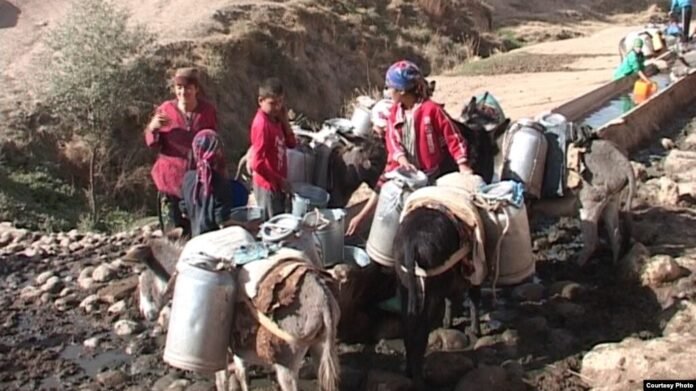
This report highlights that some residents of the country walk several kilometers every day to deliver drinking water home using donkeys and carts.
In the Kulyab zone, where particularly hot weather prevails these days, residents report that the authorities have canceled the previously established water supply schedule, according to which water was supplied for several hours a day. Now, water is supplied only once every 3–4 days, despite the abnormal heat.
Moreover, it is not only the residents of Kulyab who face this problem. Many families from the outskirts of Dushanbe have been suffering from a lack of water during the summer for many years. As a result, they are forced to buy water at a price of up to 1000 somoni per month.
According to some residents of the country, currently in many households in Tajikistan, especially in cities and districts, due to the labor migration of men and young boys, the responsibility for delivering water often falls on women and underage children. In some cases, the burden of this work negatively affects their health.
According to official statistics from the State Housing and Communal Services Enterprise, about 66% of the population of Tajikistan has access to drinking water, while the remaining 34% continue to experience a shortage of drinking water.
Residents believe that the government of Emomali Rahmon has failed to solve the problem of water scarcity for the population in this region over more than 30 years.
Every year, the government of Tajikistan, under the pretext of improving the social welfare of the population, including providing people with essential goods and products, particularly access to clean drinking water, receives millions of dollars from abroad in the form of grants. However, despite this, a significant portion of the country’s population continues to suffer from a lack of drinking water.