News
MIGRATION
Khabarovsk is experiencing a severe shortage of public transport drivers
In the Khabarovsk region, authorities may lift the ban on migrants working in passenger transportation. According to Vostok.Today, earlier this year, migrants were officially prohibited from working in several sectors of the economy in the Khabarovsk region, including public transportation. At that time, the media praised this decision by the new regional head as a […]
In the Khabarovsk region, authorities may lift the ban on migrants working in passenger transportation.
According to Vostok.Today, earlier this year, migrants were officially prohibited from working in several sectors of the economy in the Khabarovsk region, including public transportation.
At that time, the media praised this decision by the new regional head as a firmness in migration policy, while human rights activists called it an example of harsh migration policy and a violation of the rights of foreign citizens.
However, the decision may now change, as it soon became clear that there is simply no one to transport passengers on urban routes. In some public transport routes, the shortage of drivers has reached fifty percent.
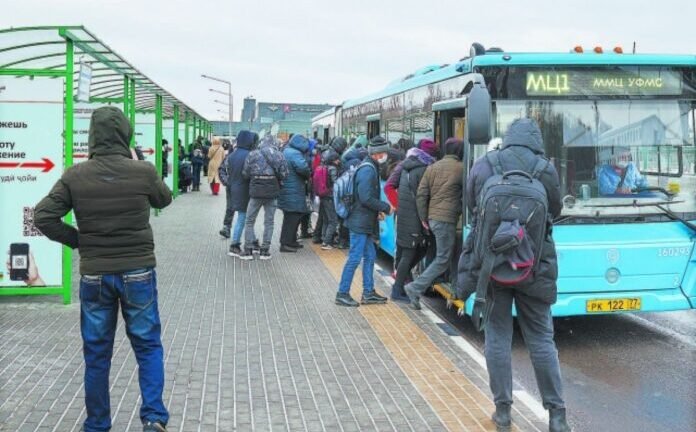
As a result of the catastrophic shortage of personnel, there are significant disruptions in the schedules across all city routes. Often, no one knows when the next bus will arrive or if it will arrive at all, the report states.
The Khabarovsk administration has taken a number of measures, including raising salaries and providing accommodation in dormitories, but nothing has helped – the acute shortage of drivers in transport enterprises remains unresolved to this day.
Elena Shaduya, chair of the Khabarovsk Public Chamber’s commission on urban economy and transport, noted that the staffing problem can only be solved with the help of migrants.
Khabarovsk carriers have repeatedly asked the authorities to lift the imposed ban, and now the authorities are leaning towards the necessity of canceling their own ultimatum decision, she says.
It should be noted that the Khabarovsk region is not the only region in Russia facing such a problem. Other cities and regions in the Russian Federation, despite attracting migrants from African countries, North Korea, India, and Nepal in the fields of passenger transportation, construction, courier delivery, and others, where previously mainly migrants from Central Asian countries worked, are experiencing a severe labor shortage. Authorities in some regions intend to lift previously imposed restrictions.
It is still unknown whether migrants from Central Asian countries will return to their previous jobs from which they were expelled. Over the past two years, especially after the attack on the Crocus City Hall concert venue, in which migrants are suspected, there has been a rise in xenophobia and anti-migrant sentiment in Russia. Law enforcement agencies are conducting mass raids on the streets, in hostels, cafes, and markets, where migrants are often treated violently, beaten, and their patents or residence permits are revoked. This particularly affects citizens of Central Asian countries, including Tajikistan. They are also deprived of their residence permits and even citizenship for evading participation in the war in Ukraine.