News
AFGHANISTAN MIGRATION
“Do not come to Tajikistan!” Afghans disappointed in the friendly country
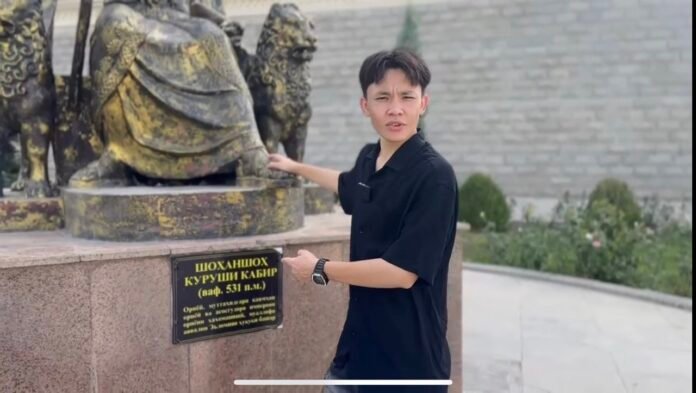
Young Afghan blogger Amir Rajabi traveled to Tajikistan for a trip but suddenly began to sharply criticize the actions of the Tajik authorities. According to him, despite having all the necessary documents, including a passport and visa, he was deported from Tajikistan. The blogger published his video address on his Instagram page and complained that […]
Young Afghan blogger Amir Rajabi traveled to Tajikistan for a trip but suddenly began to sharply criticize the actions of the Tajik authorities.
According to him, despite having all the necessary documents, including a passport and visa, he was deported from Tajikistan.
The blogger published his video address on his Instagram page and complained that after arriving in Tajikistan, he settled in a hotel. One early morning, Tajik law enforcement officers entered the hotel where he was staying with his fellow countrymen, collected the documents of all Afghan citizens, and took them away.
“Three days later, we were all deported, even a family with a small child who had arrived in Tajikistan just a day before. The government of Tajikistan does not allow Afghan citizens to live in the capital and strictly controls their stay,” said the Afghan blogger.
The blogger emphasized that even those Afghan citizens who obtained a visa to Tajikistan, spending between $1300 and $1500 for it, are also being deported. In his video address, he urged his fellow countrymen not to visit Tajikistan.
“Do not come to Tajikistan at all, it is not a good place, you will be deported even with legal documents,” he stated.
Earlier, on July 19 of this year, the press center of the Border Troops of the State Committee for National Security of the Republic of Tajikistan reported that there has been an increase in the migration of foreign citizens to Tajikistan recently.
Some foreign citizens entered our country illegally, and a certain part of foreign citizens grossly violates the established stay regime, the statement said.
The press center’s statement did not specify which country’s citizens were implied but claimed that during inspections, a number of violations of Tajikistan’s legislation were identified. Among them, they were accused of involvement in the illegal drug trade, promoting extremist movements, providing false information and documents to obtain refugee status, violating immigration system requirements, holding citizenship of a third country, using Tajikistan’s territory as a transit country, and so on.
The government of Emomali Rahmon has positioned itself for years as a supporter of the Afghan people and refugees; however, against the backdrop of mass deportations of migrants and the expulsion of regime opponents from the Taliban from the country, it seems to have changed its approach to Afghan citizens.
Previously, Afghan citizens, especially political activists and social media users, referred to Tajikistan as “the safest and friendliest country for Afghan refugees.” They praised President Emomali Rahmon as “a leader and defender of the Afghan people” and noted his policies as an example of brotherly relations between the two nations.
However, at present, among many Tajiks and Persian-speaking citizens of Afghanistan who hoped for Tajikistan during the civil war and after the Taliban came to power, there is a growing sense of disappointment and detachment from the politics of Dushanbe.
“Emomali Rahmon has used sympathy for the Afghan people for many years to create an image of a just leader. But recent events have shown that political interests are apparently more important to him than moral promises,” says an Afghan analyst.
There have also been reports of the deportation of Afghan refugees, which has raised concerns among human rights organizations.
Against the backdrop of changing political sentiments in Afghanistan, the issue of the treatment of Afghan refugees and migrants has become particularly relevant in Tajikistan, as well as in other neighboring countries of Afghanistan. The public is actively discussing questions regarding their legal status, return to their homeland, or respect for refugee status.