News
HUMAN RIGHTS
Incarcerated journalist denied surgery
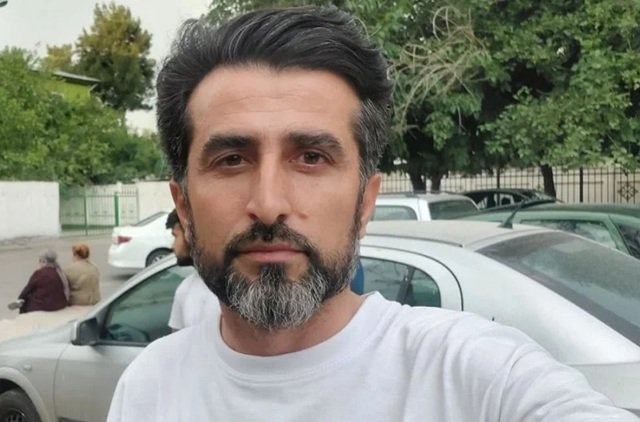
The administration of the colony did not allow journalist and political prisoner Abdusat tor Pirmukhammadzoda to undergo surgery. The health of journalist and political prisoner Abdusat tor Pirmukhammadzoda has significantly deteriorated in the colony; he has been diagnosed with acute purulent inflammation of the gallbladder and requires urgent surgery. Radio Ozodi, citing Pirmukhammadzoda’s relatives, reports […]
The administration of the colony did not allow journalist and political prisoner Abdusat tor Pirmukhammadzoda to undergo surgery.
The health of journalist and political prisoner Abdusat tor Pirmukhammadzoda has significantly deteriorated in the colony; he has been diagnosed with acute purulent inflammation of the gallbladder and requires urgent surgery.
Radio Ozodi, citing Pirmukhammadzoda’s relatives, reports that the journalist’s condition in the high-security colony in Dushanbe is extremely serious. According to them, he lay unconscious for several days before being transferred to the prison hospital of the colony in the city of Vahdat, more commonly known as “Kirpichny.”
Previously, Abdusat tor Pirmukhammadzoda was serving his sentence in the colony of the city of Khujand. His relatives stated that they had not seen him for six months. Since March, they had no information about his condition, and the administration of the Khujand colony did not allow them visits.
Now, the close ones of the imprisoned journalist report that he spent six months in a punishment isolation cell (SHIZO), and then was transferred to a special regime colony, more commonly known as “the covered one.”
The authorities have not yet explained why Pirmukhammadzoda was held in SHIZO and then in “the covered one.”
One of the political prisoner’s relatives reported that a few days ago they received a call from an unknown number informing them that Pirmukhammadzoda had been hospitalized in the medical unit of the Vahdat colony. After that, his two sisters and brother came to visit him. According to them, his condition is very serious: his hands have turned yellow, he has lost a lot of weight, and he looks extremely weakened.
Relatives brought doctors for an examination, and it turned out that Pirmukhammadzoda has purulent cholecystitis – acute purulent inflammation of the gallbladder, and he also has sharply exacerbated kidney pain. Medical professionals stated that he urgently needs surgery using a puncture operation, or laparoscopy, which is only performed in a hospital. However, the prison administration responded that he is in a special regime colony, in “the covered one,” and he cannot be taken outside the colony.
His relatives intend to appeal to the director of the Main Department for the Execution of Criminal Sentences of the Ministry of Justice, Mansurjon Umarov, requesting permission for a transfer to the hospital. They stated that if permission is not granted, his life will be in danger. Abdusat tor himself refuses the usual surgical operation with an incision.
The report of Abdusat tor Pirmukhammadzoda’s critical condition comes against the backdrop of at least five political prisoners dying in the country’s prisons this year due to illnesses and lack of timely medical assistance.
Journalist and blogger Abdusat tor Pirmukhammadzoda, a 44-year-old native of the city of Vahdat, was detained by Tajik law enforcement agencies on July 8.
Later, a criminal case was initiated against Pirmukhammadzoda under Article 307, Part 1 “Public Calls for Extremist Activities” of the Criminal Code of the Republic of Tajikistan, due to his alleged collaboration with the opposition.
On December 26 of last year, the court sentenced him to 7 years in prison.
In the same year, more than a dozen journalists and bloggers were detained and sentenced to imprisonment.
It was reported that Abdusattor Pirmukhammadzoda, in his letter from the pre-trial detention center, complained that he had been subjected to brutal torture and psychological pressure since the first day of his detention, and that police officers and investigators forced him to give false confessions based on fabricated charges.
He later also repeatedly complained about torture and cruel treatment.
International and human rights organizations have repeatedly called on the Tajik authorities to release the detained journalists, but the country’s authorities always ignore these calls from human rights organizations, instead further intensifying repression against dissenters.