News
HUMAN RIGHTS
The European Union urged the authorities of Tajikistan to release political prisoners
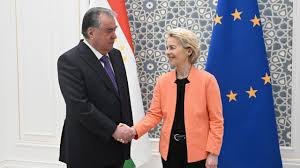
On October 17 of this year, another round of dialogue took place in Brussels between the European Union and the Republic of Tajikistan on human rights issues. According to the press service of the Tajik Ministry of Foreign Affairs, the meeting featured a constructive and open exchange of views on a wide range of issues […]
On October 17 of this year, another round of dialogue took place in Brussels between the European Union and the Republic of Tajikistan on human rights issues.
According to the press service of the Tajik Ministry of Foreign Affairs, the meeting featured a constructive and open exchange of views on a wide range of issues related to the human rights situation in the European Union and Tajikistan, as well as a joint review of progress in specific areas since the previous dialogue.
The press service of the European Union reported that Brussels urged Dushanbe to take further actions so that legal reforms lead to concrete results, including the prevention of torture and other forms of inhumane treatment, reforms of the penitentiary system, the establishment of an independent monitoring system, and effective judicial oversight.
EU representatives paid special attention to the protection of fundamental freedoms, particularly freedom of expression and political participation.
The EU expressed deep concern about the working conditions of journalists, human rights defenders, and civil society representatives in general, and called on the Tajik authorities to ensure the re-registration of public organizations that had been forced to cease their activities.
EU representatives also presented a list of specific cases of human rights defenders, lawyers, and journalists who are imprisoned, and called for their immediate and unconditional release.
However, it is not specified who exactly was included in this list, but it is known that dozens of journalists, civil activists, and human rights defenders are serving sentences in the country’s prisons on fabricated charges.
The European Union also expressed serious concern about the lack of progress in the field of human rights in the Gorno-Badakhshan Autonomous Region (GBAO) and urged Tajikistan to engage in open and constructive dialogue with the Pamiri minority. The European Union also strongly recommended that the authorities adhere to international standards of fair trial.
The EU stated that regular dialogues on the rule of law and human rights remain a cornerstone of bilateral relations between the European Union and Tajikistan, and real progress in political pluralism, freedom of expression, media independence, and civil society participation will be crucial when considering Tajikistan’s application to participate in the GSP+ program.
In conclusion, the European Union reiterated that successful economic cooperation within the framework of the Enhanced Partnership and Cooperation Agreement (EPCA) is only possible if democratic institutions in Tajikistan are strengthened and human rights and fundamental freedoms are respected.
The European Union’s demand to the authorities of Tajikistan comes against the backdrop of a serious deterioration in the situation regarding human rights and freedom of speech: under the pretext of fighting terrorism and extremism, the authorities annually send hundreds of their opponents, journalists, activists, and human rights defenders to prison on fabricated charges, and in GBAO, several activists have reportedly been executed.
The position of the Tajikistan government regarding negotiations and its readiness to meet the European Union’s demands for joining the GSP+ system is unknown.