News
MIGRATION
Participants of mass brawl in Moscow face deportation and loss of citizenship
Migrants involved in the mass brawl in Moscow’s Prokshino face up to seven years in prison or deportation. Some may even be stripped of their Russian citizenship. According to the police, more than 80 participants in the mass brawl have been detained in Moscow. According to investigators, on the evening of October 25, a mass […]
Migrants involved in the mass brawl in Moscow’s Prokshino face up to seven years in prison or deportation. Some may even be stripped of their Russian citizenship.
According to the police, more than 80 participants in the mass brawl have been detained in Moscow.
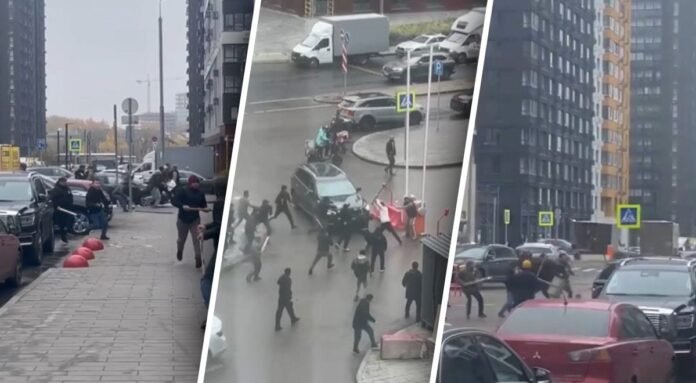
According to investigators, on the evening of October 25, a mass brawl occurred in the residential complex “Prokshino,” located in the Kommunarka district of Moscow. Workers, many of whom were migrants, began a conflict right in the courtyard of the new building.
As seen in video footage, migrants used shovels, sticks, metal pipes, and even road signs.
Witnesses reported that the scuffle started quickly—many simply rushed at others with improvised weapons. Nearby parked cars were damaged. Local residents were frightened by the noise and aggression, with some calling the police.
The police noted that all foreigners involved in the brawl will be deported with a subsequent entry ban.
During the conflict, parked cars were damaged. Local residents were frightened by the noise and aggression, with some calling the police.
Residents complained that such incidents cause them significant anxiety, especially considering the danger these situations pose to children.
It is still unknown which countries the citizens involved in the mass brawl are from. The reasons for the conflict are also unclear.
Nineteen direct participants in the conflict face up to seven years in prison under the hooliganism statute.
The police emphasized that even those who have obtained Russian citizenship and participated in the mass brawl may be stripped of their citizenship.
Following an armed attack on a concert hall in Moscow in 2024, in which the main suspects were Tajik migrants, there has been an increased wave of concern regarding migration in Russia, and control and restrictions in this area have become stricter.
Experts believe that these measures are aimed at increasing pressure on migrants, especially those who work and live in Russia from Central Asian countries.