News
SOCIETY TAJIKISTAN
When will the electricity shortage issue be resolved? Residents complain about power outages
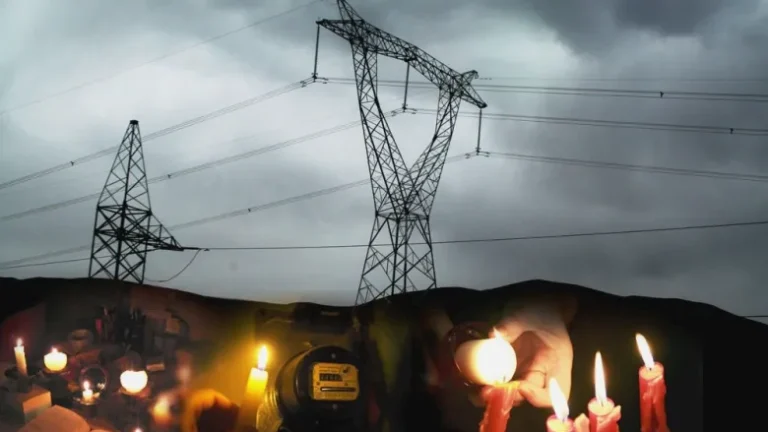
Residents of the Sughd and Khatlon regions report that they are already without electricity today, as power is only supplied for 2 to 4 hours a day. In a conversation with Azda TV, a resident of the Shurobod district of Khatlon region complained about “This year, the limit on electricity consumption was introduced back in […]
Residents of the Sughd and Khatlon regions report that they are already without electricity today, as power is only supplied for 2 to 4 hours a day.
In a conversation with Azda TV, a resident of the Shurobod district of Khatlon region complained about
“This year, the limit on electricity consumption was introduced back in September. Now sometimes at night after the evening prayer, if they want, they provide electricity for one or two hours. We don’t even have time to charge our phones. They say they provide 8 hours a day, but in reality — 2 hours at night and 1 hour during the day,” said our interlocutor.
Although representatives of the energy company “Barki Tojik” do not explain the reasons for such strict restrictions to the public, many believe that residents have already become accustomed to this situation and perceive it as a given, although they suffer greatly from it.
At the same time, the company “Barki Tojik” informed Asia-Plus that the reason for the electricity shortage is the decrease in water levels in the Nurek reservoir. Company representatives noted that the water level “has decreased by 2 meters and 47 centimeters compared to last year.” However, according to social media users, similar explanations are given every year, and they believe that the company is trying to evade responsibility.
Officials do not warn the public in advance about the introduction of consumption limits and do not publicly acknowledge the existence of restrictions. However, the state agency “Khovar” published a message on November 13 about a meeting of a working group discussing the issue of preventing losses and illegal use of electricity by the branch “Electric Distribution Networks of Cities and Districts under Republican Subordination,”
where company representatives effectively confirmed the introduction of the limit.
At the meeting, company representatives stated that thanks to increased control over consumers, “the revenue from electricity consumption this year has increased by 1 billion 342 million somoni compared to the same period in 2024.” This statement came against the backdrop of mass complaints from the public about power outages, while officials express satisfaction with the increase in revenue from the population.
Users on social media are questioning that if the water level in the reservoirs has indeed decreased, what kind of governance is this when the authorities cannot ensure water reserves, or they are not enough for at least one winter month? Meanwhile, every summer, the authorities regularly claim that electricity production has shown additional growth, yet in winter this “additional” volume of electricity somehow disappears, and the population remains without power even before the onset of severe cold.
Even if one believes the authorities’ version, is it really the case that when the water level decreases, electricity is almost immediately cut off for the population?
At the same time, Tajikistan supplies tens of millions of kilowatt-hours of electricity to neighboring countries every year, including Afghanistan, Uzbekistan, and Kyrgyzstan. In August of this year, Emomali Rahmon stated that since the launch of the first turbine of the Rogun Hydroelectric Power Station in 2018, it has produced 9.1 billion kilowatt-hours of electricity.
Residents are asking the question: where does all this electricity go if the population of the country is without power for 6–7 months a year?