News
TAJIKISTAN
Energy sector development program adopted until 2030, while the population is left without electricity
The government of Tajikistan discussed the energy sector development program until 2030, although a limit on electricity consumption has been introduced in the country. On November 25 in Dushanbe, a government meeting was held under the chairmanship of President Emomali Rahmon, where “major” projects for the development of the energy sector for 2026–2030 were proposed. […]
The government of Tajikistan discussed the energy sector development program until 2030, although a limit on electricity consumption has been introduced in the country.
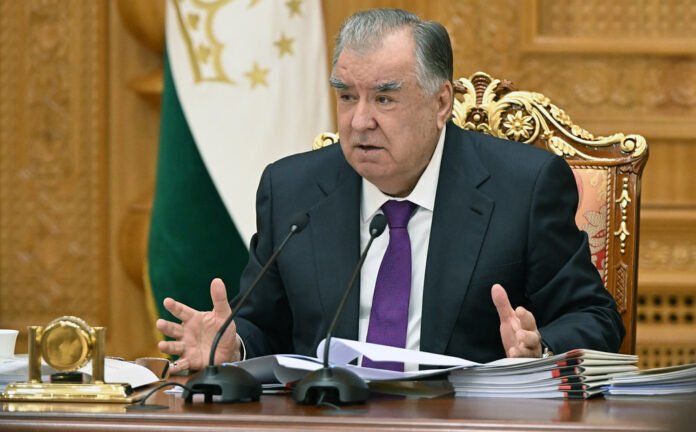
On November 25 in Dushanbe, a government meeting was held under the chairmanship of President Emomali Rahmon, where “major” projects for the development of the energy sector for 2026–2030 were proposed.
Minister of Energy and Water Resources Daler Jumah, discussing the Energy Sector Development Program for 2026–2030, stated that the country plans to increase production capacity by more than 5,000 MW through the construction of new hydropower plants, modernization of existing facilities, restoration of lost capacity due to equipment wear, as well as the development of solar energy.
Emomali Rahmon instructed ministries and local executive authorities to ensure the implementation of the Program and to explore the possibility of installing solar panels on residential buildings and connecting them to the country’s energy networks.
As part of the program, the authorities intend to reduce electricity losses in transmission networks to 3%, in distribution networks to 9%, and to increase electricity exports to 5 billion kWh.
According to official data, Tajikistan currently exports about 2.5 billion kilowatt-hours annually, including to Afghanistan, Uzbekistan, and Kyrgyzstan.
Rahmon also emphasized the importance of ensuring energy security and improving the efficiency of electricity use by the population. However, he did not address pressing issues, including the limit on electricity consumption.
But he did not forget to mention criminal liability for the illegal use of electricity, including its application in cryptocurrency mining.
Experts believe that Tajikistan traditionally prefers to tighten penalties and fines for the population rather than address infrastructure problems and modernize networks. According to them, instead of first eliminating the causes of the deficit, the authorities focus on punitive measures.
Recently, a law came into force in the country providing for fines ranging from 27,000 to 90,000 somoni or imprisonment for a term of 3 to 10 years for “illegal use” and “non-payment” for electricity. A new bill is now being discussed, which proposes to tighten these penalties, including criminal sanctions.
Independent experts note that the authorities’ attention is once again focused on long-term projects and export indicators, while in Tajikistan itself, every autumn and winter, and in some cases even in spring and summer, the population faces acute electricity shortages. In many cities and regions, residents receive electricity for only 3–4 hours a day, which significantly complicates their lives. And judging by the presented energy development program, the issue of the electricity limit will not be resolved in the foreseeable future.