News
HUMAN RIGHTS
More than 1000 prisoners released from the “First Soviet” prison
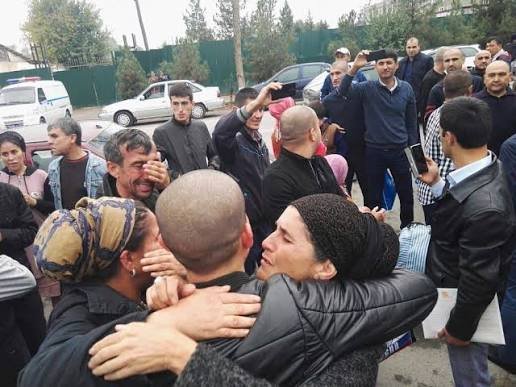
As part of the “Amnesty Law,” on July 10, more than a thousand prisoners were released from the prison in Dushanbe, known as the “First Soviet.” The implementation of the amnesty law began on the morning of July 10, and relatives and friends of the prisoners gathered in front of the correctional facility to greet […]
As part of the “Amnesty Law,” on July 10, more than a thousand prisoners were released from the prison in Dushanbe, known as the “First Soviet.” The implementation of the amnesty law began on the morning of July 10, and relatives and friends of the prisoners gathered in front of the correctional facility to greet them. Although several hours have passed, the authorities have not yet reported exactly how many prisoners were released from this colony.
The “First Soviet” colony is considered one of the largest correctional facilities in the country. It houses convicted bloggers, journalists, and writers, including Daleri Imomali, Abdullo Gurbati, Zavkibek Saidamini, Ahmad Ibrohim, and Abdukodiri Rustam. It is still unknown whether they were included in the list of those granted amnesty.
Relatives of the founder and leader of the Islamic Revival Party, Said Abdullo Nuri, also reported that his brother and nephews were released from this colony. It was reported that on Friday morning, Said Abdullo Nuri’s brother, Nurullo Saidov, was released from the “First Soviet” colony, while his nephews, Mukhibullo Nuriddinov and Nusratullo Saidov, were released from the Khujand colony.
Also released was Saidumar Saidov, a nephew of party member Shamsullo Saidov, who was sentenced to six years in prison in 2023.
This is already the second stage of the implementation of the “Amnesty Law” in recent days. Earlier, on July 6, 2,979 people, including 297 women, were also released from various correctional facilities. They were freed from the prisons in Nurek, Vahdat, Yavan, and Dusti.
The “Amnesty Law” was adopted by the Majlisi Namoyandagon (lower house of parliament) of the Republic of Tajikistan on June 16, 2026, during its regular session, and was signed by President Emomali Rahmon on the same day.
At that time, it was noted that the adopted amnesty law could apply to approximately 18,038 convicted individuals and those whose criminal cases are still in progress. According to the law, some prisoners either have their sentences reduced or are released from places of detention.
However, civil society activists criticized the implementation of this law. In particular, activist Abru Alimardonshoiev expressed concern about the implementation of the amnesty law, noting that out of approximately 300 convicted individuals in cases related to the activists of Badakhshan, only two were released, and three had their sentences reduced. In his opinion, if the goal of the amnesty law is indeed the principle of humanitarianism, its implementation should be the same for all citizens.