News
WORLD
Iran and Israel exchanged strikes
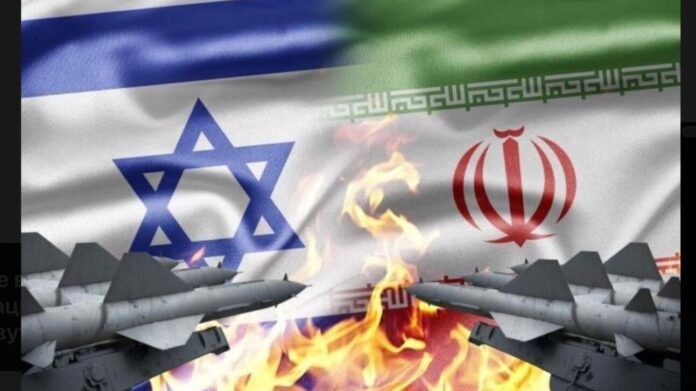
For the first time since the April ceasefire, Iran and Israel exchanged direct missile and air strikes. This has heightened concerns about a possible escalation of the regional conflict. On Sunday, June 7, the Iranian army reported that it had struck targets in northern and central Israel. It was reported that the attack on Israel […]
For the first time since the April ceasefire, Iran and Israel exchanged direct missile and air strikes. This has heightened concerns about a possible escalation of the regional conflict.
On Sunday, June 7, the Iranian army reported that it had struck targets in northern and central Israel. It was reported that the attack on Israel was carried out in support of Hezbollah and as a response to recent Israeli attacks on the Southern Dahia area in Beirut. Tehran also described its strikes as “support for the people of Lebanon” and a response to “Israel’s violations of the ceasefire.” The Central Headquarters of the Iranian Armed Forces, Khatam al-Anbia, stated on Sunday that missile strikes were carried out on several strategic targets in Israel.
Following the start of the attack, the Khatam al-Anbia headquarters issued the following statement:
“During a new wave of actions against important and sensitive targets in the occupied territories, the enemy suffered heavy, precise, calculated, and damaging strikes, experiencing a successful offensive operation from the powerful forces of the Islamic Republic of Iran.”
Israeli authorities also confirmed that Iran had carried out several consecutive attacks on Israeli territory. Following these attacks, on Monday morning, the Israeli Air Force struck military targets in western and central Iran. The Israeli army stated that the attacks were aimed at missile bases and other military facilities.
International media reported several explosions in Tehran, Isfahan, Tabriz, Karaj, and Kermanshah. Additionally, Israel stated that strikes were carried out on a major petrochemical complex in southwestern Iran.
In response, Iranian authorities reported the continuation of missile strikes on Israel and warned that further Israeli attacks would result in even larger retaliatory strikes. According to media reports, several waves of Iranian missiles were launched at central and southern regions of Israel within a day.
The Iranian headquarters stated that due to the aggression of the Israeli army in southern Lebanon and the Zahia area, Iran retaliated against Israel in support of Hezbollah, but is now suspending its operations.
U.S. President Donald Trump urged Israel and Iran to “immediately cease fire.” He stated that further escalation could jeopardize peace negotiations, but noted that consultations for a new agreement are ongoing.
According to Reuters and Axios, U.S. armed forces did not participate in the strikes against Iran, although media reports indicate that Washington continues to play a role in coordinating Israel’s missile defense.
Experts warn that the new exchange of strikes could completely destroy the fragile April ceasefire and plunge the Middle East into a new phase of military escalation. Global markets also reacted to these events. Following the new attacks, the price of oil rose by more than $4.