News
WORLD
Israel expands strikes deep into Lebanon
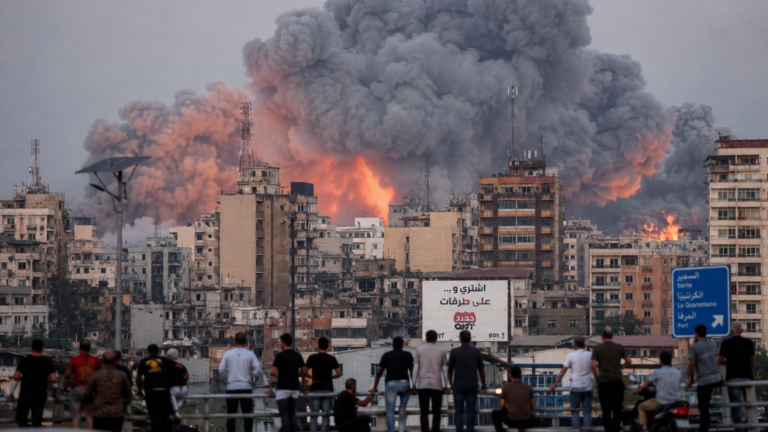
The military conflict between Israel and the Lebanese movement “Hezbollah” is escalating. Israel has expanded its strikes deeper into Lebanon to Beirut. On Monday, June 1, Israeli Prime Minister Benjamin Netanyahu instructed the military to begin strikes on the suburbs of Beirut, including the Southern Dahia neighborhood, which Israel considers one of Hezbollah’s main strongholds. […]
The military conflict between Israel and the Lebanese movement “Hezbollah” is escalating. Israel has expanded its strikes deeper into Lebanon to Beirut.
On Monday, June 1, Israeli Prime Minister Benjamin Netanyahu instructed the military to begin strikes on the suburbs of Beirut, including the Southern Dahia neighborhood, which Israel considers one of Hezbollah’s main strongholds.
On the morning of the same day, the Israeli army warned residents of nine settlements in the southern suburbs of Beirut to leave their homes. At the same time, the military released video footage showing Israeli tanks crossing the Litani River for the first time and advancing deeper into Lebanese territory.
This is happening against the backdrop of diplomatic efforts to achieve a sustainable ceasefire between the parties failing.
According to Israeli officials, the expansion of the military operation is a response to rocket fire and recent attacks by Hezbollah on northern areas of Israel. At the same time, the Israeli army has expanded its ground operation in southern Lebanon and has taken the historic Beaufort Castle and several other strategically important sites. This is considered the deepest incursion of Israeli troops into Lebanon since 2000.
After the warning from the Israeli army, thousands of residents of the southern suburbs of Beirut were forced to leave their homes.
International humanitarian organizations are warning of a worsening humanitarian situation. According to reports, since the beginning of the new phase of the conflict, the number of internally displaced persons in Lebanon has exceeded one million.
The United States is proposing a new diplomatic plan in an attempt to prevent further escalation.
According to this plan, Hezbollah must cease all attacks on Israel, and in return, Israel will refrain from escalating the conflict in Beirut. However, Lebanese authorities have called for Israel to be the first to halt hostilities, and only then would a ceasefire be possible.
Diplomatic sources report that direct negotiations between Israel and Lebanon have been taking place with U.S. mediation since April of this year. Another round of negotiations is scheduled for next week in Washington. However, the new escalation of the conflict raises doubts about the prospects for a successful conclusion to the talks.
Experts believe that further expansion of Israeli strikes in the suburbs of Beirut could lead all negotiations to a deadlock. In their opinion, the escalation of the conflict could negatively impact diplomatic efforts to reduce tensions between the U.S. and Iran. They also emphasize that if this situation continues, Lebanon could once again become one of the main centers of instability and security crisis in the Middle East.