News
CULTURE HUMAN RIGHTS
Parents fined for teaching their children religion
Law enforcement officials in the Faizabad district have fined parents for allegedly teaching their children religion. An anonymous source from Azda.tv reported on Friday that officials from the local branch of the State Committee for National Security (SCNS) in the Faizabad district imposed fines on several parents for religious education of their children. According to […]
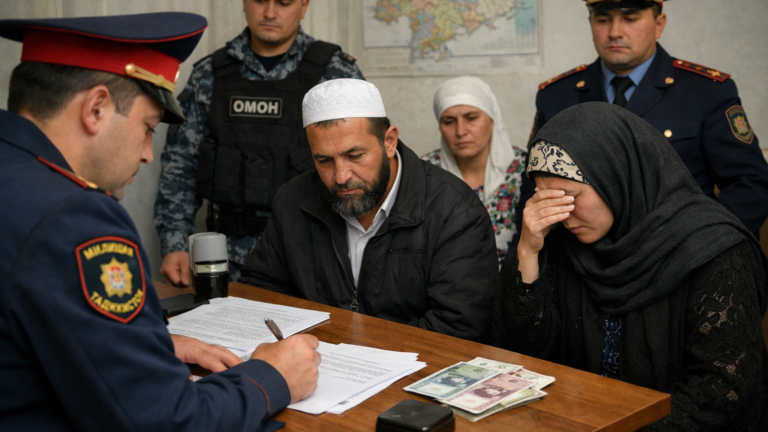
Law enforcement officials in the Faizabad district have fined parents for allegedly teaching their children religion.
An anonymous source from Azda.tv reported on Friday that officials from the local branch of the State Committee for National Security (SCNS) in the Faizabad district imposed fines on several parents for religious education of their children.
According to the source, such actions have been ongoing for some time. SCNS officials, along with other representatives of local authorities and law enforcement, are conducting raids, visiting schools, and questioning children about whether they are being taught religious knowledge at home.
“First, children are shown the book ‘Koidai Bagdodi’ (editor’s note: a textbook for learning to read the Holy Quran) and asked who knows the title of this book. Those who know the title and can read it are promised a trip to Dushanbe,” the source told us.
The source claims that several children recognized this textbook for reading the Quran and were able to read excerpts. The officials then asked where they learned to read the Quran and who their teacher was.
As a result, law enforcement officials detained the parents of 25 children, imposing fines ranging from 5,000 to 7,000 somoni (500-700 dollars) on each.
Our source noted that among those detained were poor and elderly women living with their grandchildren. They were also detained and fined.
Experts and critics believe that the fines are not aimed at preventing extremism but rather indicate a high level of corruption within the government, particularly in law enforcement, which seeks to profit from the population and devises increasingly sophisticated methods for personal enrichment.
It is natural, critics question, for a grandmother to teach her grandchild. But what, besides the basic ‘Koidai Bagdodi’, can rural grandmothers teach their grandchildren?