News
POLITICS
Ablukhalima Gafforov was also dismissed
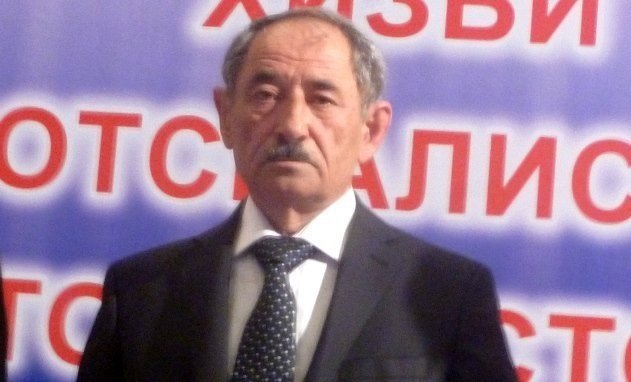
Abdulhalim Gafforov has been dismissed after 20 years as the chairman of the Socialist Party of Tajikistan. On July 23, an extraordinary congress of the Socialist Party of Tajikistan (SPT) took place at the International University of Foreign Languages of Tajikistan. Abdulhalim Gafforov left his position voluntarily. He was succeeded by Gulom Halimzoda, who previously […]
Abdulhalim Gafforov has been dismissed after 20 years as the chairman of the Socialist Party of Tajikistan.
On July 23, an extraordinary congress of the Socialist Party of Tajikistan (SPT) took place at the International University of Foreign Languages of Tajikistan.
Abdulhalim Gafforov left his position voluntarily. He was succeeded by Gulom Halimzoda, who previously headed the SPT department in the city of Buston in the Sughd region.
During the meeting, three candidates were proposed for the position of chairman of the Socialist Party of Tajikistan. Two of them withdrew their candidacies in favor of Halimzoda.
According to Asia-Plus, Halimzoda thanked those present.
“I will do my utmost to promote the party, to unite it, and to achieve great heights,” said Gulom Halimzoda.
He also asked Abdulhalim Gafforov to continue working as a party advisor.
Abdulhalim Gafforov did not explain the reason for his resignation but stated that “as a result of many observations, we concluded that Gulom Halimzoda should be elected as the head of the SPT.” However, he had previously informed journalists that he would again propose his candidacy for the position of head of the SPT.
Earlier, on July 20 of this year, an extraordinary congress of the Party of Economic Reforms of Tajikistan took place at the Russian-Tajik (Slavic) University. The party chairman, 64-year-old Rustam Kudratov, was dismissed, and his deputy, 48-year-old Giyosiddin Ashurzoda, was elected in his place.
These political parties hold their congresses in university halls. Previously, the government also did not provide venues for opposition parties, such as the Islamic Revival Party of Tajikistan and the Social Democratic Party of Tajikistan, forcing them to hold their congresses at home or in party halls.
Also, in May of this year, on May 11, at an extraordinary congress of the Democratic Party of Tajikistan, Saidjaffar Usmonzoda was removed from the position of party chairman. He was succeeded by Shahboz Abror.
Saidjaffar Usmonzoda stated that he does not recognize any decisions made at this congress and claimed that Shahboz Abror was a member of the ruling People’s Democratic Party of Tajikistan until recently.
Saidjaffar Usmonzoda, who considered himself the legitimate chairman of the Democratic Party of the country, urged the Ministry of Justice not to recognize the decisions of this congress. However, at the end of May, the Ministry of Justice of Tajikistan recognized the controversial congress of the Democratic Party as legitimate and Shahboz Abror as the new leader of the democrats.
Later, Saidjaffar Usmonzoda was detained on charges of conspiracy with the opposition and attempting to seize power in the country using his official position.
Later, the Parliament of Tajikistan, based on the proposal of the Attorney General, stripped Saidjafar Usmonzoda of parliamentary immunity and he was arrested.
At the end of June, Ahmadshoh Komilzoda, a journalist and first deputy chairman of the Democratic Party of Tajikistan, was detained in Dushanbe.
He was also stripped of parliamentary immunity and accused of attempting to seize power.
Experts consider all political parties in Tajikistan to be “pocket” and openly pro-government. It is believed that they function only to create the appearance of multipartyism and transparency in parliamentary and presidential elections in the country, as they have never criticized the government or the electoral processes in the country.
Political expert Mukhamadjon Kabirov believes that the change of leaders in political parties to a younger generation, the recent detentions of well-known politicians in the country, and the disappearance of the leader of the “Group 24,” Sukhrab Zafar, in Turkey are related to preparations for the transfer of power from father to son in Tajikistan.