News
HUMAN RIGHTS
Amnesty International urged the United States to raise human rights issues at the meeting with the leaders of Central Asian countries
On the eve of the summit of leaders from Central Asian countries with the President of the United States in the C5+1 format, the international organization Amnesty International called on American politicians to prioritize human rights in the negotiations. In a statement published on November 5 on the organization’s website, it is noted that against […]
On the eve of the summit of leaders from Central Asian countries with the President of the United States in the C5+1 format, the international organization Amnesty International called on American politicians to prioritize human rights in the negotiations.
In a statement published on November 5 on the organization’s website, it is noted that
against the backdrop of rising authoritarianism in the region, this summit provides an opportunity to discuss the suppression of press freedom and civil society. Amnesty International believes that U.S. President Donald Trump should urge Central Asian leaders to uphold human rights.
“As authoritarian practices in Central Asia intensify, it is crucial for President Trump to call on regional leaders to move towards the protection of human rights,” said Ben Linden, Director of Advocacy for Amnesty International in Europe and Central Asia.
“This summit represents a chance — and a test — for the United States to demonstrate that it can play a positive role in human rights issues and to dispel expectations that the meeting will be purely pragmatic and commercial in nature,” he stated.
As emphasized in their statement, authorities in all Central Asian countries continue to suppress dissent and restrict human rights. Strict control over the media and civil society has led to limitations on freedom of expression, assembly, and association. Journalists have been silenced, and non-governmental organizations have been shut down.
As a striking example, Amnesty International mentioned the case of the well-known human rights defender and prisoner of conscience from Tajikistan, Buzurgmehr Yorov, who is serving a 28-year sentence for peacefully defending his rights.
Linden noted that if President Trump does not raise the issue of human rights, then members of Congress should do so, demanding that Central Asian leaders cease pressure on civil society. According to him, silence on this issue will be perceived as a “green light” for regional governments to continue repression without consequences.
The statement also mentions that the governments of Central Asian countries are seeking to expand the extraction of strategically important minerals, which is of interest to the Trump administration. Amnesty International calls on Congress to ensure oversight of future agreements so that authorities consult with local communities and civil society to address their legitimate environmental and human rights concerns before project implementation begins.
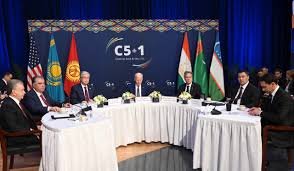
The C5+1 summit with the participation of leaders from Kazakhstan, Kyrgyzstan, Tajikistan, Turkmenistan, Uzbekistan, and the United States will take place on November 6, 2025, in Washington, D.C. The agenda of the meeting includes issues of energy, investment in strategic minerals, trade routes, and regional security.
Earlier, human rights organizations and a group of Tajik opposition members also urged the United States to make human rights a key part of the meeting. Donald Trump was asked to raise the issue of political repression in Tajikistan, call for the immediate release of political prisoners, and promote the start of an international dialogue on a peaceful and inclusive political process in the country.
It is still unknown whether Donald Trump will address this topic at the summit.