Authorities representatives did not attend the conference
The third day of the Warsaw Conference on the Human Dimension of the OSCE has ended, but representatives of the Tajik government did not appear. Photo: Internet The main theme of the Warsaw Conference on the Human Dimension of the OSCE was “Fundamental Freedoms,” which included topics such as “Freedom of Religion,” “Freedom of Assembly […]
AZDA.TV· Send to others
The third day of the Warsaw Conference on the Human Dimension of the OSCE has ended, but representatives of the Tajik government did not appear.
Photo: Internet
The main theme of the Warsaw Conference on the Human Dimension of the OSCE was “Fundamental Freedoms,” which included topics such as “Freedom of Religion,” “Freedom of Assembly and Association,” “Human Rights Defenders,” and “Freedom of Movement.”
The conference began on September 26 and will last until October 7. Representatives of the Tajik government did not appear at the conference. The reason for their absence is unknown.
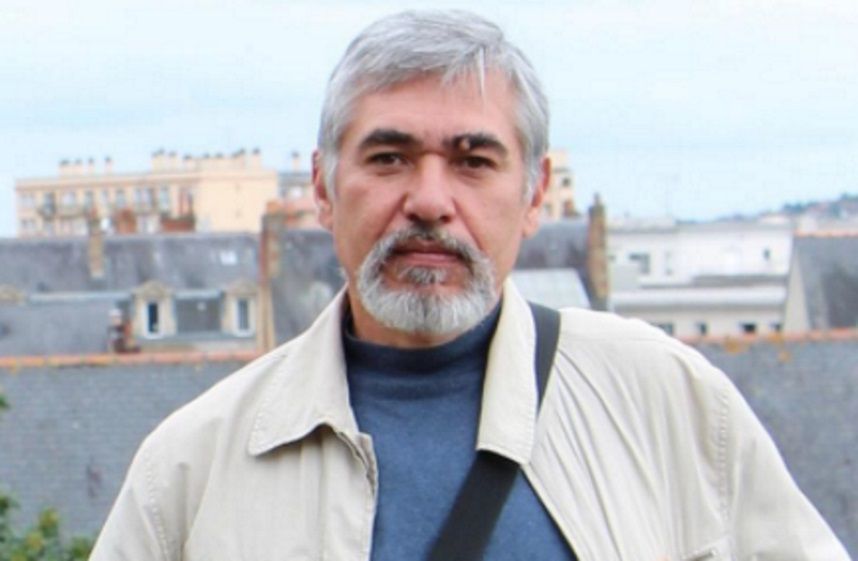
Temur Varki, a representative of the National Alliance of Tajikistan, a coalition of Tajik opposition parties and movements abroad, called on free countries to support the victims of the repressions of dictators Rahmon and Putin.
“In this hall, behind the official nameplate ‘Tajikistan,’ should sit the so-called members of parliament. In reality, they represent no one. They are not elected by anyone but appointed by an illegitimate usurper. They are a void, representing no one. And it is symbolic that this seat is empty at this conference. I believe it will be filled by worthy individuals,” said Temur Varki.
Photo: InternetTemur Varki, journalist
The journalist described the events of the 1990s in Tajikistan as “a Russian special operation in Tajikistan, carried out under the command of a GRU colonel, commander of the 15th special forces brigade Kvachkov, on the orders of the General Staff of the Russian Ministry of Defense.”
Temur Varki noted that they initiated a war to overthrow the first coalition government of independent Tajikistan, during which up to 200,000 people were killed, leading to the rule of Emomali Rahmon, who has called himself the president of Tajikistan for 28 years.
“According to some estimates, up to a third of the adult population of Tajikistan is in Russia. This constitutes about 30 percent of the electorate. And this 30% of votes is regularly stolen in elections and referendums by the illegitimate power of Rahmon, whose official title ‘Peshvoi Muazzami milli’ translates as ‘Great Leader of the Nation,’” emphasized Varki.
On the first day of the Warsaw conference, representatives of official delegations from various countries also spoke. This year, for unknown reasons, representatives from Russia, Belarus, and Tajikistan did not participate in the conference.
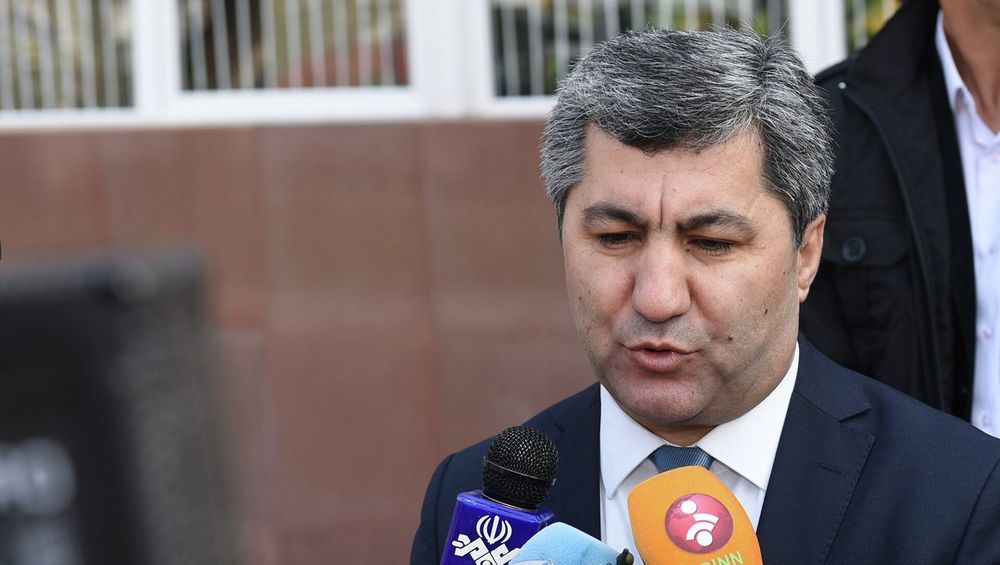
The theme of the second day of the conference was “Democratic Institutions.” The Tajik opposition actively participated in it. In particular, in his speech, the leader of the National Alliance of Tajikistan, Muhiddin Kabiri, spoke about recent events in the Gorno-Badakhshan Autonomous Region. According to him, during the suppression of peaceful protests, the authorities killed about 50 peaceful residents, and hundreds of activists, including at least 10 journalists and bloggers, were arrested or fled the country.
Photo: InternetMuhiddin Kabiri, leader of the NAT
Kabiri also criticized the international community, stating that the governments of Russia, Belarus, and Tajikistan have carried out a “devastation of civil society,” but the international community has spent much time and effort on “dialogue and cooperation with these stagnant regimes.”
“As a result, we have what we have today in Russia, Belarus, Tajikistan, and other similar countries. It should not be forgotten that repressive long-standing governments already have extensive experience in turning dialogue with democratic countries into a prolonged process of ‘talks about nothing’ and ultimately gaining maximum benefit to strengthen their power. As a result of these constant dialogues about ‘the human rights situation, democratization, and civil society,’ the situation has not only not improved but, as in the case of our country, has worsened significantly,” emphasized the leader of the NAT.
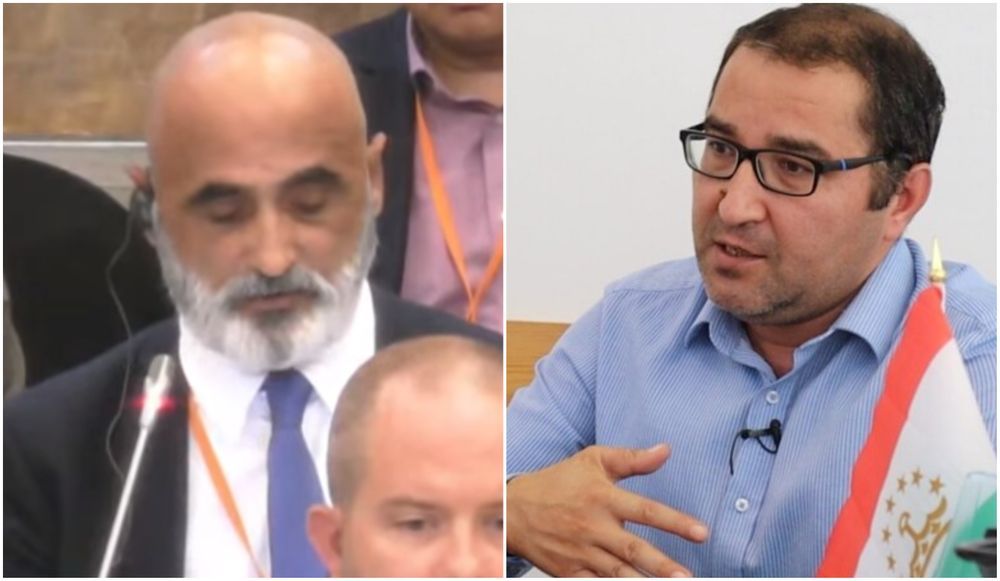
Jamshed Yorov, head of the Buzurgmehr Foundation at the Warsaw Conference of the OSCE, stated that after the adoption of the new Law on Advocacy in Tajikistan in 2015, this institution of civil society has effectively ceased to exist, and today in the country “from a practical point of view, the role of advocacy is reduced only to legitimizing the course of investigations and judicial sentences.”
Photo: InternetAlim Sherzamonov and Jamshed Yorov
Alim Sherzamonov, deputy chairman of the National Alliance of Tajikistan and chairman of the executive committee of the Forum of Free Thinkers of Tajikistan at the Warsaw Conference, stated that “the need for a new world order has arisen,” as, according to him, “for thirty-one years, power has not changed in Tajikistan. To remain in power, Rahmon has changed the Constitution four times using electoral mechanisms to extend his rule, while remaining acceptable to the civilized world.”
Madina Hikmatullo, a member of the Tajik Human Rights Center in Vienna, presented women from Tajikistan whose rights have been violated. She spoke about “how the regime of Emomali Rahmon, who has ruled Tajikistan for almost 30 years, brutally suppresses women and mothers.” As an example, she pointed to the detention of 65-year-old Ulfatkhonim Mamadshoeva, a civil society activist and journalist from Badakhshan, and 45-year-old Shohida Mahmadjonova, who was sent to prison simply because her son criticized the government.
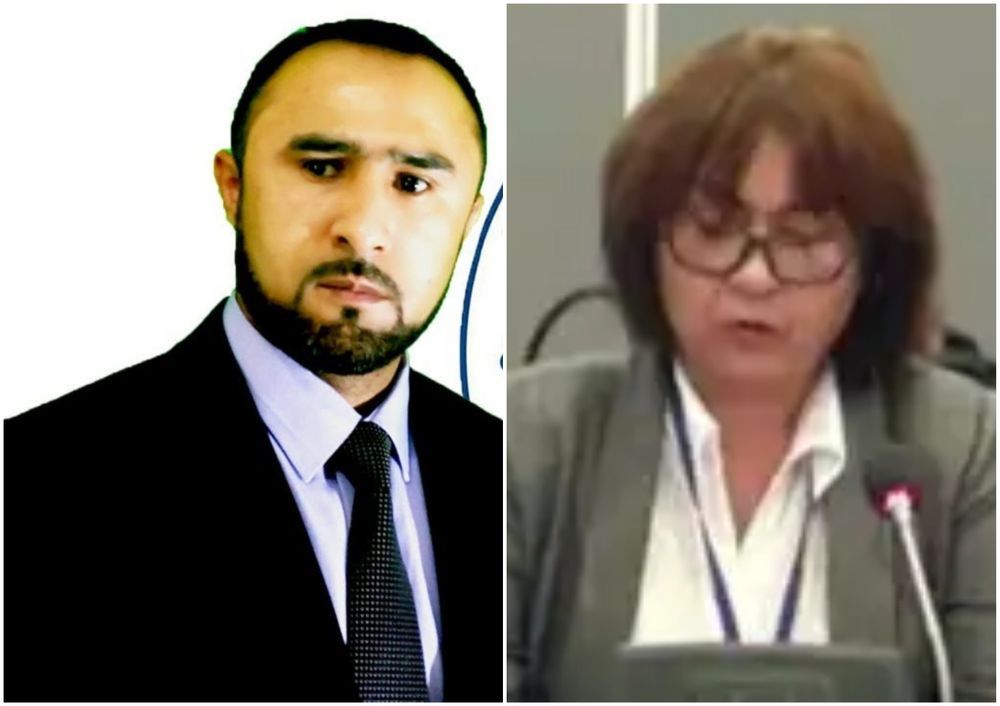
Human rights defender Muazzama Kodirova, in her speech, called on the Tajik government, particularly law enforcement agencies, to stop persecuting, abducting, and killing citizens of Tajikistan, fabricating criminal cases against the innocent, and to comply with laws and the Constitution.
Photo: InternetKhusain Ashurov and Muazzama Kodirova
At the Warsaw Conference on the Human Dimension of the OSCE, a representative of the Tajik opposition, Deputy Head of “Group 24” Khusain Ashurov, also spoke. In his speech, he discussed elections and emphasized that elections in some so-called democratic countries have become “staged,” not conducted transparently and according to international norms.
As an example, Khusain Ashurov pointed to the presidential elections in Tajikistan in 2020. He stated that “although in these elections, besides Rahmon, four other candidates participated, they were not alternative candidates. Only one person, Faromarz Irgashov from Badakhshan, tried to run, but he was not allowed to participate in the elections. He is currently in prison.”
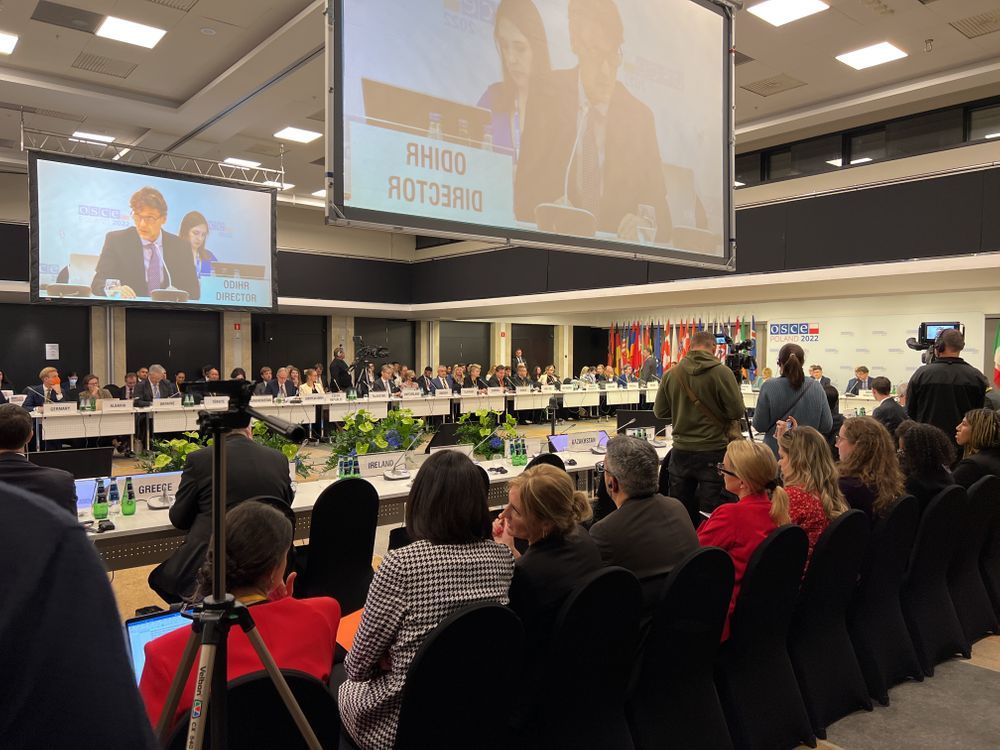 Photo: Internet