Photo: Internet On October 19, the international conference “International and Regional Cooperation in Border Security and Control to Combat Terrorism and Prevent the Movement of Terrorists” concluded in Dushanbe, the capital of Tajikistan. On October 17, a day before the start of this conference, the last court hearing for journalist Daler Imomali took place in […]
AZDA.TV· Send to others
Photo: Internet
On October 19, the international conference “International and Regional Cooperation in Border Security and Control to Combat Terrorism and Prevent the Movement of Terrorists” concluded in Dushanbe, the capital of Tajikistan.
On October 17, a day before the start of this conference, the last court hearing for journalist Daler Imomali took place in a temporary detention center in the capital, just a few kilometers from the venue of this international event.
Daler Imomali was detained 122 days ago, on June 15 of this year, by law enforcement officers in the Ayni district, and was sentenced to 10 years in prison at the very moment when Dushanbe was hosting over 500 delegations from various countries around the world.
The court found Daler Imomali guilty of “providing knowingly false information about a crime,” “illegal entrepreneurship,” and “participating in the activities of extremist organizations,” namely terrorist and extremist organizations whose activities are banned in Tajikistan by the Supreme Court.
Photo: Internet
This international conference was attended by high-ranking representatives from 52 countries, international and regional organizations, diplomatic corps, experts, and journalists from various international publications, who, alongside the main theme of the conference, namely “combating terrorism and preventing the movement of terrorists,” naturally also followed the news in Tajikistan itself.
The President of Tajikistan also delivered a speech at this international conference. The main issue raised by Emomali Rahmon in his speech, which he wanted to convey as a special message to the whole world, apparently was “combating terrorism and preventing the movement of terrorists.”
However, at this world-class event, which took place at the initiative of the government of Tajikistan, the United Nations, the Organization for Security and Co-operation in Europe, and with funding from Qatar and Saudi Arabia, Emomali Rahmon interpreted his message in his own way.
According to Emomali Rahmon’s interpretation, “combating terrorism” is not about fighting armed militants, but primarily about fighting journalists and dissenters. Anyone who speaks out against autocratic regimes and the policies of dictatorial governments is recognized as a terrorist, an accomplice of terrorists, or collaborating with terrorists.
In connection with the interpretation of the phrase “preventing the movement of terrorists,” i.e., the journalists and bloggers in the country who speak the truth, the President of Tajikistan demonstrated a living example to the world in the case of Tajik journalist and blogger Daler Imomali, showing that to intimidate the population, these journalists must be punished with 10 years of imprisonment in a high-security colony.
The trials of these Tajik journalists and bloggers, conducted behind closed doors, and the harsh sentences handed down to them, including those against Abdullo Gurbati and Daler Imomali, were carried out at the behest and direction of Emomali Rahmon and took place precisely during these days, sending a clear message to the country and beyond.
Intimidation of people and imposing an atmosphere of fear in society, especially among civil society activists, and signals to the outside world, i.e., intolerance towards dissent, regardless of whether they are opposition groups or supporters, and ruthlessness towards civil society activists and freedom in general.
The law enforcement agencies, the prosecutor’s office, and the Supreme Court, at the direction of Emomali Rahmon, fabricated the case against Daler Imomali and prolonged it for more than four months until today. Although according to the current legislation of the country, the judicial authorities are a separate branch of power, in practice, the courts in Tajikistan are subordinate to the executive power led by the head of the government of Tajikistan.
Moreover, since Emomali Rahmon personally appoints and dismisses all judges in Tajikistan, for the past three decades, the notion has firmly established itself in the minds of the majority that the resolution of any high-profile cases, especially those involving civil society activists, journalists, and successful entrepreneurs, is determined at the wish and direction of the President of Tajikistan.
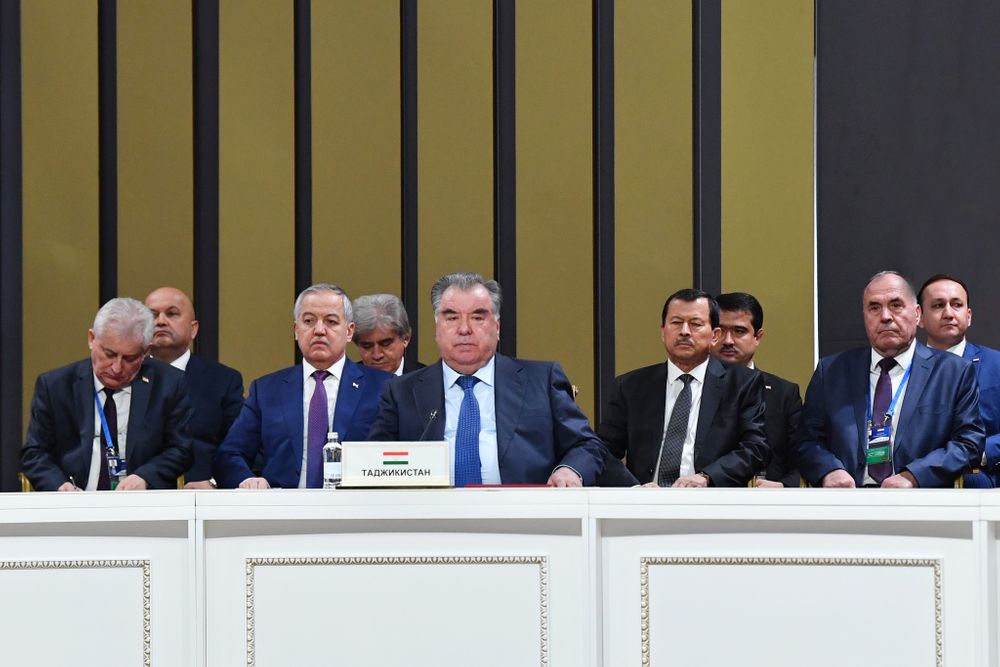 Photo: Internet
