News
POLITICS
CSTO wants to hinder NATO?
Secretaries of the Security Councils of CSTO countries discussed NATO’s latest decision and the situation in Ukraine. According to the organization’s press service, on November 7, the 12th meeting of the secretaries of the Security Councils of the CIS member states took place in Moscow. During the event, a meeting was held between CSTO head […]
Secretaries of the Security Councils of CSTO countries discussed NATO’s latest decision and the situation in Ukraine.
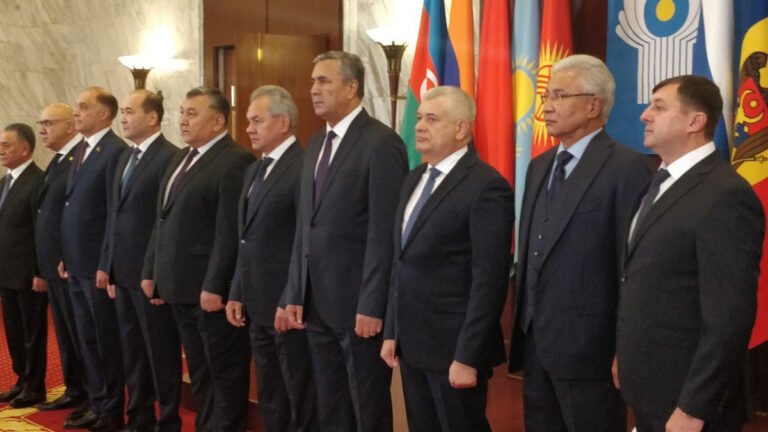
According to the organization’s press service, on November 7, the 12th meeting of the secretaries of the Security Councils of the CIS member states took place in Moscow. During the event, a meeting was held between CSTO head Imangali Tasmagambetov and the Secretary of the Security Council of Russia Sergey Shoigu.
CSTO Secretary General Imangali Tasmagambetov emphasized in his speech that the military-political situation along the perimeter of the CSTO’s area of responsibility remains complex.
In particular, the decision made by the United States and Germany to deploy “long-range” strike systems in Western Europe “has created a threat of a renewed arms race, including nuclear weapons, on the continent and in the world as a whole.”
It was also noted that the concentration of NATO armed forces and information warfare centers at the borders of Belarus and the Russian Federation continues, as well as the increasing economic, financial, and military support for Ukraine aimed at continuing the armed confrontation with Russia.
One of the main topics of this meeting was the discussion of the situation in Central Asia. It was noted that there remains a “danger of the spread of terrorist activity, illegal migration, and the illicit trafficking of weapons and drugs” in this region.
The CSTO Secretary General noted that on November 28 of this year, a draft “Targeted Intergovernmental Program of the CSTO for Strengthening the Tajik-Afghan Border” will be presented for approval by the heads of state at the session of the CSTO Collective Security Council.