Political scientist Rustam Khaydarov called the report of the U.S. Commission on International Religious Freedom “a provocative and biased conclusion.” Photo: Internet As reported by the Khovar agency, the deputy director of the Institute of Philosophy, Political Science, and Law of the National Academy of Sciences of Tajikistan, Rustam Khaydarov, stated that Tajikistan is considered […]
AZDA.TV· Send to others
Political scientist Rustam Khaydarov called the report of the U.S. Commission on International Religious Freedom “a provocative and biased conclusion.”
Photo: Internet
As reported by the Khovar agency, the deputy director of the Institute of Philosophy, Political Science, and Law of the National Academy of Sciences of Tajikistan, Rustam Khaydarov, stated that Tajikistan is considered the most religious country in the region. He commented on the report published in April 2022 by the U.S. Commission on International Religious Freedom (USCIRF), which recommended designating Tajikistan as a country of “particular concern.”
Rustam Khaydarov believes that “the report was prepared by biased desk researchers who have a superficial understanding of religious life in Tajikistan.”
The Tajik political scientist claims, based on studies from certain organizations, that “Tajikistan is the most religious state among the Central Asian countries, with 85% of its population being believers.” As evidence, he cites the functioning of several thousand mosques, the performance of the Hajj by believers, and the celebration of Eid al-Fitr and Eid al-Adha.
Khaydarov writes that the U.S. Commission’s conclusion about the situation in Tajikistan is “a provocative and biased conclusion” that will lead to a deterioration of Tajik-American relations.
At the same time, most domestic and foreign experts note that the authorities severely restrict freedom of religion and belief in Tajikistan.
An independent Tajik expert, speaking on condition of anonymity, told Azda TV:
“The uncompromising struggle of the government of Emomali Rahmon against certain elements of external appearance, such as indicators of religiosity, including hijabs for women and beards for men, is constantly covered in the press and subjected to public criticism, and this cannot be denied. This is a well-known fact. However, Rahmon’s government continually denies real facts, just as it previously denied conducting “raids” on conscripts.”
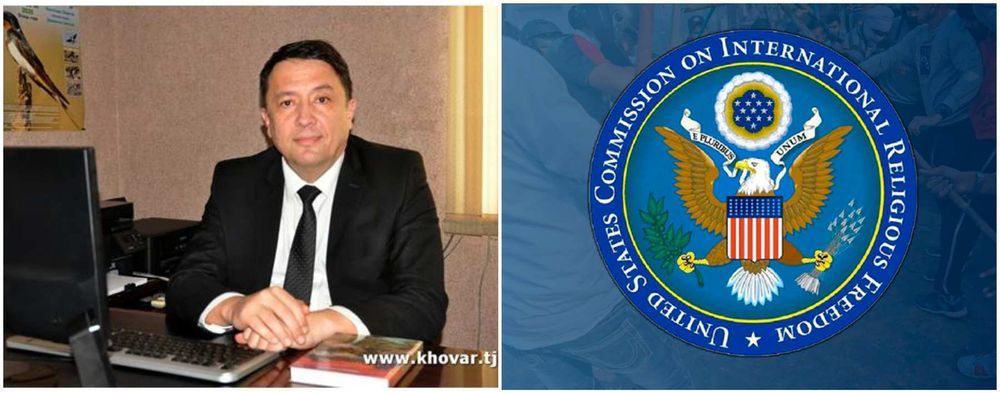 Photo: Internet