News
HUMAN RIGHTS
HRW reported on repression and persecution of dissenters in Tajikistan
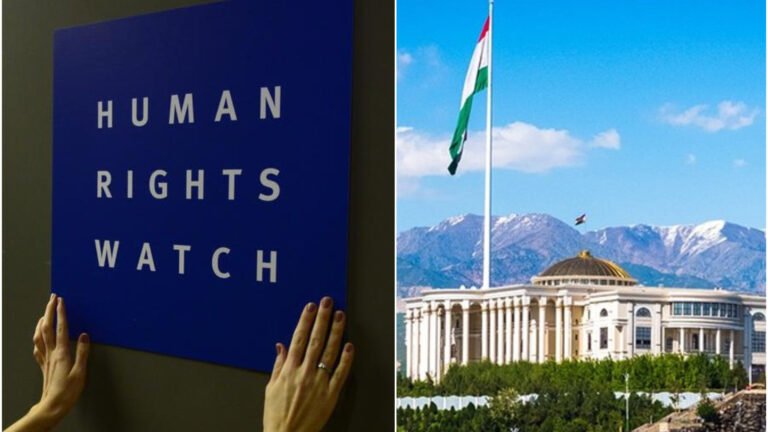
The international organization Human Rights Watch (HRW) in its World Report – 2024, published on January 11, 2024, reports that authoritarian governments in Central Asian states “grossly restrict freedom of speech and freedom of assembly, as well as other fundamental freedoms, arbitrarily imprison their opponents and critics, and allow impunity for serious human rights violations […]
The international organization Human Rights Watch (HRW) in its World Report – 2024, published on January 11, 2024, reports that authoritarian governments in Central Asian states “grossly restrict freedom of speech and freedom of assembly, as well as other fundamental freedoms, arbitrarily imprison their opponents and critics, and allow impunity for serious human rights violations such as torture and domestic violence.”
It is also noted that in 2023, repression against independent and critical voices in Tajikistan continues.
In the context of a repressive political climate and pressure on human rights in Tajikistan, the government has forced hundreds of non-governmental organizations to close, banned or restricted the activities of religious organizations, and many bloggers have been detained for expressing their opinions on state policy, the report states.
Several political movements and parties that the authorities see as a threat to the regime remain banned, including the Islamic Renaissance Party of Tajikistan and “Group 24”; their members are serving long prison sentences, and some have been forcibly returned from abroad.
In June 2023, the Supreme Court recognized the internet resource “New Tajikistan 2,” belonging to “Group 24,” as “extremist” and declared the activists’ pages on Telegram, Facebook, YouTube, and Instagram as prohibited. For cooperating with this resource, the authorities of Tajikistan have imposed a penalty of up to eight years of imprisonment.
Also, in the summer of 2032, the Supreme Court banned the news internet resource Pamir Daily News as extremist, which primarily covered the situation in GBAO.
The authors of the report note that independent journalist Khurshed Fazilov was sentenced to seven years in prison. A criminal case was also initiated against independent journalist and blogger Rustam Dzhoni due to criticism of the authorities.
Leaders and ordinary members of the IRPT, previously sentenced to long or life sentences, remained in custody despite ongoing international calls for their release, noted Human Rights Watch.
In July, the court of the city of Vahdat added 10 years to the 21-year prison sentence of lawyer Buzurgmehr Yorov, who defended members of the banned IRPT before the first sentence in 2015. The trial was held behind closed doors and without a lawyer.
The report by the international organization also states that the son of one of the leaders of the IRPT Abdullohi Shamsiddin and former member of “Group 24” Nizomidin Nasriddinov were sentenced to imprisonment after being forcibly returned to Tajikistan.
“In September, relatives of activists from ‘Group 24’ were detained in Tajikistan. Activists held a protest during the visit of President Emomali Rahmon to Germany, where he met with Chancellor Olaf Scholz,” the report states.
According to Human Rights Watch, the repression against residents of the Gorno-Badakhshan Autonomous Region (GBAO) has not ceased.
After peaceful demonstrations in GBAO were dispersed with the use of force in 2021 and 2022, the persecution of human rights defenders, lawyers, Pamiri activists, and journalists covering the situation continued, and the authorities of Tajikistan began closing or nationalizing the facilities of the Aga Khan Foundation, including NGOs funded by this foundation.
In the first half of 2023, the authorities reported the closure of 239 non-governmental organizations (over 500 NGOs in 2022). At least five of these organizations, including the “Pamiri Lawyers Association” and two youth groups, were closed in May in GBAO on suspicion of “connections with local criminal groups.”
To date, 205 residents of GBAO have been sentenced to various terms of imprisonment in closed trials. Many reported to relatives that they had been subjected to torture and ill-treatment.
The Human Rights Watch report also mentions violations of freedom of religion, domestic violence against women and girls, harassment and abuse of LGBT individuals by law enforcement agencies in Tajikistan, as well as the conflict on the Tajik-Kyrgyz border.
It should be noted that this is not the first instance in which human rights organizations and Western countries criticize the authorities of Tajikistan for suppressing dissent, but the country’s government ignores any criticism, recommendations, and demands from organizations. The human rights situation in the country worsens every year.