News
MIGRATION
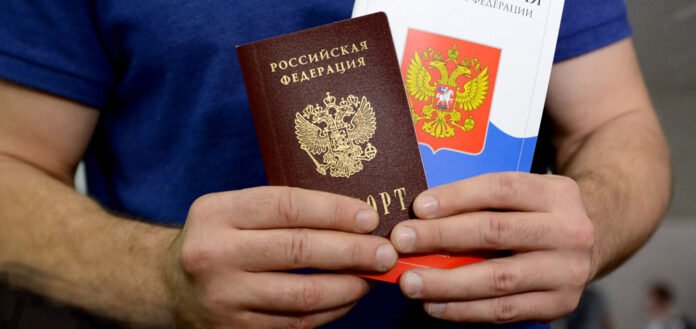
In Russia, there are calls to ban citizenship for migrants from Central Asian countries
In the State Duma of Russia, it has been proposed to temporarily suspend the issuance of citizenship to individuals from Central Asian countries, including citizens of Tajikistan. The chairman of the party Just Russia – For Truth, leader of the party faction in the State Duma, Sergey Mironov, called for a moratorium on granting citizenship […]
In the State Duma of Russia, it has been proposed to temporarily suspend the issuance of citizenship to individuals from Central Asian countries, including citizens of Tajikistan.
The chairman of the party Just Russia – For Truth, leader of the party faction in the State Duma, Sergey Mironov, called for a moratorium on granting citizenship and residence permits to migrants from Central Asia until 2030.
“The poorly controlled flow of migrants to Russia is only increasing. According to the Ministry of Internal Affairs, in the first six months of 2025, about 114,000 work permits were issued to foreigners, which is one and a half times more than in the first half of 2024,” the politician noted.
According to official estimates, there are more than 6.5 million migrants in Russia.
Sergey Mironov stated that only a smaller portion of them are employed. The rest, “family members who do nothing but use our social infrastructure, including hospitals and schools,” Mironov said, but did not provide data to support these claims.
Mironov stated that this situation poses “a direct threat to the national security of Russia and the well-being of its citizens.”
Under this pretext, on September 9 of this year, his party submitted a bill to the State Duma that proposes a ban on the entry and residence of family members of labor migrants in the country.
According to official data, in 2024, about 209,000 foreigners received Russian citizenship, with the largest portion being natives of Tajikistan — 45,200 people.
Additionally, in the first half of 2025, about 114,000 work permits were issued to foreigners, which is 1.5 times more than in the same period last year.
Sergey Mironov is known as one of the opponents of labor migration and has repeatedly expressed dissatisfaction with the presence of migrants in Russia. The party “Just Russia – For Truth” is also the author of several anti-immigration laws and initiatives.
Earlier, the Just Russia – For Truth faction in the State Duma announced the launch of a Telegram bot “Stop Migrant” for reporting on migrants. According to the authors’ idea, ordinary citizens can now report violations by migrants, thus contributing to the fight against illegal migration.
The party also advocates for the introduction of a visa regime with Central Asian countries, as well as a ban on employing migrants in social sectors such as construction and transportation.
At the same time, Sergey Mironov, the leader of this party, has repeatedly stated that entry into Russia should only be allowed for those migrants who have biometric data and paid medical insurance, and a special amount should be charged in advance in case of their possible deportation, so that this procedure is not carried out at the expense of “Russian” taxes.
After the attack on the “Krokus City Hall,” in which migrants were identified as suspects, anti-migrant sentiments have intensified in Russia. During this time, several new laws have been proposed and adopted in the State Duma that further worsen the situation for migrants.
Law enforcement agencies, along with nationalist groups, are conducting “raids” on the streets, in dormitories, cafes, and markets, where migrants are mistreated and beaten.
Despite the labor shortage in Russia, which authorities and experts note has reached a deficit of 2 to 2.2 million workers, the number of deportations of migrants from the country continues to rise.
Experts point out that whenever problems arise within Russia, the authorities create an atmosphere of hostility towards migrants to distract citizens from the main issues. The incident at “Krokus City Hall” provided the authorities with just such an opportunity.
Experts also note that parliamentary elections will take place in Russia in 2026, and parties that currently have limited representation in the State Duma, such as “Fair Russia — For Truth” or “New People,” are eager to use the current situation in the country to increase their number of seats in parliament next year.
Proposing initiatives related to restricting the rights of migrants is a way for them to gain support from that segment of voters who advocate for a stricter migration policy.