News
HUMAN RIGHTS
In two years, at least 8 journalists have been arrested and convicted in Tajikistan
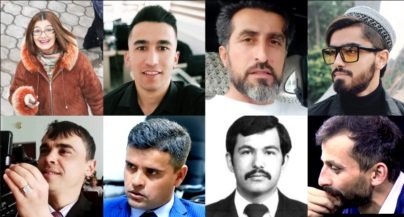
Exactly two years ago, one of the largest arrests of journalists since the civil war took place in Tajikistan. From May to July 2022, the authorities arrested and then sentenced at least eight people to various terms. According to human rights defenders, in the overwhelming majority of cases, their criminal cases were fabricated: for this […]
Exactly two years ago, one of the largest arrests of journalists since the civil war took place in Tajikistan. From May to July 2022, the authorities arrested and then sentenced at least eight people to various terms. According to human rights defenders, in the overwhelming majority of cases, their criminal cases were fabricated: for this reason, the authorities held court sessions in a closed regime at the pre-trial detention center.
Two years later, despite calls and demands from international organizations and human rights defenders, the government of Tajikistan has not reviewed the cases of the convicted journalists. Colleagues from the Tajik service of Radio Free Europe/Radio Liberty met with the families of several journalists and learned how they are living.
****
Shodigul Bobieva is the mother of journalist Daler Imomali: he was arrested in June 2022. The authorities accused him of spreading false information, membership in an extremist organization, as well as illegal entrepreneurship and sentenced him to ten years in prison. The journalist denies all charges and partially admits only to the charges of tax evasion.
Daler has been in prison for two years: there he engages in wood carving and painting, sending his family boxes and boards with pictures. “Here, he wrote: ‘To my Shahnosa from father.’ And his signature: his daughter’s name is Shahnosa,” Shodigul Bobieva shows. “He made this as a gift for his daughter’s birthday.”
After Daler’s arrest, who was the sole breadwinner of the family, the situation for his relatives worsened significantly. The elderly father of the journalist had to go into labor migration to support the family. “I spoke with him this morning. Every time I hear his voice, I involuntarily start to cry,” Shodigul Bobieva shares about her son. “And he asks me not to cry: he says it is hard for him to see me in such a state and that it also brings him down. But I can’t hold back.”
****
In the summer of 2022, along with Daler, Tajik security forces also arrested his colleague Abdullo Gurbati. He was sentenced to seven years in prison on charges of assaulting a police officer. Abdullo and his relatives deny all accusations and say that Gurbati was attacked twice before his arrest due to his reports.
Abdullo’s mother, Gulnora Sharifova, says she misses her son very much: “We worry about his children. When his child starts to talk, it brings a lump to my throat. I work myself: I leave the house and my thoughts scatter,” Abdullo’s mother shares. “But his father cries very often. What can we do?”
****
Another convicted journalist in Tajikistan is Zavkibek Saidamini. He is a former employee of the state television channel who left the profession and became a construction crane driver. However, he did not completely stop writing: he continued to express his opinions on social media.
The mother of journalist Khabis Yatimov says that she still does not understand the charges for which her son was sentenced to seven years in prison. “Right now he is not complaining about anything. Our only complaint is that he was imprisoned without any guilt,” the woman emphasizes. “My son was not allowed to defend himself in court. The hearing was held behind closed doors. At the last hearing, he read his statement and declared that he is innocent. I only ask for my son to be released so that he can return to his family. Nothing more.”
Currently, at least eight journalists are serving sentences in Tajikistan’s prisons. Their arrests and sentences have been harshly criticized by international human rights and journalism organizations. Amnesty International accused the Tajik authorities of “creating an atmosphere of fear in the country,” while the Committee to Protect Journalists included Tajikistan among the 12 countries labeled as “jails for journalists.”
The Tajik government has not yet responded to external criticism and continues to increase pressure on the media.