News
HUMAN RIGHTS POLITICS
Is Tajikistan a threat to the whole world?
Article based on materials from havli.substack.com. After the atrocities at “Krokus City Hall,” China is paying more attention to security issues in Tajikistan. Meanwhile, Russia and Turkey are applying restrictive approaches. Even among its friends, Tajikistan is increasingly perceived as a security problem. Last week, Chinese Minister of Public Security Wang Xiaohong visited Dushanbe to […]
Article based on materials from havli.substack.com.
After the atrocities at “Krokus City Hall,” China is paying more attention to security issues in Tajikistan. Meanwhile, Russia and Turkey are applying restrictive approaches. Even among its friends, Tajikistan is increasingly perceived as a security problem.
Last week, Chinese Minister of Public Security Wang Xiaohong visited Dushanbe to meet with President Emomali Rahmon. The bulletin of Tajikistan’s state media included threats such as “terrorism, extremism, manifestations of radicalism, separatism, transnational organized crime, drug trafficking, and cybercrime” among the topics discussed. As a result of the meeting, the state agencies of China and Tajikistan tasked with these issues are to “strengthen coordination and practical cooperation.”
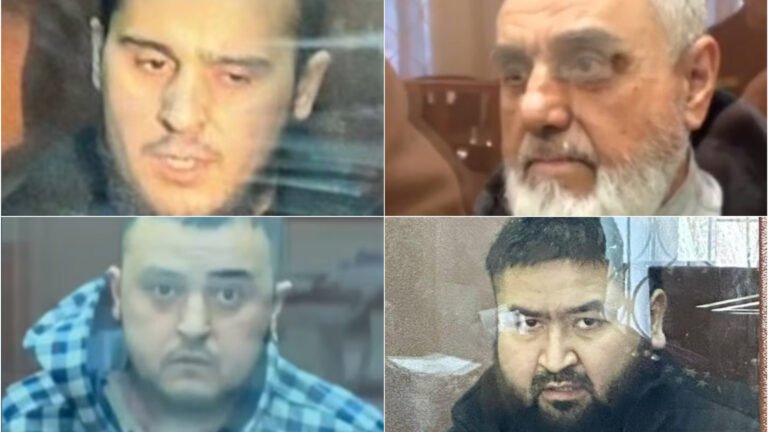
It is unlikely to be a coincidence that this visit took place so soon after the deadly atrocity at Krokus City Hall, for which Russian authorities blamed a group of Tajik citizens. Beijing’s assistance in ensuring internal security in Tajikistan largely depends on providing it with the surveillance technology that it has successfully used in its Xinjiang province.
As reported by Eurasianet.org, Tajikistan signed a $22 million deal with the Chinese technology company Huawei in 2013 for the installation of surveillance cameras and traffic cameras around the capital. Drivers in Dushanbe quickly learned to hate the cameras, as it meant they could no longer run red lights without a fine. However, the combination of AI-based surveillance technology with the Tajik government’s requirement for residency identification, as well as fingerprint and blood type data, creates a total surveillance machine.
The alleged closeness between Huawei and the Chinese state likely means that security personnel in Beijing have broad access to the data collected in Tajikistan. Tajikistan’s dependence on Huawei is only increasing. In December, the company’s office in Dushanbe signed a preliminary deal with Tajikistan’s telecommunications authority to upgrade or install 7,600 base stations, which will become the cornerstone for the 5G network. Tajik internet users will enjoy higher speeds, but this will likely come at a certain cost. The concept of digital surveillance aligns closely with the control measures that Russia offers for incoming foreigners.
Earlier this month, the Ministry of Internal Affairs in Moscow announced that it had prepared a draft law that, among other things, provides for the creation of a digital profile for foreign citizens, which will be used by several government agencies. If there was any illusion that the ministry was referring to labor migrants, other parts of the same proposed law directly address employment rights. Another provision is to limit the stay of foreign citizens in Russia to “no more than 90 days in a calendar year,” in contrast to the current rule of 90 days within six months. Whether the more draconian aspects of this draft law will remain in light of complaints from the business community and when the wounds of “Crocus City Hall” will begin to heal is still unknown. But the direction is clear: surveillance, intimidation, expulsion. This is alarming, as remittances from labor migrants in Russia account for about half of Tajikistan’s economy.
Turkey, another destination for Tajiks, has already pulled the trigger on one major restrictive measure. Last week, it terminated the visa-free agreement for citizens of Tajikistan. This was a blow to those who used Istanbul as an affordable transit point for travel to third destinations. The Ministry of Foreign Affairs in Dushanbe stated that they were not informed of this decision in advance, noting that it was made in haste. “According to international practice, Turkey should have provided us with official information about the date of the introduction of the visa system for citizens of Tajikistan,” a ministry representative lamented.