Recently, the issue of the humiliation of women in hijabs by the authorities of Tajikistan has once again become resonant. Photo: Internet Social media user Lola Nasriddinova apologized to women “who removed or tied their headscarves under duress at the event, and to all those who had to leave the event due to pressure.” She […]
AZDA.TV· Send to others
Recently, the issue of the humiliation of women in hijabs by the authorities of Tajikistan has once again become resonant.
Photo: Internet
Social media user Lola Nasriddinova apologized to women “who removed or tied their headscarves under duress at the event, and to all those who had to leave the event due to pressure.” She believes that women need the support of human rights defenders and feminists who advocate for women’s rights.
“Do we really have regulations prohibiting hijabs in state institutions, and are we not allowed to be shown on TV?” – questions Nasriddinova.
“The humiliation of women in headscarves (hijabs) continues to be a serious problem in our country. I believe this is an insult to personal dignity, a lack of respect for a person’s conscious choice, and a very biased attitude,” – she writes.
“But are the feelings of women in headscarves not feelings?” – asks a user.
The user’s post sparked numerous discussions, and in the comments, users divided into several groups.
Some users expressed support for women’s freedom in choosing clothing.
“I advocate for absolute freedom for women in their choice of clothing. No one has the right to tell a woman what to wear or to take it off. Only in weak, poor, and dictatorial countries do governments seek to impose a dress code on women. Any country that resorts to extreme measures on this issue will face collapse,” – writes journalist Humairo Bakhtiyor.
“I am very sorry, some women think that with a headscarf or hijab, a woman cannot study. Will you be smarter if you take off your headscarf?” – writes Fatima Khuseynova.
User Azimjon Ahmadzoda states that “there is no prohibition on wearing a headscarf in Tajikistan in any regulatory act. Tajikistan adheres to the constitutional principle of a secular state! Those who demand that you remove your headscarf do not have such authority!”
“Just recently in Iran – a Muslim country, we saw how women massively removed their satrs and chadors, cut their hair, and exposed themselves – all of this was accepted as a protest against the forced imposition of Islamic values! Here, on the contrary, we have the opposite situation! Prohibitions and coercion can only achieve the opposite effect! Extremes are always bad! The Women’s Committee needs to make efforts, apply common sense, and respect women to reach a compromise on this issue at the official level!” – writes Marhabo Zununova under Lola Nasriddinova’s post.
Some users supported the ban on wearing hijabs on the grounds that hijabs symbolize backwardness.
“Hijabs, headscarves, burqas, what else is there, are just a part of clothing. You are fighting for them now, but in the past, our great-grandmothers died fighting for the removal of the burqa and for women’s equality in society! I am very sorry that their struggle for women’s freedom was in vain, as women like you are rolling back to the past century, to the hijab, and soon to the burqa, and then our freedom of speech will be at an end!” – writes user Musallam Kamolova.
“Do you want us to be like in Iran? Because of improper hijab wearing, women were killed? I don’t think a piece of fabric prevents anyone from remaining faithful to their beliefs,” – writes a user named Shoira Toirova. In her comment, she supported the idea of imposing restrictions on religious people.
Lawyer Navruz Odinaev wrote under this post that there are no official prohibitions on wearing a headscarf (hijab) in Tajikistan.
“As for the situation in general, unfortunately, even from the comments on this post, we see that we are still far from the principles of democracy, where everyone is free in their actions as long as that freedom does not interfere with others. Wearing a headscarf cannot interfere with anyone, just as wearing other ‘secular’ clothing cannot. In reality, sometimes employees of certain structures exceed their authority and violate the rights of our citizens,” – writes the lawyer.
The authorities of Tajikistan, under the pretext of combating extremism and terrorism, restrict the religious rights of citizens. It is unsafe for men in the country to wear beards, and for women to wear hijabs, and the threat to people in traditional Islamic clothing comes from both the authorities and law enforcement agencies.
International organizations have harshly criticized the authorities of Tajikistan for restricting the religious rights of citizens. Tajikistan is among the countries of particular concern regarding “violations of religious rights and freedoms of citizens.”
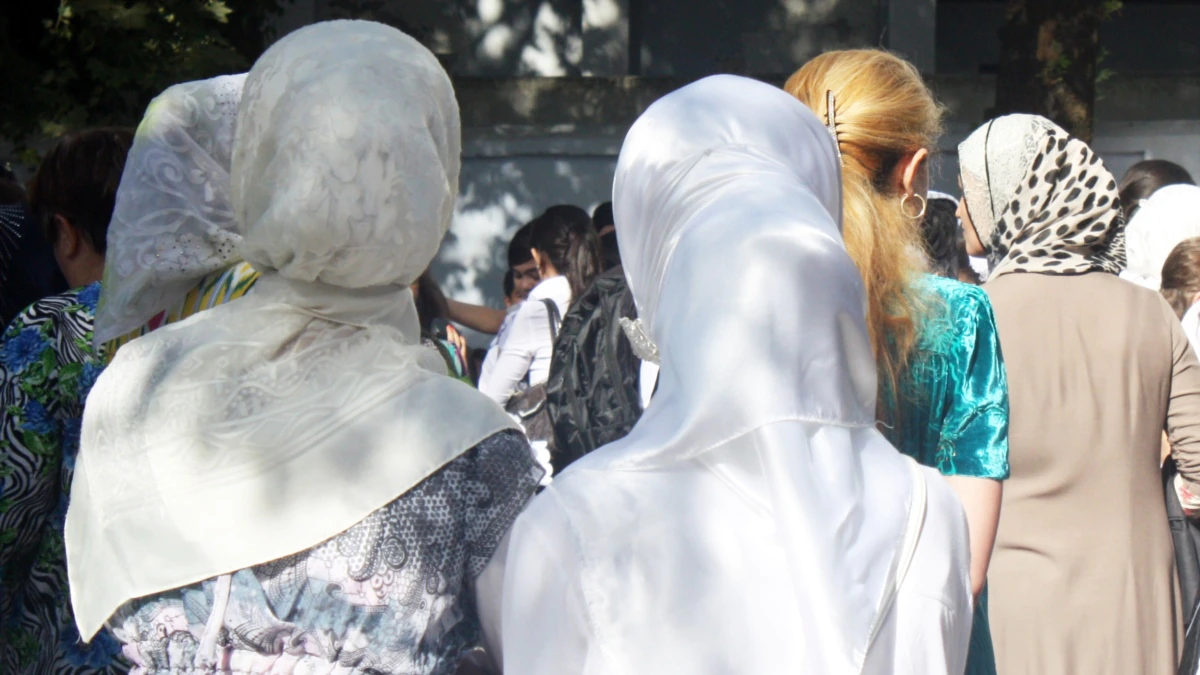 Photo: Internet