News
SOCIETY
“Manhunt” or arrest of a criminal?
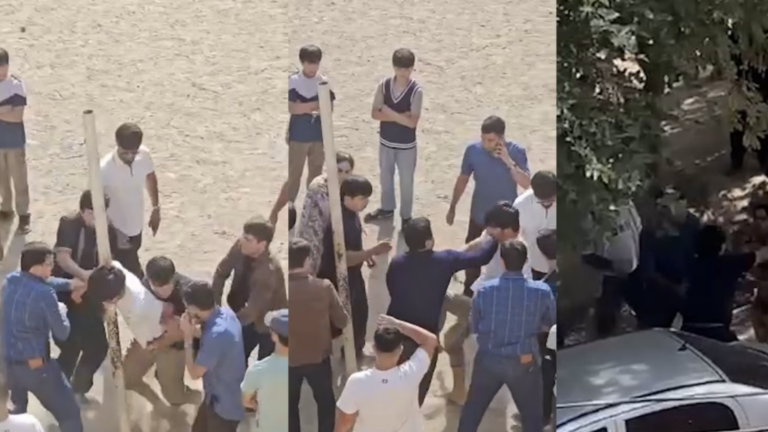
In the last two days, a video of the detention of a young man by several plainclothes men has been actively circulated in the Tajik-language segment of social media and news outlets. The footage shows the men attempting to forcibly take the young man in a white shirt somewhere, but local residents intervene and prevent […]
In the last two days, a video of the detention of a young man by several plainclothes men has been actively circulated in the Tajik-language segment of social media and news outlets.
The footage shows the men attempting to forcibly take the young man in a white shirt somewhere, but local residents intervene and prevent them from doing so.
According to Radio Ozodi, the incident occurred on October 21 on Borbad Street in the city of Kulob. Eyewitnesses reported that the young man was sitting on a bench near a sports ground when three plainclothes men appeared, detained him, and attempted to illegally take him to the military enlistment office. However, the young man firmly grabbed onto a metal pole and began to scream loudly for help.
Eventually, the plainclothes men, whom witnesses believed to be police officers, managed to put the young man in a car, but several women surrounded the vehicle, resisted, and freed him.
The Ministry of Defense of Tajikistan, in its statement, denied the information that the young man was being detained by military enlistment office staff. The Ministry of Defense emphasized that this was not a “raid” and that it allegedly “contradicts the culture of our people and is a provocation.”
According to the Ministry of Defense, the young man in the white shirt was detained by the Ministry of Internal Affairs in Kulob, and he is suspected of distributing the narcotic drug “Lyrica.”
The Ministry of Internal Affairs also issued a similar statement, but no name or other details about the detainee were provided.
The comments from the Ministry of Defense and the Ministry of Internal Affairs of Tajikistan have raised many questions among users in the Tajik-language segment of social media. The public is asking why, if this young man was indeed dealing drugs, he called for help during the “detention,” and how the women were able to free him? Why did the police officers not present their service IDs and did not detain him? Why were they not in police uniform?
Users are also wondering why the Ministry of Defense is silent regarding other videos showing young people being forcibly taken to the military enlistment office.
Earlier, the Ministry of Defense of Tajikistan reported that from the beginning of the conscription campaign from October 1 to 10, 2025, the plan for recruiting new soldiers into the Armed Forces of Tajikistan across the republic has been fulfilled by 78%. This season, young men born between 1998 and 2007 are subject to conscription.
Authorities claim that the reason for the rapid fulfillment of the conscription plan for military service is due to the “large number of volunteers,” “improvement of the national army’s reputation among the population,” as well as a number of promised government benefits, including obtaining driver’s licenses.
However, experts believe that one of the main reasons is the early start of the conscription campaign in some regions and the reduction of the plan for the number of conscripts. In addition, this process was influenced by amendments to the laws from 2020. According to these amendments, university graduates are required to serve in the military before starting work in law enforcement agencies.
Although the Ministry of Defense’s statement notes that some cities and districts have fulfilled the conscription plan due to a large number of volunteers, at least three videos published on social media show military enlistment officers detaining and taking young people with them.
Recently, the media reported cases where a second-year student and a teacher were forcibly taken.
Witness accounts of the conscription process indicate that enlistment officers are detaining young people of conscription age on the streets and in public places, as well as at their places of residence, during a campaign known among the people as “oblava,” and forcibly sending them to the army.
Recently, the authorities of Tajikistan have devised even more sophisticated methods of “oblava.” In particular, government officials and enlistment officers are forcing the heads of mahallas and mosque imams to bring young people of conscription age and send them to serve in the army; otherwise, the authorities threaten to close the mosques. In some villages in remote areas, enlistment officers have come to the homes of conscripts and, not finding the young people themselves, took their relatives or parents with them until the conscript appeared.