News
WORLD
Massive Israeli strikes on Lebanon. Israel does not consider Lebanon part of the ceasefire deal
After the announcement of a ceasefire between Iran and the USA, Israel launched massive strikes on Lebanon on Wednesday. Israeli Prime Minister Benjamin Netanyahu stated that the ceasefire between Iran and the USA does not apply to Lebanon. According to him, the Israeli army will continue its attacks against “Hezbollah.” On April 8, Israel carried […]
After the announcement of a ceasefire between Iran and the USA, Israel launched massive strikes on Lebanon on Wednesday.
Israeli Prime Minister Benjamin Netanyahu stated that the ceasefire between Iran and the USA does not apply to Lebanon. According to him, the Israeli army will continue its attacks against “Hezbollah.”
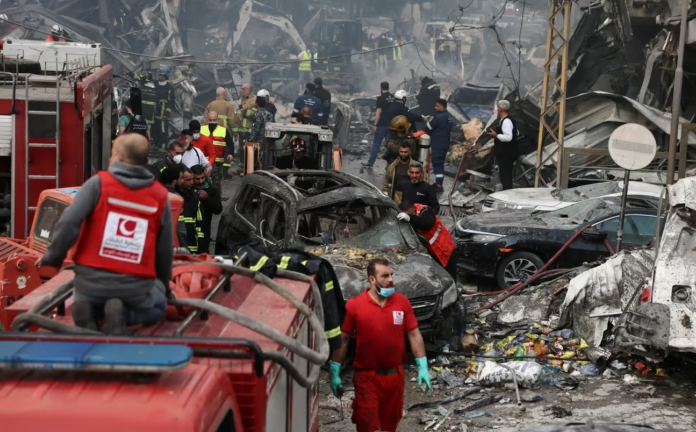
On April 8, Israel carried out over 100 strikes across Lebanon in just 10 minutes, resulting in hundreds of casualties. Israel claimed that the strikes targeted “Hezbollah” facilities.
According to media reports, last night Israel struck several bridges and crossings, including bridges over the Litani River that connect the north of the country with the south. Israeli sources stated that “Hezbollah” uses these bridges to transport military equipment, weapons, and ammunition.
Israel also reported that strikes hit ten sites used for storing “Hezbollah” ammunition and rockets.
Additionally, Israel announced the elimination of “Hezbollah” leader Naim Qassem, although this information has not yet been confirmed. The death of Ali Yusuf Harashi, a nephew of Naim Qassem, has been confirmed.
The Lebanese Ministry of Health reported that as a result of the massive strikes on Beirut and other areas of the country, 254 people have died, and another 1,165 have been injured. Search and rescue operations are ongoing, and there may still be people trapped under the rubble, so the death toll may rise.
Lebanese President Joseph Aoun declared a “massacre.” A national mourning period has been announced in the country.
In response to the Israeli strikes, “Hezbollah” began rocket attacks on Israel.
Israeli media reported that rocket fire is being directed from Lebanon towards northern Israel, and alarm sirens can be heard.
Israeli media, citing the Israeli army, stated that the southern part of Lebanon up to the Litani River is no longer considered part of Lebanese territory. This information has not yet been officially confirmed. The Litani River is located about four kilometers from the Lebanon-Israel border and runs through Lebanese territory.
Iranian President Masoud Pezeshkian stated on his social media page that the continuation of Israeli strikes on Lebanon “is a blatant violation of the initial ceasefire agreement,” and it is also “a dangerous sign of deception and lack of commitment to potential agreements.”
Pezeshkian noted that “continuing these actions will make negotiations meaningless.”
“We still have our finger on the trigger. Iran will never betray its Lebanese brothers and sisters,” wrote the Iranian leader.
Iranian Parliament Speaker Mohammad Bagher Ghalibaf stated that violations of the ceasefire “will entail specific costs and harsh retaliatory measures.” Ghalibaf urged Israel to “immediately cease fire.” According to him, Lebanon and Iran’s allies in the “Axis of Resistance” are an integral part of the ceasefire with the USA.
Experts believe that Israeli attacks on Lebanon and threats from Iranian leaders indicate “uncertainty and fragility” of the ceasefire. According to them, the angry statements from Iranian leaders may yield results as diplomatic pressure, but at the same time increase the risk of renewed strikes against Iran.