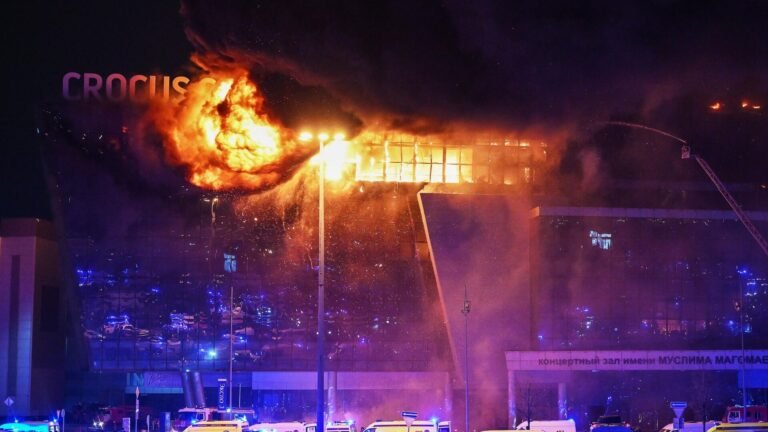
As reported by Radio Ozodi, after the terrorist attack at the Crocus concert hall in the Moscow region, migrants from Tajikistan and other Central Asian countries are increasingly facing xenophobia and migrant phobia, while discrimination and deportation have become common occurrences for them. Xenophobia, which has always existed in Russian society to some extent, has recently reached its peak. We spoke with Natalya Zotova, a Russian anthropologist and researcher of migration issues from the USA, who has conducted several studies on the situation of Tajik migrants in Russia and their families in Tajikistan.
Radio Ozodi: You have researched the issue of Tajik migration to Russia and the situation of their families in Tajikistan. We know that the situation for Tajik migrants in Russia was difficult even before the attack. In your opinion, how much has their situation worsened after the attack at Crocus?
Natalya Zotova: Of course, their situation has worsened after the attack because a new wave of hatred and xenophobia specifically towards Tajik migrants has risen. However, for Tajik migrants and their families, there is nothing new in this, as the attitude towards them has always been unfriendly and negative, and I speak about this with shame. Certainly, new trends have emerged after the attack: torture of suspects on camera, even though there is no evidence that they are involved in the attack. This raises the level of aggression, hatred, and potential violence against Tajik migrants to a new level, and this is very alarming.
Radio Ozodi: In your opinion, how long will this situation last and how long will Tajik migrants suffer in Russia?
Natalya Zotova: Of course, the most acute wave will subside because such a peak of hatred cannot last long. However, there are currently no prerequisites for the situation to change positively. When the actions of the leaders of the Russian state and the media continue to reproduce this negative attitude towards Tajiks and Tajik migrants, unfortunately, there are no prerequisites for the situation to change for the better. I have no illusions about this, unfortunately.
Radio Ozodi: Can we say that mass deportations of migrants, searches, raids, and cruel treatment are a collective punishment of migrants after the attack at Crocus?
Natalya Zotova: Indeed, there are reports of numerous sweeps, deportations, and planned deportations, involving thousands of people. This is not so much a punishment for Tajik migrants as it is a response from the Russian authorities, a performance for the public. They need to show that they are doing something, that they are reacting in some way after the attack. Therefore, one of the simplest ways is to punish Tajik migrants with mass raids, sweeps, and deportations.
Radio Ozodi: Despite all this discrimination and cruel treatment, Tajik migrants continue to strive to obtain Russian citizenship. Why?
Natalya Zotova: Let’s start with the numbers, the numbers are large. Within various programs for obtaining Russian citizenship, in just the last four years, about half a million people from Tajikistan have received Russian citizenship. These are huge numbers, plus the number of those who received Russian citizenship in previous years. In general, when we talk about Tajik migration, a misleading image is formed, as if people come to Russia for a while, for a few years, meaning a cyclical migration. But it is important to understand that a huge number of people stay in Russia; they choose to live in Russia.
This is normal from the perspective of migration in a global sense because migration is part of human history, and as a result of migration, people have settled all over the planet. Therefore, people from Tajikistan are an integral part of Russian society. In fact, the history of mass Tajik migration began 30 years ago, after the collapse of the former Soviet Union and the start of the civil war in Tajikistan. Before that, there was also a history of migration during the Soviet era. So this is a huge process that encompasses a large part of society. People strive to obtain Russian passports because it is much easier to find work, enroll children in kindergartens and schools, and integrate into society with one. Of course, despite having a Russian passport, discrimination persists. They can always be denied employment, not paid their salaries; however, there are now far fewer reasons for this. With a Russian passport, life in Russia becomes easier, which is why many strive to obtain citizenship. This is completely logical.
Radio Ozodi: After the attack in “Krokus,” Russian President Vladimir Putin stated that migration policy needs to be radically changed. We have been hearing this for many years, and Russian politicians repeat it every time, when it is convenient. Is this yet another unfounded statement, or can something really be done?
Natalya Zotova: It seems to me that this is an unfounded statement, as I mentioned earlier, a kind of public relations stunt, because the Russian authorities are well aware of the advantages of migration, the benefits that migration brings to the Russian economy. Therefore, globally, in my opinion, in migration policy, everything they could tighten, they have already done – this includes a ban on entry into the country for the slightest mistake in migration documents, a multi-year entry ban, raids, deportations; there is nowhere left to tighten further. It is clear that migrants bring great benefits to Russia, that migrants are needed in Russia. Therefore, in my opinion, there will be no serious changes in migration policy, such as the introduction of visas or a ban on the entry of Tajik migrants into Russia.
Radio Ozodi: In one of your long-standing studies, you mention that in Tajikistan, a young person’s departure for work is seen as a ticket to adult independent life, somewhat reminiscent of sending someone to the army in Soviet times. Do you think this opinion still exists, or has it changed over the years?
Natalya Zotova: I continue to work and conduct research in Tajikistan and, to be honest, I was there quite recently, less than a year ago, because we conducted a large study with the Tajik office of the International Organization for Migration on mental health among returning migrants. We specifically studied how discrimination and xenophobia significantly affect the emotional well-being and mental health of migrants. Regarding your question related to the research I conducted a few years ago, I want to say that we can no longer compare migration to conscription in the Soviet era, as many years have passed.
However, migration for young people is indeed seen, in my opinion, as a stage of maturation. Migration has become an important part of life in Tajikistan, and it is difficult to find a family member who has not had experience working in Russia or another country. Young people graduating from school are curious to see Russia; I have heard many stories like, “everyone went, so I went.” This is an inclusion in life when their older brothers, their fathers go, “everyone went, so I went.” It is a rite of passage into adulthood. Being able to go, earn money, bring something back for the family, save up for a wedding – this is certainly highly valued. The value is not even material, but the value of the experience and what it brings for maturation.
Radio Ozodi: Another question is related to your research conducted in the Ahsht district. In it, you mentioned the concepts of “good son” and “good husband” in contemporary conditions, which include the assessment of men’s migration behavior. Can you tell us more about this?
Natalya Zotova: Thank you, this is actually an interesting question. This research of mine is not very old, and I have been to Tajikistan many times to study migration processes. The assessment of a man’s viability, of young men, is related to two factors, not so much to migration, but rather, and this is quite culturally conditioned, to the ability to earn and provide for their families. Since such opportunities are only available through migration, especially when we talk about rural and mountainous areas of Tajikistan, where there is no work, where poverty exists, and where all young residents of the village go to earn money. Therefore, the assessment of his viability as a man, as a “good father,” “good son,” “good brother,” is evaluated based on how successful his migration was. For example, if a guy managed to save money for a wedding, then the villagers would say: look how well he did, he managed to save money and hold a good wedding. In other words, this is a combination of factors where migration plays an important role in the assessment by local communities.
Radio Ozodi: And here is a question: who needs whom more – Russia needs migrants or migrants need Russia?
Natalia Zotova: This is a good question, and I think they equally need each other. Migrants bring enormous benefits to Russia because migration in the modern world is a human resource, it is human capital. This is what countries fight for, where birth rates are falling, where new people, new minds, and fresh blood are needed. This is a global process. Russia continues to experience a significant demographic crisis, birth rates are declining, and the war that Putin is waging in Ukraine is resulting in many young men being killed or injured. Thanks to a large influx of migrants from Central Asian countries, including Tajikistan, Russia has managed to overcome the demographic crisis, and the decline in birth rates has paused. Why do we talk about birth rates, and why is this important for the country? Because young people who start working begin to pay taxes, and pensions are paid with the help of this group of the population, as well as salaries for public sector employees. Migration is very much needed. Additionally, there are economic benefits. Huge factories and enterprises built over the past 30 years will stand idle without migrants. Any employer you talk to will say that finding qualified specialists is very difficult. They understand that there is a shortage of labor, and they recognize that migrants make a huge contribution. On the other hand, Russia is also needed by migrants from Tajikistan. Perhaps not for residents of large cities in Tajikistan, as they are also developing rapidly; Dushanbe, Khujand, and other cities are changing quickly, and there are job and earning opportunities there. In rural areas, such opportunities do not exist, and the only way to earn money is to go to Russia and earn for some of their life goals. That is why migrants need Russia, and it remains the main country they go to and will continue to be so for a long time.
Radio Ozodi: And the last question: what should the government of Tajikistan or society do to improve the situation of Tajik migrants in Russia?
Natalia Zotova: It seems to me that both the Tajik government and migrant communities in various cities in Russia need to speak up. It is important to self-organize and to raise their voices. It is important to change the perception of Tajik migrants, who are seen as quiet, modest, and downtrodden individuals trying not to stand out too much to avoid worsening their situation. This is an understandable strategy, especially now, when there is a serious threat in light of the outbreaks of hatred and violence against Tajik migrants. But it is important to raise their voices. I liked how recently the President of Tajikistan responded to Vladimir Putin on some issue: “Respect us.” This is an important sign, and in my opinion, Tajik migrants should unite, speak out in the media. They should talk about their problems and not remain silent, because xenophobia and migrant phobia will not disappear on their own. If we talk about it, unite, perhaps we can shift the situation in a better direction.