News
ECONOMY
Oil and the Union of Persian-Speaking Countries: Tajikistan and Iran Expand Cooperation
Tajikistan and Iran have signed a long-term agreement on the supply of petroleum products to Tajikistan. This issue was discussed during a trip by an official Tajik delegation to Tehran and negotiations with senior representatives of the Iranian government. The Tajik delegation, led by Minister of Energy and Water Resources Daler Juma, held meetings in […]
Tajikistan and Iran have signed a long-term agreement on the supply of petroleum products to Tajikistan. This issue was discussed during a trip by an official Tajik delegation to Tehran and negotiations with senior representatives of the Iranian government.
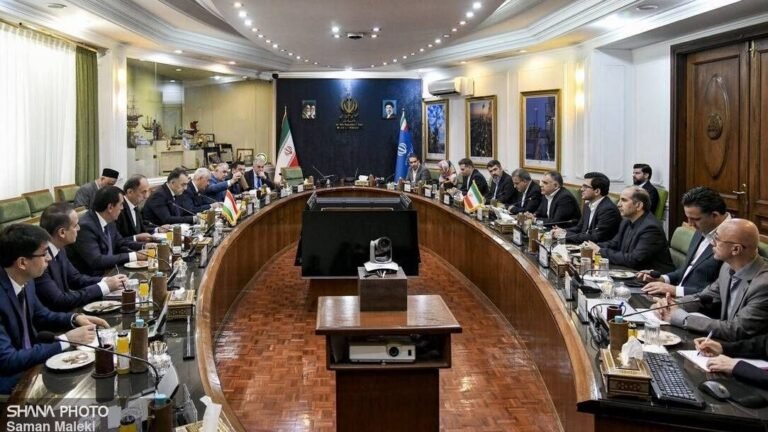
The Tajik delegation, led by Minister of Energy and Water Resources Daler Juma, held meetings in Tehran on August 15 with Iran’s First Vice President Mohammad Reza Aref, Foreign Minister Abbas Araghchi, and Oil Minister Mohsen Paknejad, as well as with other officials.
According to Tajikistan’s Ministry of Energy and Water Resources, the parties signed a long-term contract for the supply of diesel fuel, aviation fuel, and crude oil to Tajikistan. The negotiations also covered logistics, cooperation between oil and gas enterprises, and proposals for preferential prices for the Tajik market.
The parties reached this agreement against the backdrop of Tajikistan’s efforts in recent years to reduce its dependence on a single source of fuel supply. Currently, the majority of the country’s imported petroleum products come from Russia. However, Russia’s war in Ukraine and rising prices over recent months have forced Tajik authorities to seek oil from Iranian markets.
According to authorities, trade turnover between Tajikistan and Iran reached $254.3 million in the first half of 2026, an increase of 14.8 percent compared to the same period last year.
It was also noted that during the negotiations, Iran’s First Vice President Mohammad Reza Aref proposed establishing a union of Persian-speaking countries and regions. According to him, such a union could promote cooperation in culture, science, and civilization among Persian-speaking countries. Aref also proposed seriously discussing this initiative at future meetings between Tajik and Iranian authorities.
It is not yet known which other countries will participate in this union and on what basis they will operate.
New trade and economic cooperation between Dushanbe and Tehran is developing after years of strained relations between the countries.
In 2013, Iranian billionaire Babak Zanjani, who was considered a major investor in Tajikistan, was detained in Tehran. In Iran, Babak Zanjani was accused of financial crimes and embezzlement of funds belonging to that country’s Ministry of Oil.
Zanjani invested billions of dollars in the banking sector, transportation, and other major economic projects in Tajikistan. He was the founder and owner of companies such as “Asian Express,” “Kont Group Tajikistan” and a number of other projects. Media also reported that he had received a Tajik passport.
After the detention of Iranian billionaire Babak Zanjani, Iran demanded his capital from Tajikistan. Tajik authorities confiscated and nationalized all of Zanjani’s assets. Immediately thereafter, political, cultural, economic, investment, and trade relations between Dushanbe and Tehran deteriorated sharply. In 2015, when Tajik authorities accused Iran of interfering in the country’s internal affairs and supporting the opposition, relations between the countries became more strained than ever.
Several years later, relations between the countries gradually improved. Today, a revival and growth of trade and economic relations is already being observed.