News
HUMAN RIGHTS LAW
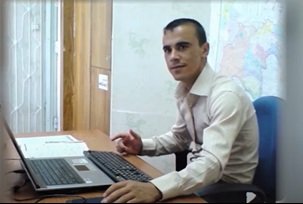
On the fate of Tajik journalist Khurshed Fozilov
On March 6, 2023, Khurshed Fozilov, a Tajik journalist who was acting as a regular journalist, was detained; he worked for the media in the Zerafshan district of the Sughd region. He was sentenced to 7 years in prison for “public calls for the violent change of the constitutional order of the Republic of Tajikistan […]
On March 6, 2023, Khurshed Fozilov, a Tajik journalist who was acting as a regular journalist, was detained; he worked for the media in the Zerafshan district of the Sughd region. He was sentenced to 7 years in prison for “public calls for the violent change of the constitutional order of the Republic of Tajikistan using mass media or the internet.” His lawyer Dilafruz Samadova reported at the time that Khurshed Fozilov was forced to testify against himself.
Relatives and international human rights organizations called the court’s verdict unfair and demanded that the authorities release him, but there was no response from the authorities other than ignoring the demands.
Khurshed Fozilov is 39 years old and is a meteorologist by profession. Before his arrest, he combined work at the Penjikent meteorological station with journalistic activities. He is married and has three children, the youngest of whom was 1.5 years old at the time of his arrest. Fozilov was the sole breadwinner for his family of six. His wife does not work and takes care of the children and his retired mother.
Characterizing the journalist’s activities, it can be said that “he mainly wrote about the shortcomings of the city; he always emphasized that he said nothing ‘wrong’ and was loyal to the state and government.”
Fozilov’s mother, who was present during the announcement of the verdict, said that her son, during his last words in court, stated that he had done nothing against the state, that he did not understand the purpose of the court in accusing him of something he had not committed; and he asked the court to release him, saying that he would be more beneficial to society if he were free and that he had small children. The mother also said that the trial went by so quickly that she did not notice how the judge quickly left the courtroom after announcing the verdict. She believes that her son was slandered by “envious people” because of his journalistic activities.
Over the past year, Fozilov’s relatives have appealed the verdict to all competent authorities: the Prosecutor General’s Office, the Supreme Court, the Presidential Administration, but all these agencies shifted responsibility onto each other and did not provide them with a substantial response. Fozilov does not tell his mother anything about the conditions of his detention, but due to his chronic bronchitis, his health is deteriorating, according to his mother.
“I believe he is innocent; he was slandered and imprisoned. Khurshed was not a provocative journalist; he was an ordinary journalist, and we lived an ordinary life… He had many friends and colleagues; now, apart from one or two people, no one asks about his children. Everyone has disappeared,” laments Fozilov’s mother. She adds that they have not given up the fight to prove her son’s innocence, but her health condition and the difficulties of life do not allow them to be effective right now. However, she believes in her son’s innocence and will go to the end.