News
CENTRAL ASIA POLITICS
Opinion of the expert community on Putin’s re-election for the region as a whole
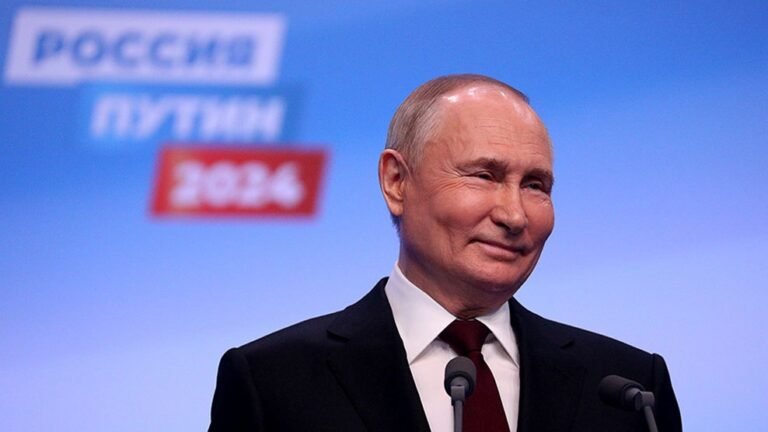
Vladimir Putin has won the virtually uncontested presidential elections in Russia. This is his fifth term, which is set to end in 2030. The leaders of Central Asian countries were the first to send congratulations to the President of Russia. “Putin’s reelection was not a surprise to anyone in the region. Moreover, all leaders of […]
Vladimir Putin has won the virtually uncontested presidential elections in Russia. This is his fifth term, which is set to end in 2030. The leaders of Central Asian countries were the first to send congratulations to the President of Russia.
“Putin’s reelection was not a surprise to anyone in the region. Moreover, all leaders of Central Asian countries relied on his reelection. In fact, the legitimacy of many authoritarian regimes today depends on Putin’s legitimacy, and accordingly, if his regime cracks, Russia will cease to be a guarantor of security for the countries in the region,” says political scientist and journalist Galiya Ibragimova. She notes that Moscow has always been an example for the regimes in the region, which have copied its methods and practices to strengthen their power.
In 2019, American political scientist Edward Lemon published the results of his research, according to which 79% of Kyrgyzstan’s laws and 56% of Tajikistan’s laws on terrorism and extremism are copied from Russian counterparts. In Kazakhstan, this figure was 4%, and in Uzbekistan, 5%.
At the same time, the practice of conducting constitutional reforms in Central Asian countries began long before Vladimir Putin, several times in all republics. Thus, some heads of state reset their previous presidential terms, which formally allowed them to run in the upcoming elections. In Russia, this practice was only resorted to in July 2020.
“Putin’s reelection will further strengthen these relations and the Putin bloc as a whole,” says the founder and head of the information portal Azda, Mukhammedjon Kabirov.
Deputy and head of the Democratic Party of Tajikistan Saidjafar Usmonzoda said in an interview with Radio Ozodi that “Russia is the main state in matters of security and economic development” and called Vladimir Putin the best candidate.
Political scientist Aziz Nurulloev believes that Putin’s continued rule in Russia will have mixed consequences for autocracies in Central Asia. “In domestic politics, it will allow autocrats to maintain power, as this model fits into the political traditions of Beijing and Moscow, but in economic terms, these regimes will lose. The sanctions policy against Putin’s Russia is likely to intensify, and the ability to circumvent sanctions through these states will decrease. This will reduce the dividends that these countries currently receive. Moreover, the volume of remittances from migrants, which play a significant socio-economic role, will decrease,” says the expert.
Journalist and political scientist Galiya Ibragimova believes that Central Asian countries are likely to continue integration within the region to enhance their subjectivity amid ongoing geopolitical confrontation.